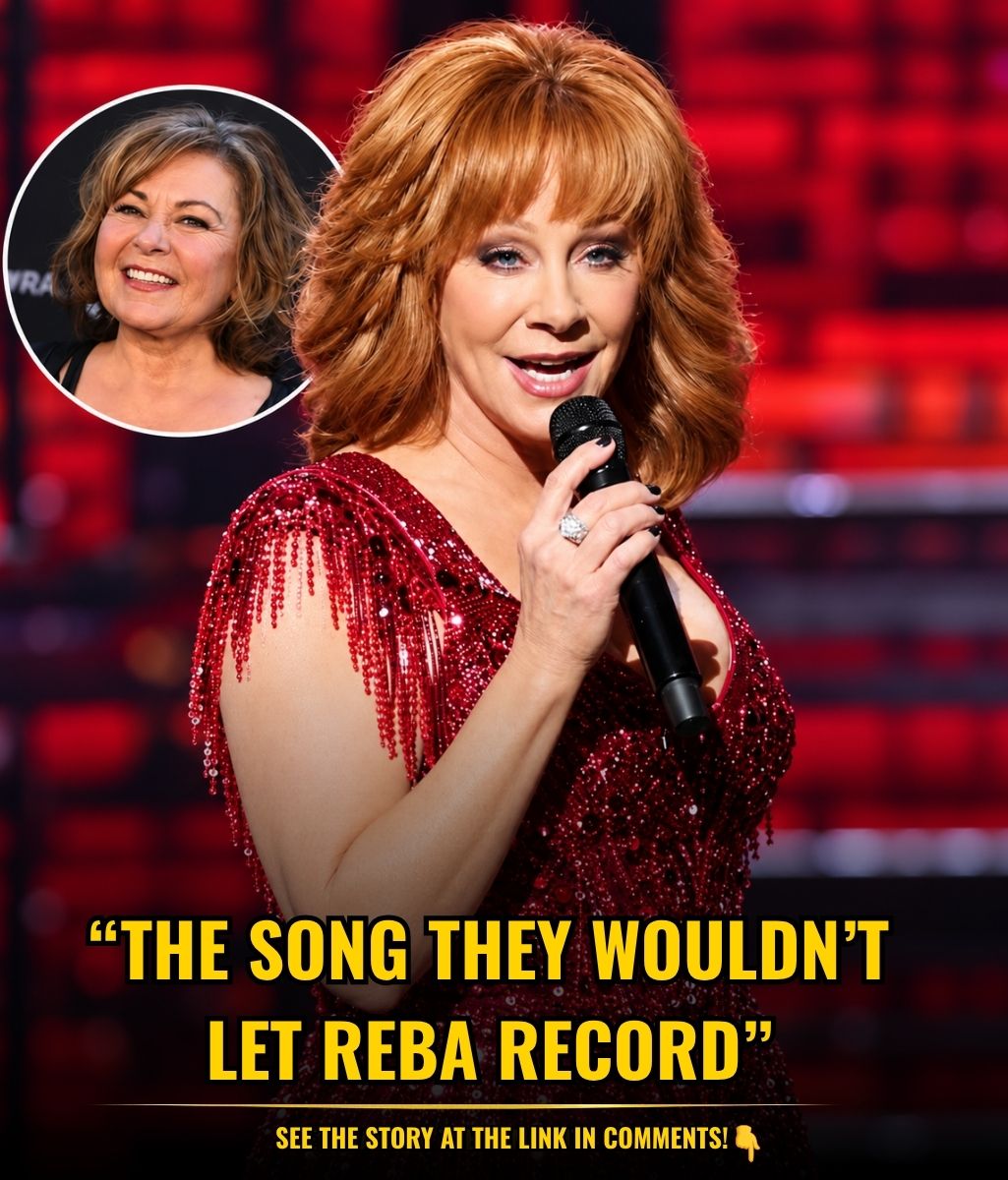
REBA McENTIRE FOUGHT FOR YEARS TO RECORD ONE SONG — THEN A NEW PRODUCER FINALLY SAID YES, AND EVERYTHING CHANGED
Long before “Fancy” became one of the songs most closely associated with Reba McEntire, it was a recording she had wanted to make for years but simply could not get approved. Today, it is difficult to imagine Reba’s career without it. The opening notes alone are enough for longtime fans to recognize what is coming, while the dramatic storytelling, steady build in intensity, and Reba’s unmistakable delivery have helped turn the song into one of the most memorable performances of her career. Yet the road that finally brought “Fancy” into Reba’s hands was anything but simple.
Reba had admired Bobbie Gentry’s “Fancy” long before she ever recorded her own version. What attracted her was not merely the melody, but the way the song told a complete story. Reba has always had a deep affection for story songs, especially those that introduce a character, build an emotional world, and carry the listener from one moment to another until the final line lands with real weight. “Fancy” had all of those qualities. It told a difficult story shaped by hardship, determination, survival, and the possibility of changing one’s circumstances, and Reba immediately recognized the emotional power within it.
She wanted to record the song herself, but her producer at the time, Jimmy Bowen, did not share her enthusiasm for the idea. Reba later recalled bringing the song to Bowen during the 1980s and asking whether she could cut it, only to be turned down. Part of the concern reportedly centered on the song’s controversial storyline, while other recollections suggested Bowen also believed the song was already too closely associated with Bobbie Gentry. Whatever the exact reason, the result was the same: Reba was not going to record “Fancy” at that time.
For many artists, that might have been enough to let the idea disappear, but Reba did not forget the song. Years passed, new albums were recorded, and her career continued to rise. By the second half of the 1980s, she had already established herself as one of country music’s most important and recognizable voices, yet “Fancy” remained in the back of her mind. That persistence says something important about the way Reba has always approached music. She was never interested only in songs that sounded good on the radio. She wanted songs she could believe in, songs built around a character, a decision, a struggle, or a memory that gave her something meaningful to interpret rather than simply perform.
Then, in 1990, the situation finally changed. Reba began working with Tony Brown, a producer whose musical instincts had been shaped by an extraordinary career of his own. Brown had worked around some of country and popular music’s most significant artists, and before becoming an influential Nashville producer and executive, he had even played piano with Elvis Presley’s touring ensemble. During a conversation about the direction of Reba’s next project, Brown asked her whether there was an older hit she had always wanted to record. Reba did not need much time to think about her answer. The song was “Fancy.”
This time, instead of hearing another rejection, Reba finally heard the answer she had been waiting for. Tony Brown liked the idea, and according to Reba, he told her that “Fancy” was one of his favorite songs as well. After years of wanting to record it, the door was suddenly open. Reba finally had the chance to take a song she had carried in her mind for so long and make it her own.
Her version appeared on the 1990 album Rumor Has It, but it was never going to be a simple copy of Bobbie Gentry’s original. Reba had waited too long and believed in the song too deeply for that. Her recording leaned into the drama of the narrative, allowing the performance to begin with restraint before gradually growing in emotional force as the story unfolded. The arrangement gave Reba room to do what she had always done exceptionally well: make the listener believe every word belonged to her.
That ability was especially important with a song like “Fancy,” because its power depends heavily on storytelling. It is not simply a collection of verses and choruses. It unfolds more like a miniature film, introducing a character, establishing the difficult circumstances surrounding her life, following the choices placed before her, and eventually revealing just how dramatically her world has changed. Reba understood that the song demanded more than vocal strength. It required interpretation, emotional control, and the ability to inhabit a character so completely that the listener could see the story unfolding through the performance.
The music video for “Fancy” gave Reba another opportunity to bring that story to life visually. By that point in her career, she had already begun exploring acting through music videos and other performances, but “Fancy” allowed her to step even more deeply into a character. The result helped transform the song from a successful recording into an enduring part of Reba’s public identity. Over time, “Fancy” became one of the performances audiences waited for most eagerly, and its imagery became almost as recognizable as the song itself.
The famous red dress, the dramatic opening, and Reba’s commanding delivery all became closely tied to the song. Eventually, she began using “Fancy” as a powerful closing moment in her concerts, which made its history even more remarkable. One of the defining performances of her career had almost never been recorded by her at all. For years, the answer had been no, yet Reba continued to believe that the song belonged somewhere in her musical story. She simply had to wait for the right moment and the right producer to recognize what she had seen in it all along.
Reba later reflected on the experience with a simple philosophy that reaches far beyond a single recording: a song will find its home. In the case of “Fancy,” that home eventually became one of the most recognizable voices in country music. There is something fitting about that, because the song itself is built around perseverance and the ability to survive difficult circumstances. Reba’s own journey to recording it carried a quieter version of the same lesson. She heard something special in the song years before the people around her were willing to let her pursue it, but she remembered it, waited patiently, and was ready when circumstances finally changed.
Decades later, “Fancy” remains inseparable from Reba McEntire’s career. It became more than a successful recording. It became a signature song, a theatrical showcase, a concert tradition, and a reminder that an artist’s instinct can sometimes survive years of rejection before finally being proven right. Jimmy Bowen said no, Tony Brown eventually said yes, and Reba McEntire turned that long-awaited opportunity into one of the songs audiences would remember her for forever.