.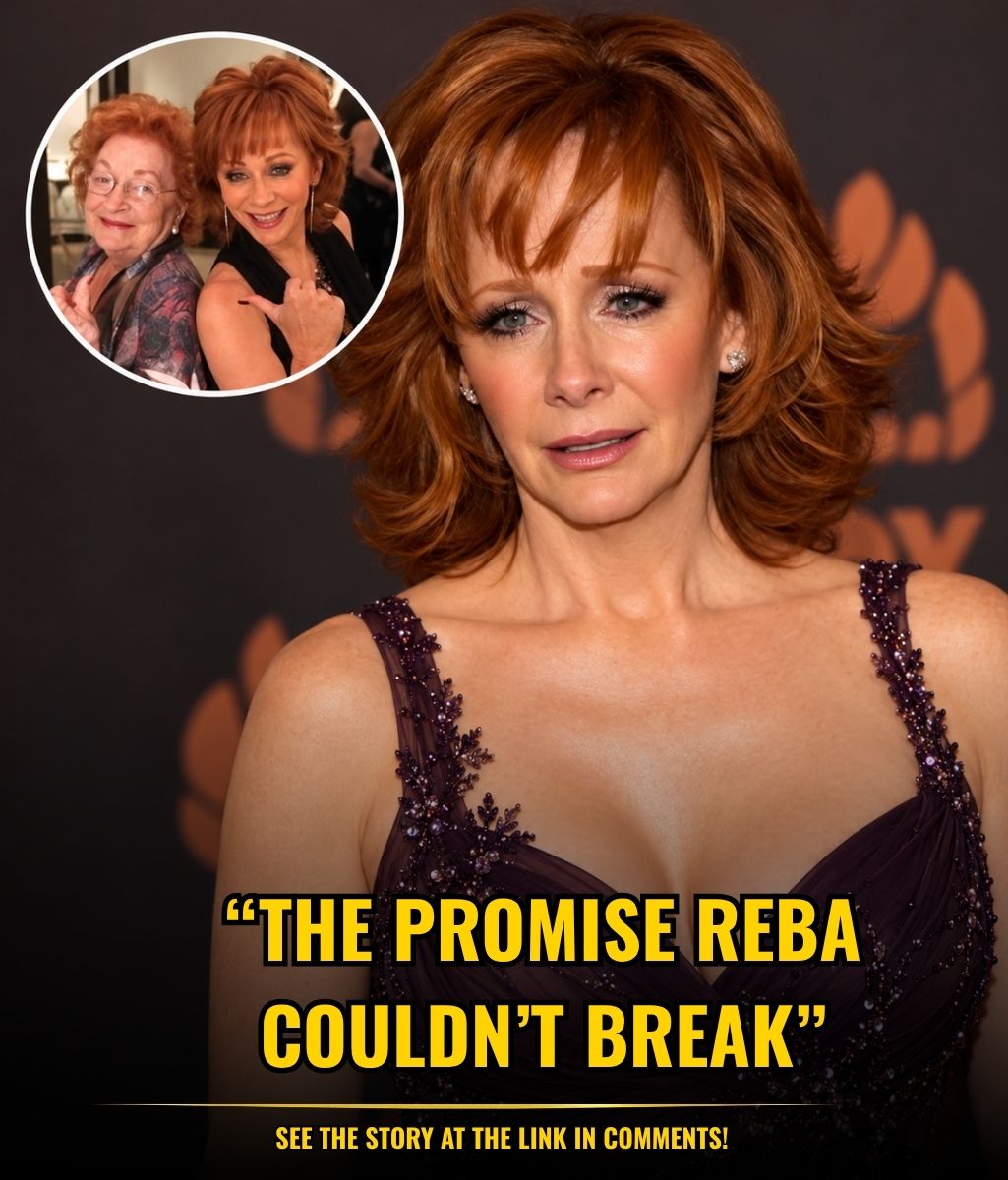
Before Reba McEntire became one of the most recognizable voices in country music, there was another singer in the family whose dream never had the chance to fully begin. Her name was Jacqueline McEntire, Reba’s mother, and long before her daughter filled arenas, won major awards, and built a career that lasted for decades, Jacqueline had once imagined a musical life of her own.
Growing up in Oklahoma, Reba did not come from a show-business family. Her father, Clark McEntire, was a champion steer roper, and the children were raised around ranch work, discipline, and the demanding rhythms of rural life. Music entered the household largely through Jacqueline, who loved singing and taught her children to harmonize together. Reba, Susie, Pake, and Alice grew up learning songs in the car and at home, developing the family blend that would eventually help shape Reba’s ear for harmony.
Jacqueline had talent, but her life took a different path.
She became a schoolteacher, wife, and mother, and the dream of becoming a professional country singer never became reality. Years later, Reba would often speak about how deeply that unfinished dream influenced the family. Her mother did not simply enjoy music; she understood what it meant to want a life in it and never get the chance to see how far that life might have gone.
That is why Reba’s early career carried more emotional weight than most fans realized.
When Reba began performing seriously, success did not arrive overnight. She sang at rodeos, small events, and local appearances, then slowly found opportunities in Nashville. Her breakthrough began after country artist Red Steagall heard her sing the national anthem at the National Finals Rodeo in 1974 and helped open doors for her in the industry.
Even after signing a recording contract, however, the road was difficult.
Her early singles did not immediately turn her into a star, and the pressure of travel, disappointment, and uncertainty could be exhausting. Reba later described periods when she questioned whether the sacrifices were worth it, particularly when the career she had imagined seemed to be moving much more slowly than she hoped.
At those moments, Jacqueline’s influence became crucial.
Reba has often credited her mother with pushing her to keep going when quitting would have been easier. Jacqueline understood disappointment because she had once carried her own musical ambitions, and she did not want Reba to surrender the opportunity she herself had never received.
The message was simple but powerful.
If Reba had a real chance to sing, she should take it as far as she possibly could.
That encouragement changed the way Reba viewed struggle. Instead of seeing every failed single or difficult year as proof that she should stop, she began to see perseverance as part of honoring what her mother had given her. Jacqueline had planted the musical foundation, and Reba now had the chance to carry that dream into a world her mother had never been able to enter.
The turning point did not happen instantly.
Reba spent years developing her sound and learning how to fight for better material. By the early 1980s, she began gaining greater control over the kind of songs she recorded, moving toward a more traditional country style that matched her voice and instincts. The decision helped transform her career.
Then the hits started coming.
Songs like “Can’t Even Get the Blues,” “How Blue,” “Somebody Should Leave,” and “Whoever’s in New England” established Reba as far more than a promising singer. She became one of country music’s leading female artists, building a career that would eventually expand into touring, television, film, business, and the Grand Ole Opry.
Through all of it, Jacqueline remained one of the people Reba credited most.
Their bond was not simply that of a mother watching her daughter become famous. Jacqueline had helped create the musical instincts Reba relied on from childhood, and she had also given her the emotional permission to pursue a dream bigger than the life they had known in Oklahoma.
That connection became even more poignant later in Reba’s life.
After Jacqueline died in 2020 at the age of 93, Reba spoke openly about what her mother had meant to the family. She described her as the person who had taught them to sing, believe in themselves, and keep going. For Reba, the loss was not only personal; it was the loss of the woman who had helped shape nearly every part of the artist she eventually became.
Looking back, Reba’s career can almost be seen as two dreams woven together.
One belonged to a young Oklahoma woman named Jacqueline who loved music but never became the country singer she once imagined.
The other belonged to her daughter.
Reba was the one who got the chance to step onto the stage, sign the contracts, face the crowds, endure the disappointments, and keep singing long enough for the dream to become real.
That is why the story matters.
Reba did not succeed because the road was easy.
She succeeded because when the road became hard enough to make walking away seem reasonable, she had someone behind her who understood exactly what quitting would mean.
Her mother had once carried the same dream.
She simply never got the chance to live it.
Reba did.
And every time she kept going, she carried a little of Jacqueline’s dream with her.