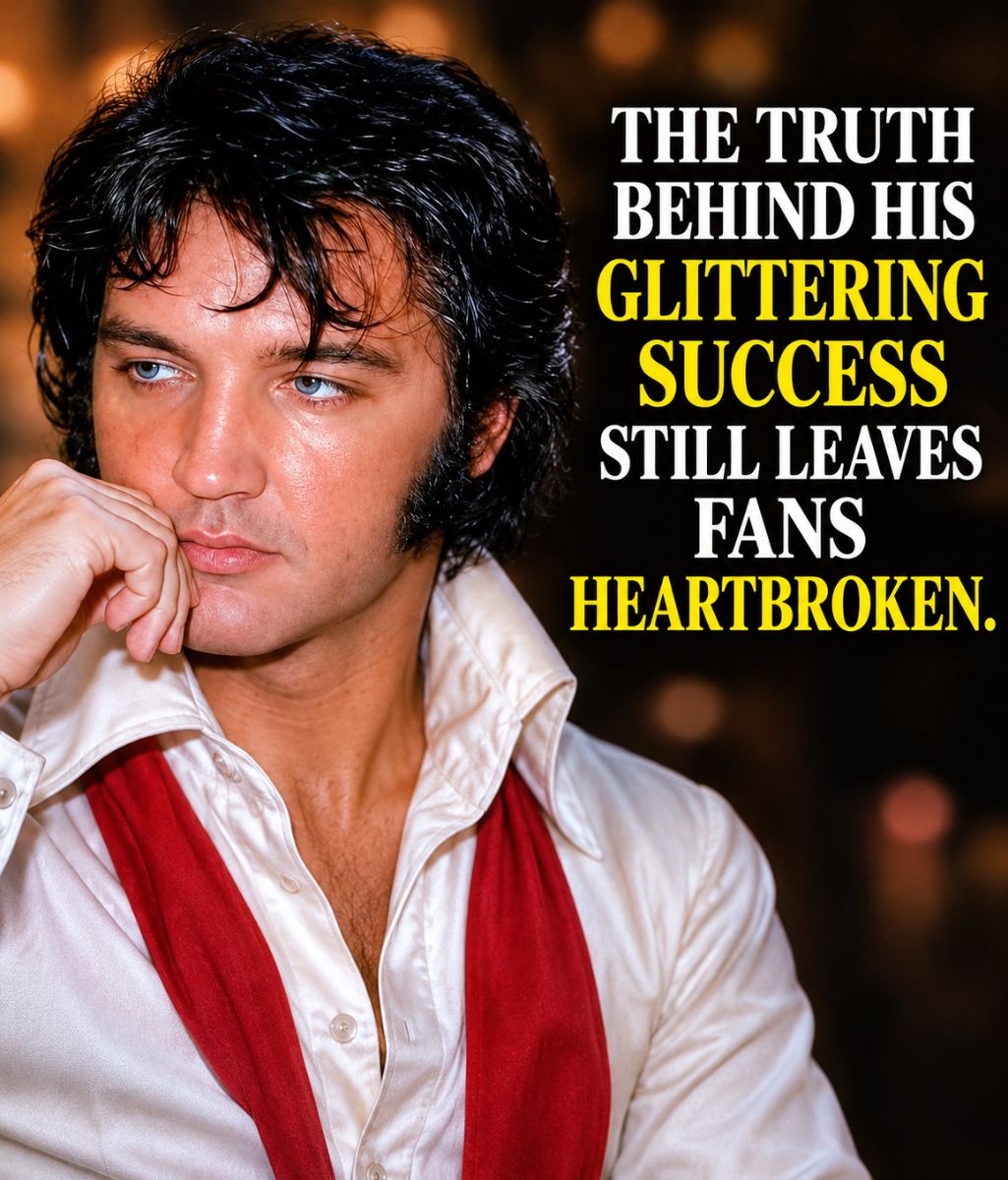
By the mid-1970s, Elvis Presley possessed almost everything fame was supposed to provide.
He had Graceland, private aircraft, expensive cars, jewelry, sold-out concerts and a name recognized around the world. His career had generated enormous sums through records, movies and touring, and even during his final years audiences continued filling arenas simply to see the man who had changed popular music.
Yet the life behind that success was becoming increasingly difficult.
Elvis had always been famously generous. He bought cars for friends and strangers, supported relatives and maintained an entourage of people whose livelihoods often depended on him. When money began running low, the solution was usually simple: schedule another tour, another recording session or another run of concerts. Contemporary financial accounts later showed that the machinery surrounding Elvis required constant income to keep moving.
By then, however, performing was becoming physically harder.
Elvis suffered from several documented health problems during his final years, including high blood pressure, glaucoma and gastrointestinal difficulties. He was hospitalized in April 1977, forcing several concert dates to be canceled, yet he returned to touring only weeks later. Graceland’s own historical timeline records that he continued performing through June, including shows filmed for what became the posthumous television special Elvis in Concert.
The footage startled many viewers.
Elvis was visibly heavier and appeared physically strained, but when he began singing, flashes of the old power were still there. That contrast became one of the saddest images of his final year: a performer whose body was clearly struggling while audiences still expected him to remain Elvis Presley every night.
Prescription medication had also become a serious part of his life.
Later court proceedings revealed that Elvis’s physician, Dr. George Nichopoulos, had prescribed thousands of doses of narcotics, sedatives and stimulants during the years before his death. Toxicology after Elvis died found numerous medications in his system, while later medical discussion has pointed to a combination of significant health problems and long-term prescription drug use rather than one simple explanation for his decline.
Still, Elvis kept working.
In the first half of 1977 alone, he performed dozens of concerts. His final show took place on June 26, 1977, at Market Square Arena in Indianapolis before approximately 18,000 people. At the time, no one in the audience knew they were watching his last full concert.
Elvis himself apparently did not believe it was the end either.
After returning to Graceland, he was preparing for another tour scheduled to begin in August. On the morning of August 16, 1977, he was supposed to rest before flying to Portland, Maine, for the next series of shows.
He never made that flight.
Elvis died at Graceland at only 42 years old.
The scale of his fame made the ending even harder to understand. A man whose image suggested limitless success had spent his final years dealing with declining health, exhausting work demands and financial responsibilities that could not simply be solved by another gold record.
Even his wealth was more complicated than the legend suggested.
When Elvis died, his estate was valued at roughly $4.9 million, a substantial amount but surprisingly modest compared with the extraordinary sums his career had generated. Maintaining Graceland alone cost hundreds of thousands of dollars each year, while years of spending and business arrangements had dramatically reduced what remained.
That may be the most heartbreaking contradiction in Elvis Presley’s story.
He had achieved a level of fame almost no entertainer before him had known, yet fame could not protect his health, slow the demands surrounding him or guarantee peace once the stage lights went dark.
The world saw the King.
Behind the title was a man who kept working until almost the very end.