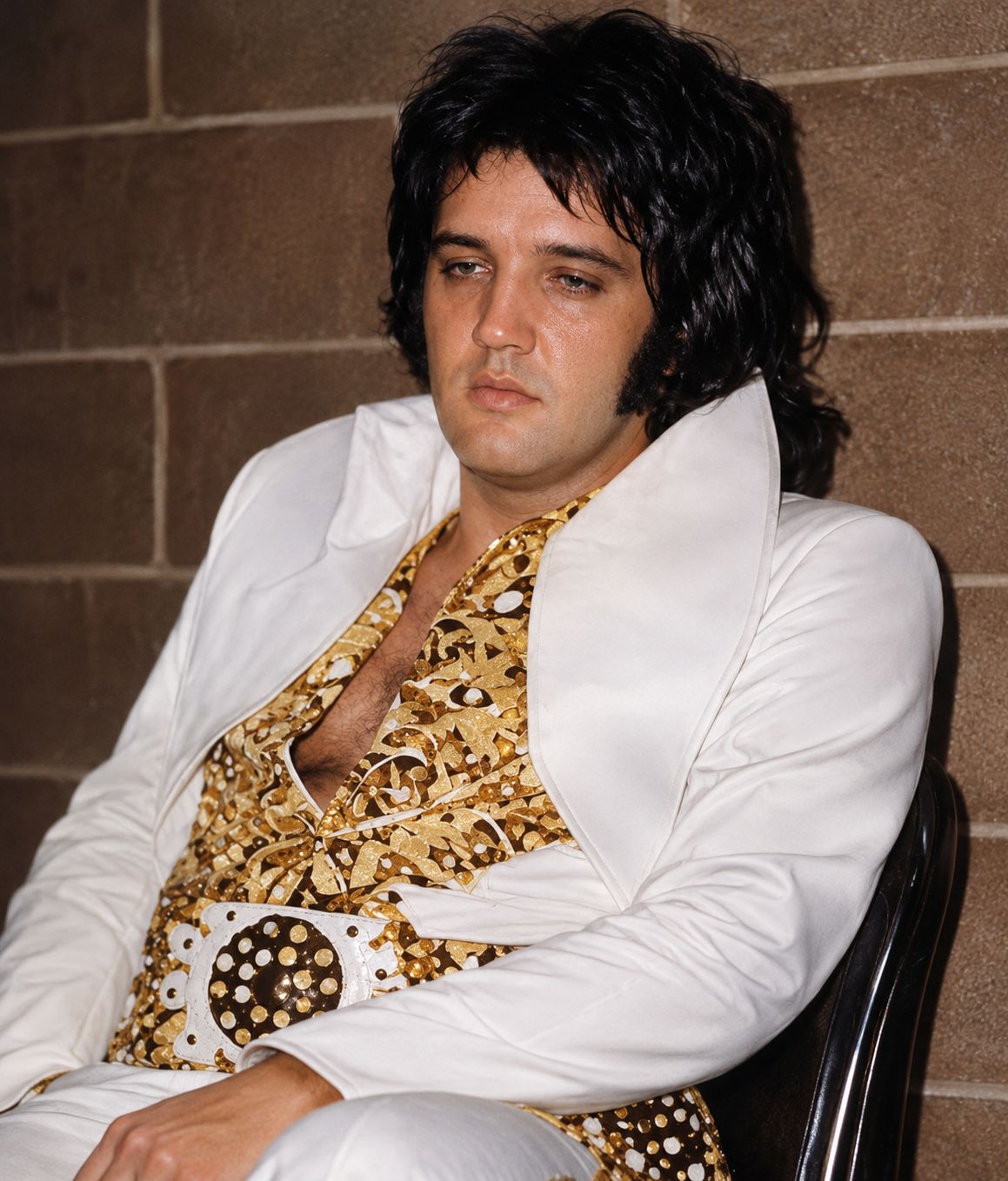
In the early hours of August 16, 1977, Elvis Presley was still preparing for what everyone around him expected to be another tour. He had returned to Graceland after a late-night dental appointment, spent time handling final details for the trip ahead, and planned to fly to Portland, Maine, later that day. His next concert was scheduled for August 17, and nothing about the official schedule suggested that the King of Rock ’n’ Roll was about to disappear forever.
Inside Graceland, however, Elvis’s life had become far more complicated than the public image suggested. Years of exhausting touring, irregular sleep, chronic health problems, and dependence on prescription medication had taken a visible toll. People in Elvis’s inner circle knew more about those struggles than fans did, but protecting his privacy had become almost automatic, and that instinct did not disappear when he died.
Longtime friend and road manager Joe Esposito later admitted that the people around Elvis had spent years protecting him from public scrutiny. After Elvis’s death, Esposito said that instinct continued, and one of the subjects they initially avoided discussing openly was his use of prescription drugs. That admission changes the way Elvis’s final hours can be understood, because the real secret was not a dramatic confession whispered moments before death. It was the private reality surrounding him and the widening gap between the superstar seen by millions and the exhausted man known only to those closest to him.
By August 1977, Elvis was still one of the most famous people on Earth, but his inner circle had become accustomed to managing a world that looked very different from the one fans saw from the audience. His fiancée Ginger Alden later gave the clearest account of his final known words. She remembered Elvis telling her that he was going into the bathroom to read, and when she warned him not to fall asleep there, he responded that he would not. Those ordinary words became the last known exchange between them before Ginger discovered him unresponsive several hours later.
The simplicity of that final exchange makes the story even more haunting. There was no dramatic farewell, no final speech about fame, and no confession about regret. Elvis apparently expected to come back out of the room, rest, and eventually leave for another tour. Earlier that same morning, his nine-year-old daughter Lisa Marie Presley had seen him for the last time. She later remembered that Elvis found her awake around four in the morning, told her to go back to bed, and kissed her goodnight, never knowing it would be their final moment together.
By late morning, Elvis was dead at only 42. The official Graceland timeline records that he died at home before the scheduled tour departure, and news of his death spread around the world within hours. In the years that followed, the story of those final months became increasingly complicated as people who had once protected Elvis began speaking more openly about the physical decline, medication, and strain that had surrounded him.
Their accounts did not reveal one single hidden confession. Instead, they revealed something more uncomfortable: the public had been seeing the legend while the people inside Graceland were watching the man struggle. Elvis Presley did not spend his final moments revealing some sensational secret that had been buried for decades. The real secret was already inside the house, in the contrast between the Elvis millions of fans believed they knew and the increasingly fragile man his inner circle had been trying to protect.
For years after his death, some of the people closest to Elvis remained careful about what they said. When they finally spoke more openly, the most painful revelation was not a last-minute confession but how much had been happening behind the gates of Graceland while the world still saw an untouchable King.