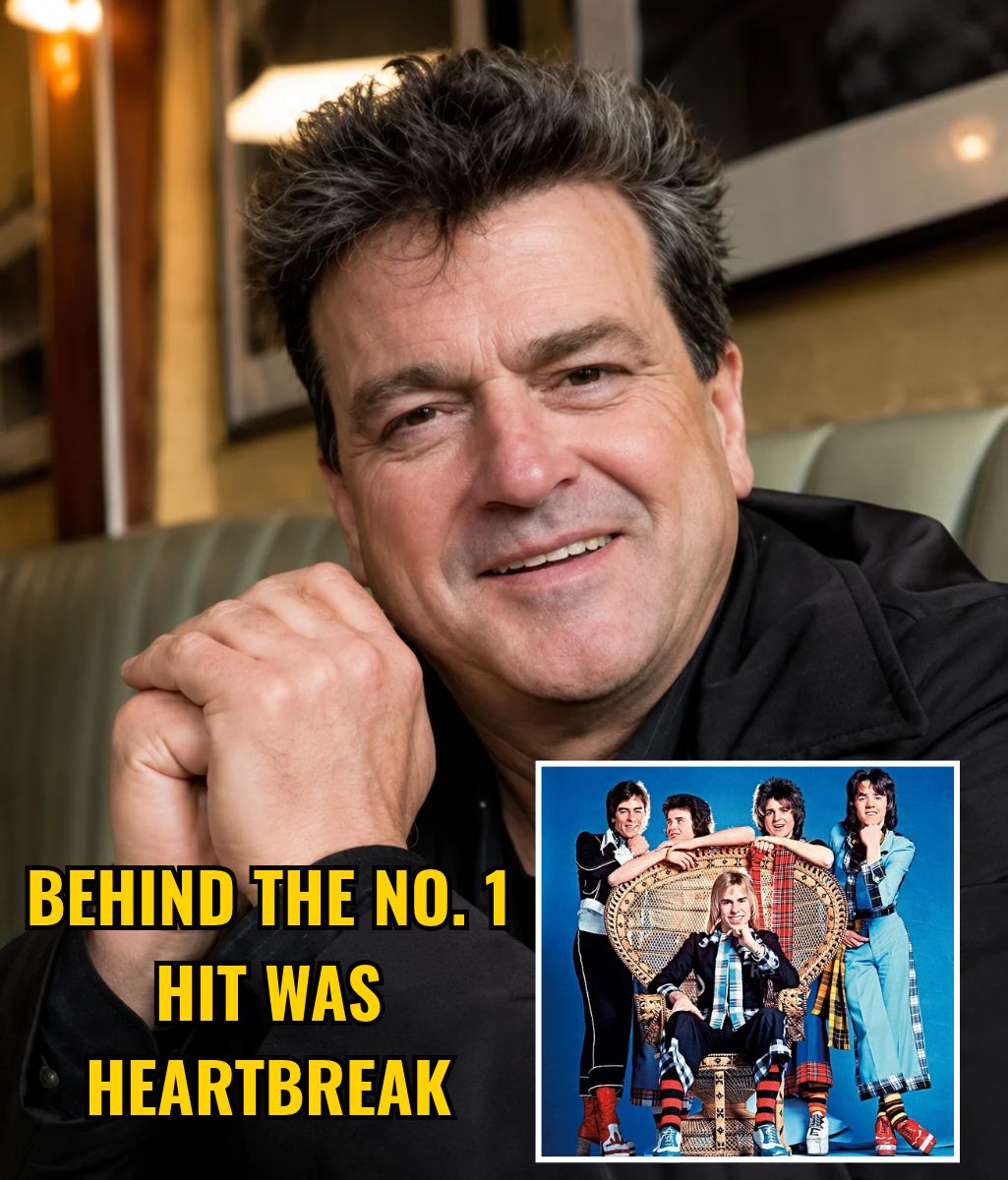
Long before “Saturday Night” became the song that introduced millions of Americans to the Bay City Rollers, it had already been given one chance to succeed.
And almost nobody noticed.
The song, written and produced by Bill Martin and Phil Coulter, was first released in Britain in 1973 with Gordon “Nobby” Clark singing lead. Despite its instantly recognizable chant and upbeat rhythm, the single failed to enter the UK chart. For most songs, that might have been the end of the story.
Then the band changed.
Clark left, and a teenage Les McKeown became the new frontman. The Rollers recorded another version of “Saturday Night” with Les on lead vocals for their 1974 album Rollin’, giving the song a brighter, more youthful sound that fit the image the band was rapidly developing.
But the real turning point came when Clive Davis, then building Arista Records, began looking for a song capable of breaking the Bay City Rollers in America.
Instead of choosing one of their established British hits, Davis returned to the song that had already failed once.
He believed “Saturday Night” had exactly the kind of simple, immediate hook American radio could embrace.
His instinct proved right.
Released in North America in 1975, the McKeown-fronted version climbed steadily through the charts before reaching No. 1 on the Billboard Hot 100 on January 3, 1976. It also reached No. 1 in Canada and became the Bay City Rollers’ only American chart-topper.
For Les, the transformation was almost impossible to comprehend.
He later remembered arriving in America as the band’s popularity exploded, being collected by helicopter and taken toward an arena filled with screaming fans. For a young singer who had joined the group only a short time earlier, it felt as though life had suddenly become larger than anything he had imagined.
That was the beginning of full-scale Rollermania in America.
The tartan clothes became instantly recognizable. Teen magazines filled their pages with photographs of the band. Fans screamed outside hotels, airports and venues, while songs such as “Money Honey,” “Rock and Roll Love Letter” and “I Only Want to Be With You” followed “Saturday Night” onto the American charts.
From the outside, it looked like a teenage dream.
Years later, however, former members described a much more complicated reality behind the phenomenon.
The Bay City Rollers’ history became marked by disputes over money, intense managerial control and allegations of abuse connected to longtime manager Tam Paton. Several former members later spoke openly about the emotional damage they carried from the period, while legal battles over royalties continued long after the screaming crowds had disappeared.
That darker history changed the way many people looked back on Rollermania.
The success was real.
So was the excitement.
But the young men at the center of it were living inside a machine that moved faster than they could control.
That makes the story of “Saturday Night” strangely bittersweet.
A song that failed in Britain was given another chance, a new young singer helped give it a different identity, and Clive Davis saw the American hit hidden inside it. Within months, Les McKeown and the Bay City Rollers had reached the top of the United States.
“Saturday Night” gave them the breakthrough almost every young band dreams about. What none of them could fully understand at the time was how much that dream would eventually cost.