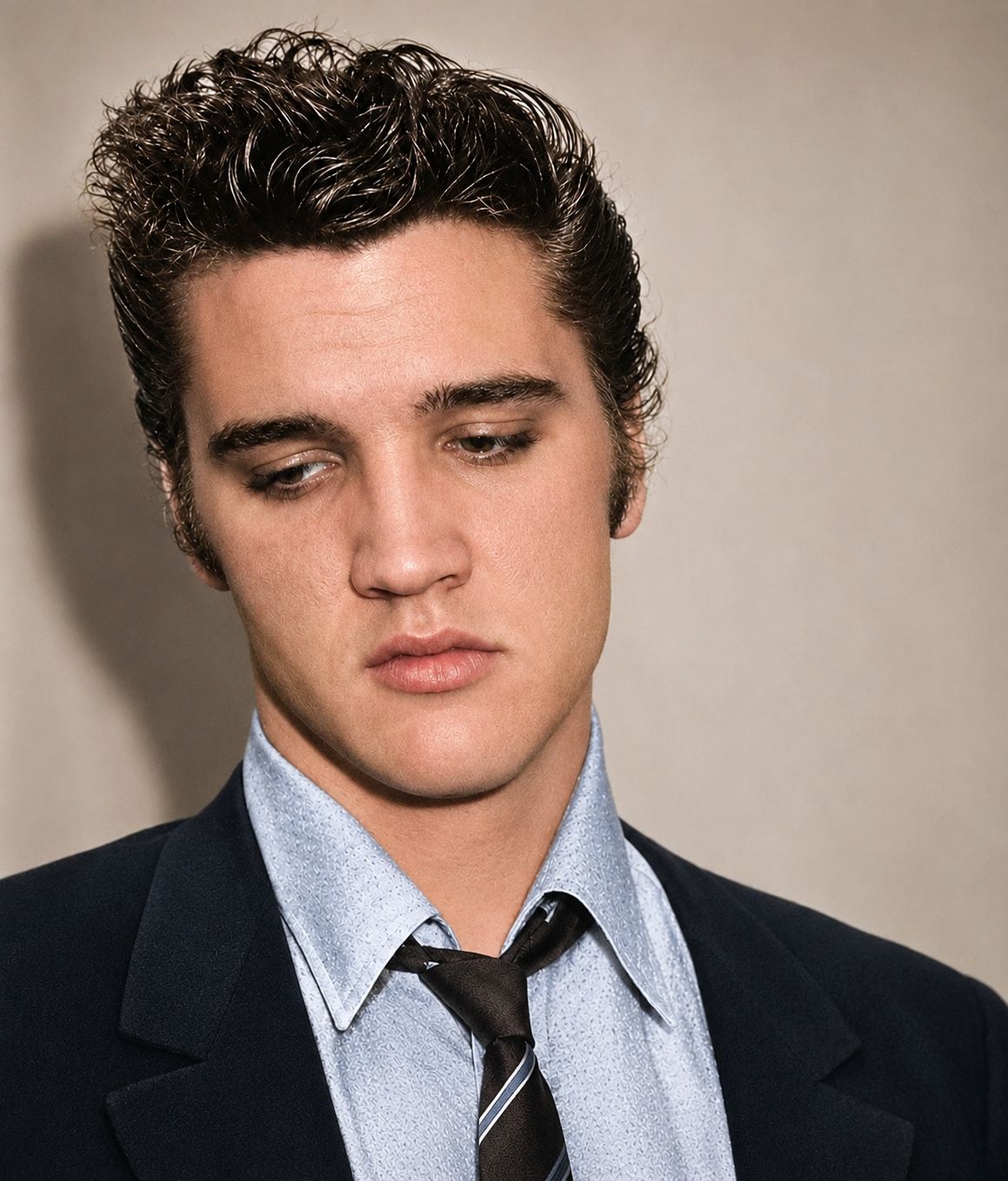
There was a time when Elvis Presley seemed almost larger than the music business itself. His face was everywhere, his records sold by the millions, and the simple sight of him walking onto a stage could send an audience into chaos. By the early 1970s, Elvis had already survived changing musical tastes and proved that he could still command the public’s attention. His Las Vegas engagements broke attendance records, his concerts remained major events, and the 1973 “Aloha from Hawaii” television special confirmed that the King was still capable of reaching an enormous international audience.
Yet the man who returned to Graceland after those performances was becoming increasingly different from the confident figure fans saw under the stage lights.
One of the most painful changes came in his personal life. Elvis and Priscilla Presley had separated before officially divorcing in 1973, ending a marriage that had once appeared to be part of the perfect image surrounding him. Their daughter, Lisa Marie, remained deeply important to Elvis, but the divorce marked the loss of the family life he had once imagined for himself. Those close to him later described a man who could still be surrounded by friends, employees and admirers while feeling increasingly isolated within the unusual world that fame had created around him.
His health was also beginning to deteriorate.
During the middle years of the 1970s, Elvis dealt with a growing list of medical problems that included high blood pressure, glaucoma, intestinal difficulties, chronic pain and other health complications. He was hospitalized several times, and his physical appearance began changing in ways that were impossible for audiences to ignore. At the same time, his reliance on prescription medication had become increasingly serious. Later court testimony showed that his personal physician had prescribed enormous quantities of narcotics, sedatives and stimulants during the years before his death.
The cycle was particularly destructive because Elvis was still expected to perform.
He often used stimulants to remain active and alert onstage, while sedatives were used afterward as he struggled with insomnia and the difficulty of coming down from a performance. By 1977, he was still working at an exhausting pace. In the first half of that year alone, Elvis performed dozens of concerts despite increasingly obvious health problems. The public continued buying tickets because Elvis Presley remained Elvis Presley, but behind the scenes, the physical cost of maintaining that identity was becoming harder to hide.
Even some observers who had admired him for years began noticing the decline.
Los Angeles Times music critic Robert Hilburn later recalled watching Elvis change physically and creatively during the 1970s. By 1974, Hilburn had become so concerned by what he saw that he wrote a column suggesting Elvis should consider retiring, a suggestion that angered many devoted fans at the time. Years later, the reasons behind some of the uneven performances became much clearer as details emerged about depression, prescription medication and deteriorating health.
What makes the story especially painful is that Elvis never truly stopped being successful.
He was not a forgotten performer playing to empty rooms. His concerts continued selling out, and people around him depended financially on the machinery surrounding his career. Graceland, the touring operation and the extended circle of employees, friends and relatives created responsibilities that made simply walking away from performing far more complicated than it might have appeared. One account of his final years noted that Elvis felt unable to cancel tours because so many people relied on him.
By the summer of 1977, however, the contrast between the legend and the private man had become impossible to ignore.
Elvis performed his final concert on June 26, 1977, at Market Square Arena in Indianapolis. Afterward, he returned to Graceland and spent much of the next several weeks preparing for another tour that was scheduled to begin in August. He still made plans, spent time with Lisa Marie and talked about returning to the stage, but reports from those final weeks describe someone who was frequently unwell and spending increasing amounts of time in his room.
On August 16, Elvis was supposed to leave Memphis for another run of concerts.
Instead, he was found unresponsive inside Graceland and later pronounced dead at the age of 42. His death was initially attributed publicly to cardiac arrhythmia, while later investigations and medical discussions focused heavily on his serious health conditions and long-term prescription-drug use. The precise medical story has remained the subject of debate, but there is little dispute that Elvis entered his final years carrying a dangerous combination of illness, medication and relentless pressure.
The tragedy of those years is not simply that Elvis Presley died young.
It is that he remained one of the most recognizable people on Earth while becoming increasingly trapped inside the identity that had made him famous. Audiences still expected the jumpsuits, the voice, the charisma and the familiar confidence of the King, while the man behind that image was struggling with health problems, loneliness, exhaustion and habits that were becoming harder to control.
Elvis Presley spent his life giving millions of people an image of confidence and excitement, but his final years revealed the cost of carrying that image for too long. Behind the gates of Graceland, the King was still surrounded by fame, money and devotion, yet none of those things could fully protect the man underneath from the pressures that were slowly consuming him.
Video
https://www.youtube.com/watch?v=GKdEwBpCXcs