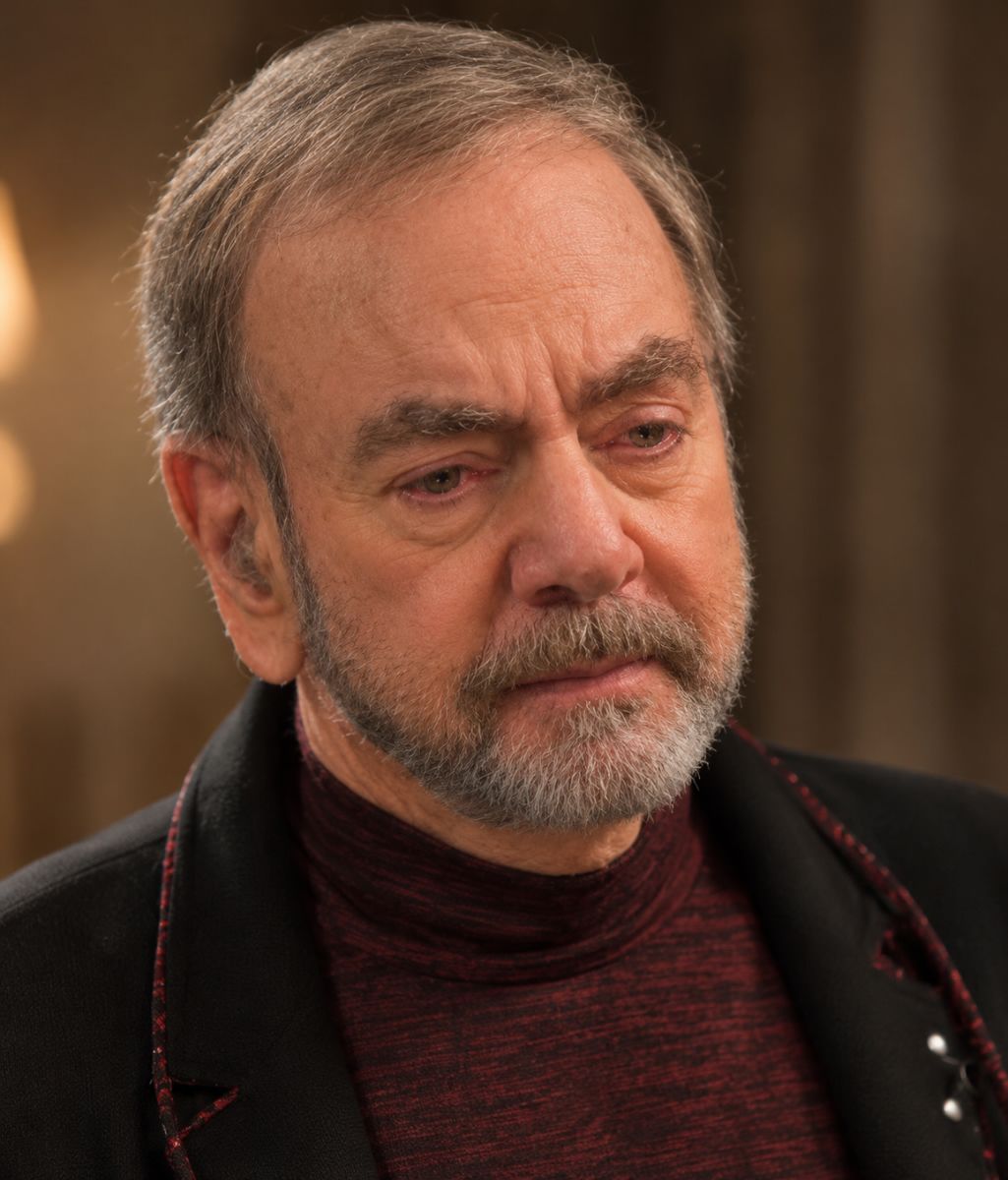
For decades, Neil Diamond seemed almost inseparable from the stage.
He had the songs, the voice and the kind of audience loyalty that very few performers ever experience. “Sweet Caroline,” “Cracklin’ Rosie,” “Song Sung Blue,” “Love on the Rocks” and “America” became part of the soundtrack of several generations, while Diamond himself grew into one of the most dependable concert attractions in popular music. By the 1970s and 1980s, he was no longer simply a successful songwriter who had found his own voice. He had become one of the most recognizable performers in the world.
That made what happened in 2018 especially difficult.
In January of that year, Diamond announced that he had been diagnosed with Parkinson’s disease and would retire from concert touring on the advice of his doctors. He was in the middle of his 50th Anniversary Tour, and the final scheduled leg in Australia and New Zealand had to be cancelled. In his statement, Diamond said the decision came with great reluctance and disappointment after fifty years of bringing his shows to audiences around the world.
For a man whose identity had been built around performing, the change was enormous.
Diamond had spent much of his adult life moving from city to city, stepping onto stages and hearing thousands of people sing his words back to him. Touring was not simply a job he did between albums. It had become part of the rhythm of his life, one that continued even after he had already achieved everything a performer could reasonably hope for.
Then, almost overnight, that rhythm stopped.
The public announcement sounded calm and practical, but the emotional reality was more complicated.
Years later, Diamond admitted that he had not truly accepted the diagnosis when he first received it. In a 2023 interview with CBS Sunday Morning, he said he spent the first year or two in denial and was not ready to accept what his doctor was telling him. His instinct was still to keep working, as though the diagnosis were something that could simply be placed to one side while life continued as before.
That response revealed a very human side of someone fans had spent decades seeing as almost indestructible.
Diamond had always projected confidence onstage, but the man away from the lights was more private, reflective and complicated. Parkinson’s forced him to confront something fame could not solve. There was no amount of applause, discipline or professional success that could simply make the condition disappear.
He eventually said that acceptance came slowly.
By 2023, Diamond described a sense of calm entering what he called the “hurricane” of his life. The world around him had become quieter, and surprisingly, he began to appreciate that quiet. He said he found himself becoming easier on other people and easier on himself, suggesting that the loss of touring had also forced him to look at his life in a way he rarely had time to do before.
The illness did not take music away from him completely.
Diamond made it clear that he could still sing, and he continued visiting his recording studio. In 2022, he surprised audiences at the Broadway opening of A Beautiful Noise, the musical based on his life, by joining the crowd in singing “Sweet Caroline.” It was one of his rare public performances after retirement and a reminder that the connection between Diamond and his music had not disappeared simply because full-scale touring was no longer possible.
Watching his own life turned into a Broadway musical, however, brought another kind of discomfort.
Diamond admitted that seeing parts of himself recreated onstage was difficult. He felt flattered, but also embarrassed and afraid because the production forced him to confront aspects of his life and personality he had spent years keeping behind the public image. He said the frightening part was the possibility of being “found out,” because beneath the fame and the superstar persona, he still saw himself simply as Neil.
That admission changes the way his later years can be understood.
The painful part of Neil Diamond’s story is not simply that Parkinson’s ended his touring career. It is that the diagnosis removed one of the structures that had defined him for half a century and forced him to discover who he was without the constant movement, applause and expectation of the stage.
For years, audiences had known the man who could make an arena sing.
Away from those crowds, Neil had to learn something much harder: how to live with limitations he could not perform his way out of.
Yet his story did not end with retirement.
He continued writing, recording and remaining connected to music, while gradually finding peace in a life that was quieter than the one he had known before. Diamond acknowledged that there was no escaping Parkinson’s and no simple return to the life he once had, but he also said he still experienced good days and still felt something powerful happen when he sang.
Neil Diamond once built a life around standing beneath the brightest lights in music. When those lights dimmed, he was forced to face an entirely different kind of stage — one without applause, where acceptance mattered more than performance. What emerged was not the end of a superstar, but the quieter story of a man learning how to live when the thing that had defined him could no longer remain exactly the same.