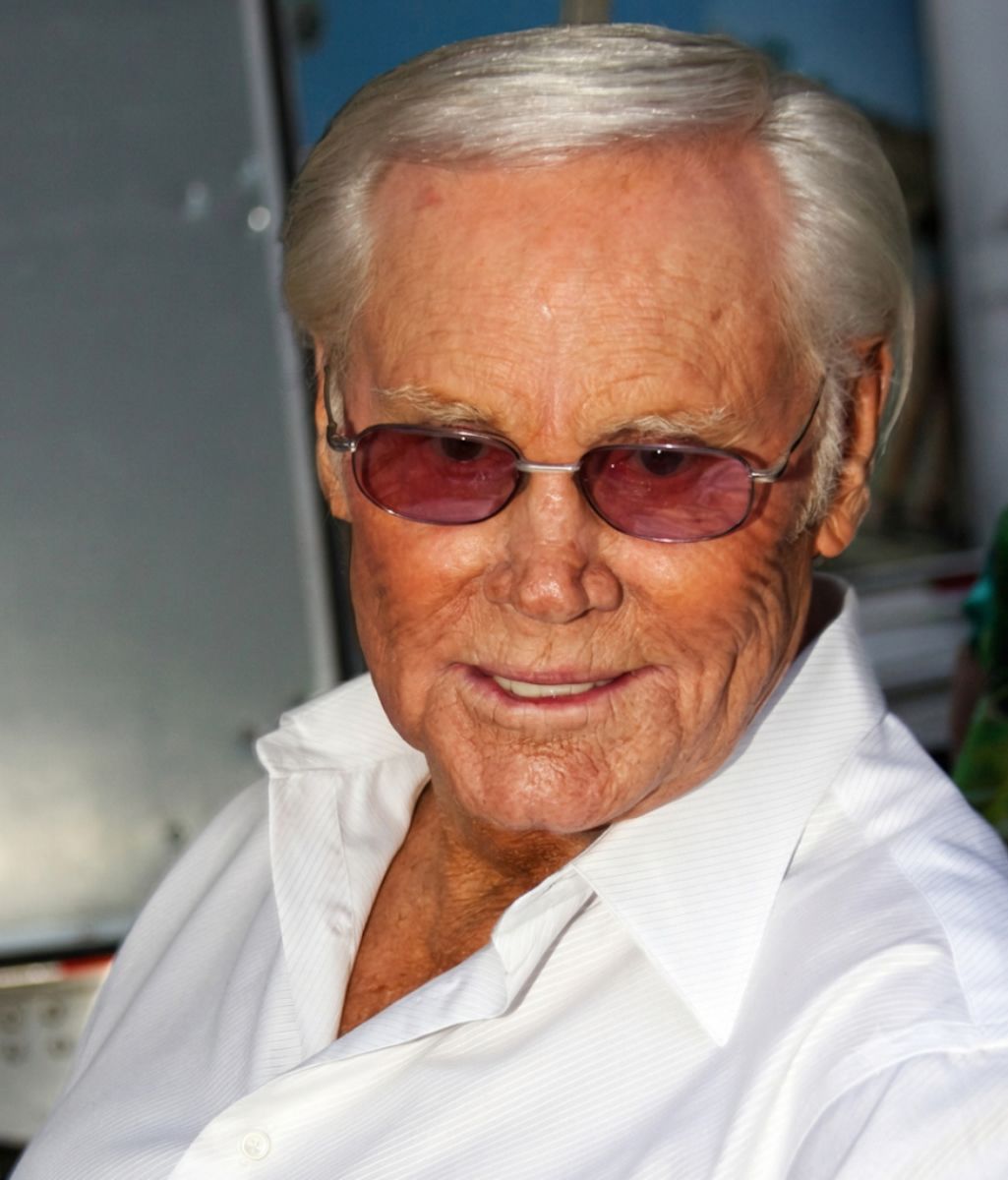
For generations of country music fans, George Jones possessed a voice that seemed capable of carrying more sorrow than almost anyone who had ever stood behind a microphone. He could stretch a single word until it sounded like regret, turn an ordinary melody into confession and make heartbreak feel almost physical. Songs such as “The Grand Tour,” “A Picture of Me Without You,” “Choices,” and “He Stopped Loving Her Today” helped establish him as one of the most respected singers in country music history. Yet the man behind that voice spent much of his life fighting battles that fame, money and admiration could not solve.
George’s rise had begun decades earlier in Texas, where he grew up in a working-class family and learned music through gospel, country radio and the influence of artists such as Hank Williams. By the 1950s, he was already developing the vocal style that would eventually make him unmistakable. “Why Baby Why” became his first major country hit, and in 1959, “White Lightning” gave him his first No. 1. More hits followed, and by the 1960s, George Jones was no longer simply a successful singer. He was becoming the kind of artist other country singers studied.
The success, however, hid problems that were growing more serious with time.
George struggled with alcohol for years, and later his problems expanded into drug addiction. The consequences affected nearly every part of his life. Concert appearances became unreliable, relationships became unstable and his behavior could change dramatically depending on his condition. Eventually, the man known for one of the most dependable voices in country music became equally famous for not appearing at all.
That reputation produced one of his most painful nicknames: “No Show Jones.”
George missed performances often enough that audiences sometimes arrived at venues unsure whether he would appear. For fans, it became part of the legend. For the people around him, it was far more serious. Promoters lost money, musicians were left waiting and family members watched a man they loved disappear deeper into addiction. The nickname could sound humorous when repeated years later, but the reality behind it was anything but funny.
His marriage to Tammy Wynette became one of the clearest examples of how deeply those struggles affected his private life.
George and Tammy married in 1969 and quickly became country music’s most famous couple. Their voices blended with extraordinary ease, producing duets such as “We’re Gonna Hold On,” “Golden Ring” and “Near You.” Onstage, they appeared almost perfectly matched. Behind the scenes, George’s drinking placed enormous pressure on the marriage. Tammy tried to help him stop, and there were periods when both believed the relationship could still be saved, but the instability continued.
They divorced in 1975.
Even after the marriage ended, the emotional connection never disappeared completely. George and Tammy continued recording together, and both later acknowledged that the love between them had been real even when the marriage itself had become impossible to sustain. Their story became one of country music’s most famous examples of the difference between loving someone and being able to live peacefully with them.
George’s decline became even more severe in the years that followed.
By the late 1970s and early 1980s, cocaine had entered his life, and people close to him described periods of paranoia, erratic behavior and physical deterioration. His finances suffered, his professional reputation weakened and his health became increasingly fragile. At times, it seemed possible that the man many considered country music’s greatest living singer might not survive long enough to rebuild anything.
Then came an unexpected turning point.
In 1980, George recorded “He Stopped Loving Her Today.” He initially disliked the song and reportedly believed its melody was too close to another well-known country tune. He also doubted that such a slow, tragic ballad could revive his career.
He was wrong.
The song became one of the defining recordings of country music, reached No. 1 and returned George Jones to the center of the industry. Its story of a man who continues loving a woman until death felt almost unnervingly appropriate for a singer whose own life had become surrounded by heartbreak, regret and loss. The recording revived his career at a moment when many people believed he had already destroyed it.
The comeback did not immediately solve his personal problems.
George continued struggling for years, but his life gradually began to stabilize after he met Nancy Sepulvado, whom he married in 1983. Nancy later became one of the most important figures in his recovery. She helped manage his career, confronted the chaos surrounding his addictions and remained beside him during years when staying could not have been easy.
George eventually credited Nancy with helping save his life.
A serious automobile accident in 1999 became another major turning point. After the crash, George finally achieved lasting sobriety. By then, he had spent decades moving between extraordinary professional achievement and personal destruction, but the final chapter of his life became much more stable than the years that had come before.
He continued performing, recording and receiving honors, including induction into the Country Music Hall of Fame. Younger artists increasingly treated him not merely as an old star but as a standard against which country singing itself could be measured.
That later respect makes the darker years of his story even more striking.
George Jones became one of the most revered voices in American music, yet admiration could not protect him from addiction, loneliness or the damage he sometimes caused the people closest to him. His greatest songs sounded convincing because he understood regret from the inside.
The tragedy of George Jones was never that fame disappeared. It was that fame stayed while the man behind it was sometimes falling apart. His voice remained magnificent even when his life did not, and that painful contradiction is part of why his music still feels so deeply human today.