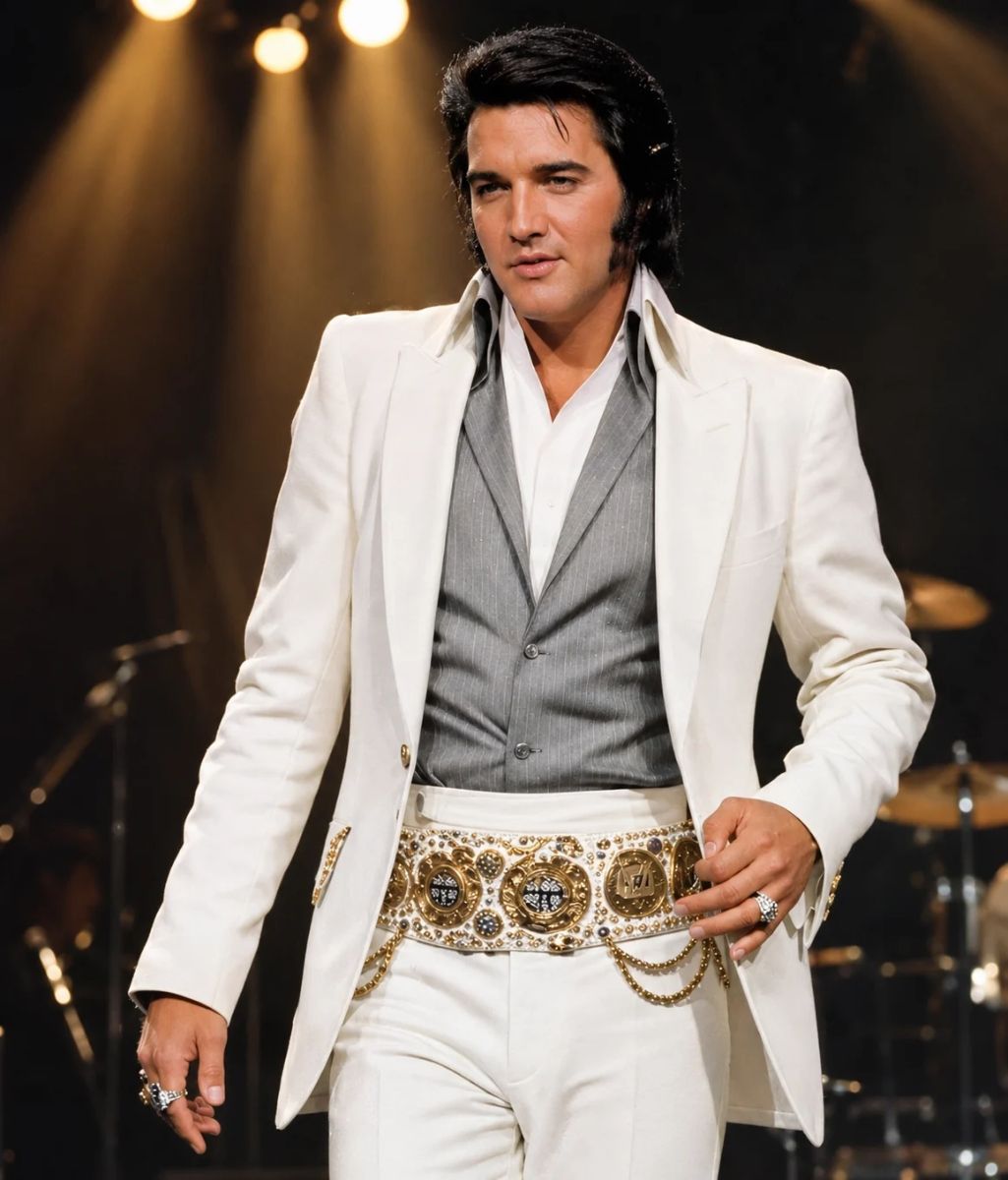
By 1972, Elvis Presley was no longer the carefree young man who had shaken American television with “Hound Dog” and “Jailhouse Rock.” His life had changed dramatically, and the emotional strain of his marriage to Priscilla Presley falling apart was beginning to shape the kind of music he wanted to record. When Elvis entered RCA’s Hollywood studios in March of that year, he was drawn toward sad, reflective songs such as “Separate Ways,” “For the Good Times” and “Always on My Mind.”
Then “Burning Love” was brought to him, and almost everyone around Elvis seemed to hear the potential immediately. Elvis himself was far less enthusiastic. According to his longtime friend Jerry Schilling, the popular story that Elvis hated the song is exaggerated. Schilling later explained that Elvis simply was not in the mood for it. At a time when his personal life was falling apart, the last thing he felt like recording was an energetic rock song filled with heat, desire and exaggerated romantic passion.
Producer Felton Jarvis, members of the band, Schilling and others continued encouraging Elvis to give the song a chance because they believed it had enormous commercial potential. Eventually, he agreed, and once the tape started rolling, the song began to take on a different life. Elvis recorded it in only a handful of takes and added a playful swagger that had not been present in the original demo. His delivery gave the track more personality, while the famous “hunka hunka” phrase became one of the most instantly recognizable moments in his later catalogue.
Released in 1972, “Burning Love” proved everyone around Elvis right. The song climbed all the way to No. 2 on the Billboard Hot 100, becoming his highest-charting American single since “Suspicious Minds” and his biggest mainstream pop hit in several years. More significantly, it became his final Top 10 hit on the Billboard Hot 100 during his lifetime, giving Elvis one last major rock success before the final years of his career.
The irony is that Elvis never completely embraced the song with the same enthusiasm audiences did. Schilling recalled that even after recording it, Elvis did not appear especially interested in listening to the track. When performing it live, he sometimes kept the lyrics nearby despite having an unusually strong memory. Only after the record became a major success did Schilling believe Elvis began warming to the song and recognizing how strongly audiences responded to it.
That detail makes the story more interesting than the familiar claim that Elvis simply hated one of his biggest hits. His reluctance had less to do with the quality of “Burning Love” than with what was happening inside his own life. The song arrived at exactly the wrong emotional moment for Elvis, when he was naturally drawn toward heartbreak rather than the fiery confidence the track demanded.
The people around him, however, heard something Elvis could not fully hear at first: the return of the rock-and-roll energy that had made him famous. The public heard it too, and the song soon became one of the defining recordings of his final decade. Elvis later performed “Burning Love” during his legendary Aloha from Hawaii concert, and even though he continued recording until shortly before his death in 1977, no later single would climb as high on the Billboard Hot 100.
“Burning Love” arrived at one of the most emotionally difficult moments in Elvis Presley’s private life, but after the people around him persuaded him to give the song a chance, it became one final reminder that the King could still turn a rock song into a major hit even when his heart was somewhere else entirely.