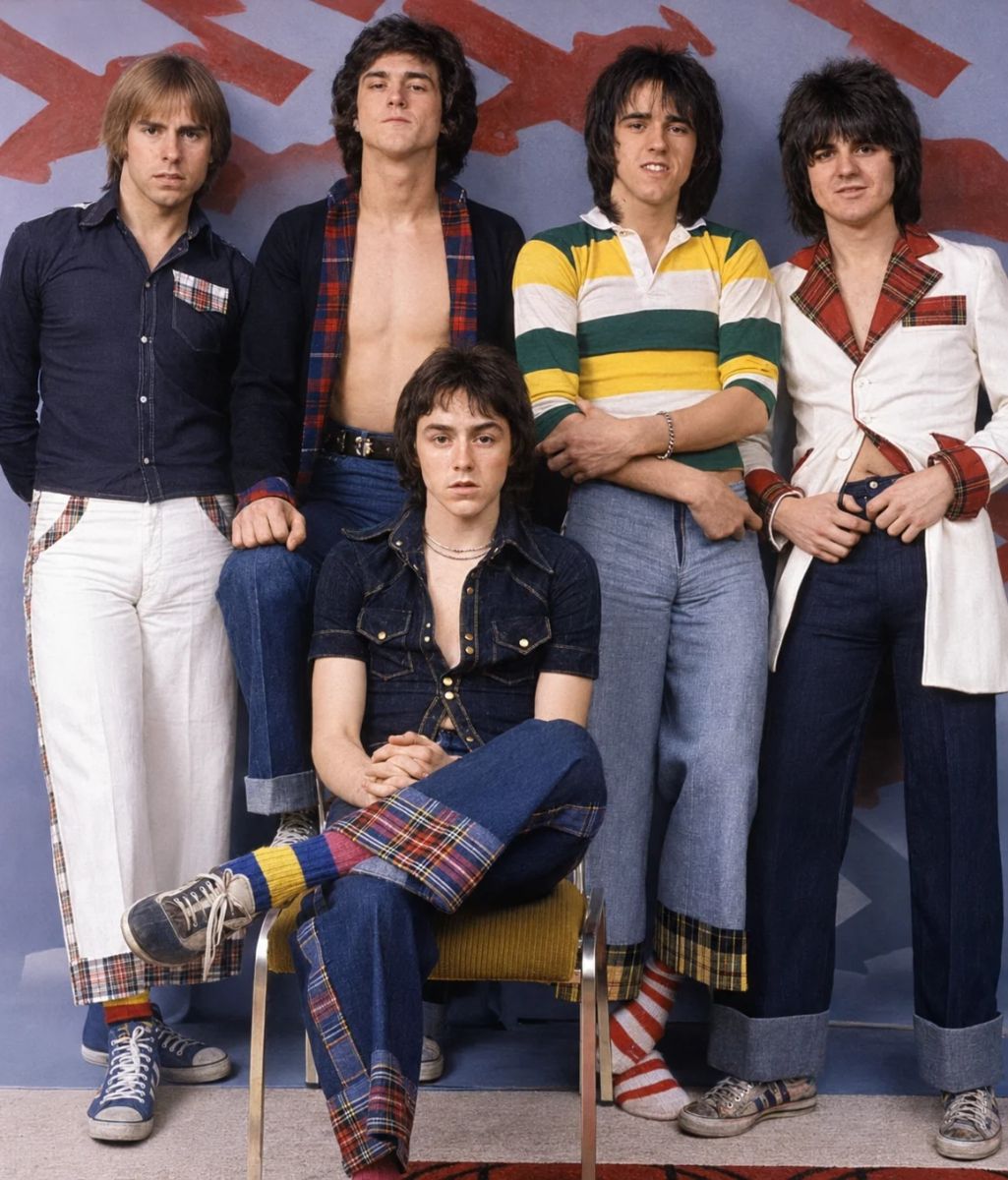
Long before “Saturday Night” became the song that made American teenagers spell out the weekend at the top of their lungs, it looked like a record that might simply disappear. The Bay City Rollers first released the song in Britain in 1973, when Gordon “Nobby” Clark was still singing lead. Written by Bill Martin and Phil Coulter, the track already contained the chant that would later become famous, but the original single failed to chart in the United Kingdom. At the time, there was little reason to believe it would eventually become one of the songs most closely associated with the band.
The situation changed after Clark left the group and Les McKeown became the new lead singer. With McKeown at the microphone, the Rollers recorded another version of “Saturday Night,” and the song appeared on their 1974 album Rollin’. Even then, Britain did not suddenly embrace it as a major hit. By that point, the band was already building enormous momentum at home with songs such as “Shang-a-Lang,” “Bye Bye Baby” and “Give a Little Love,” while “Saturday Night” remained strangely absent from the British success story.
Everything changed when the Bay City Rollers turned their attention to North America. As Arista Records prepared to introduce the group to American audiences, “Saturday Night” was chosen as one of the songs that could define their arrival. Released in the United States in 1975, the record quickly found a completely different audience, and its opening chant — “S-A-T-U-R-D-A-Y Night!” — became impossible to ignore. American radio stations picked it up, teenagers responded immediately, and the song began climbing the charts in a way it never had in Britain.
By January 3, 1976, “Saturday Night” had reached No. 1 on the Billboard Hot 100, becoming the Bay City Rollers’ first and only chart-topper in the United States. It also reached No. 1 in Canada, turning a song that had originally failed to chart in the band’s own country into the record that introduced millions of North American listeners to Rollermania.
The success helped transform the Bay City Rollers from a huge British teen phenomenon into an international pop sensation. The tartan clothes, magazine covers and screaming crowds that had already defined the group at home now crossed the Atlantic, and “Saturday Night” became the soundtrack to their American breakthrough. What had once looked like a forgotten early single suddenly became one of the most recognizable songs in their catalogue.
Its influence eventually reached beyond Rollers fans as well. Members of The Ramones later acknowledged that the chant in “Saturday Night” helped inspire the famous “Hey! Ho! Let’s Go!” opening of “Blitzkrieg Bop,” while Rolling Stone would eventually recognize the Rollers track as one of the defining boy-band songs of its era. The simple chant that had failed to make an impact in Britain had unexpectedly left a much larger mark on pop and rock culture.
The history of the song also became more complicated over time because Nobby Clark later disputed which vocal recording ultimately became the successful version and argued that he was owed royalties connected to the track. The generally accepted history credits the hit North American version to Les McKeown, but the disagreement became another chapter in the complicated story surrounding the Bay City Rollers’ early recordings and the business arrangements behind their rise.
Whatever happened behind the scenes, the transformation of “Saturday Night” remains remarkable. It began as a British single that went nowhere, returned with a different lead singer and then found a second life thousands of miles away, where it became the song that finally gave the Bay City Rollers the American breakthrough they had been chasing.
“Saturday Night” was not an instant classic. It first had to survive failure, a lineup change and an entirely different market before becoming the chant that millions of fans would remember for the rest of their lives.