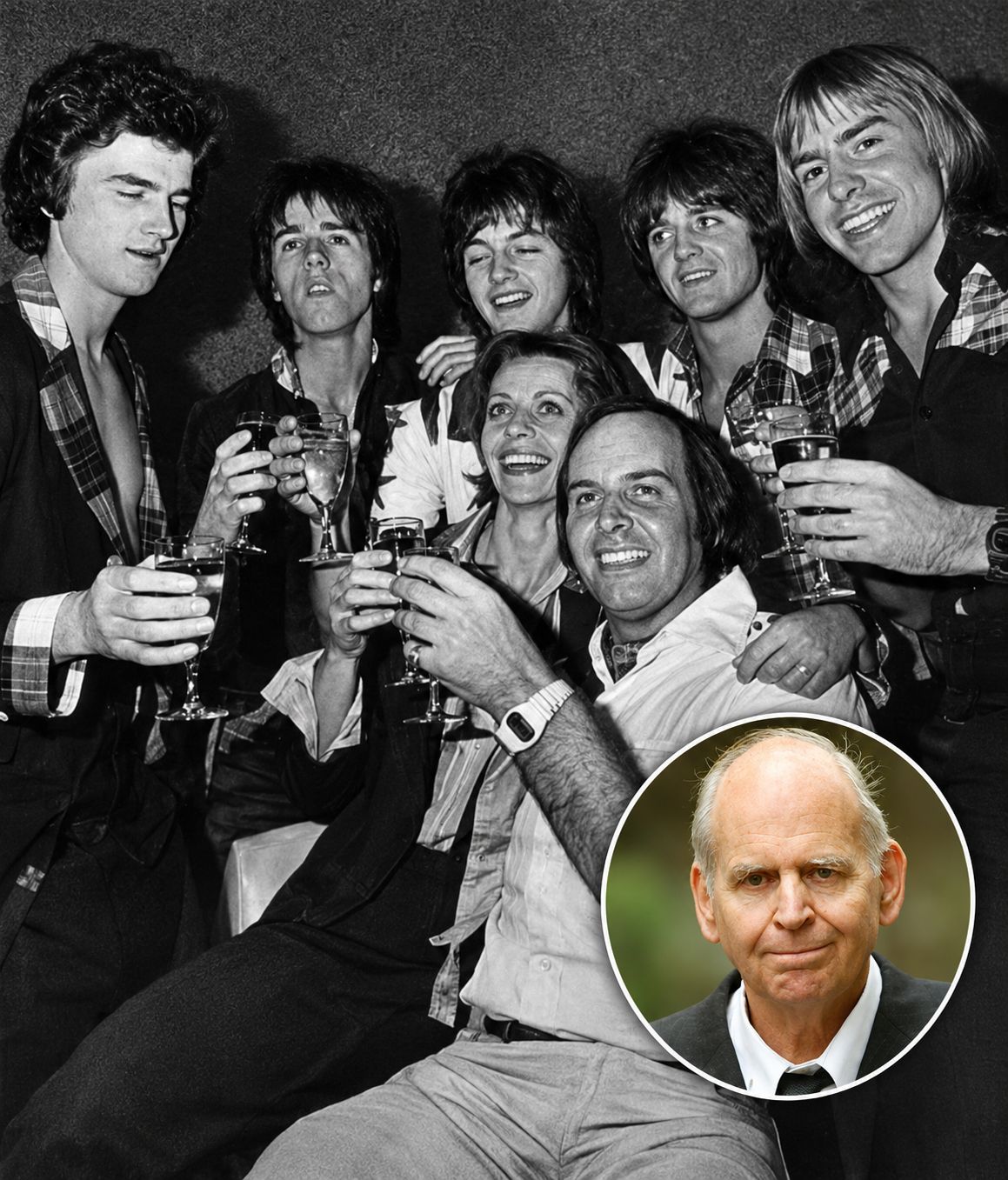
At the height of the 1970s, The Bay City Rollers seemed to be living every teenager’s fantasy.
There were screaming crowds, tartan scarves, television appearances and hit records everywhere. Songs such as “Shang-a-Lang,” “Bye Bye Baby,” “Saturday Night” and “Give a Little Love” turned a group of young Scottish musicians into international stars, while Rollermania became so intense that the band’s fans were compared to the audiences that had once chased The Beatles.
From the outside, it looked like a dream.
Behind the scenes, the reality was far more troubling.
Much of the band’s rise was controlled by manager Tam Paton, who helped shape the Rollers’ public image but also held enormous influence over their careers and personal lives. Former members later described an environment in which young musicians could feel that their futures depended on pleasing the people who controlled access to records, radio and publicity. ITV’s 2023 documentary Secrets of the Bay City Rollers examined that darker side of the story through testimony from former members and other survivors.
The most disturbing accounts involved allegations of sexual exploitation and abuse.
Former guitarist Pat McGlynn publicly accused Paton of abusing him, while original singer Nobby Clark recalled being told that better radio promotion could depend on sexual favors involving powerful people in the music business. Other survivors described experiences around Paton’s circle that went far beyond the ordinary pressures of a pop career.
Paton’s later criminal history gave those stories an even darker context.
In 1982, he was jailed after admitting sexual offences involving teenage boys. Decades later, testimony presented to the Scottish Child Abuse Inquiry alleged that Paton had also been connected to a broader network of exploitation involving vulnerable young people. Those more recent claims remain allegations given in evidence to an inquiry, but Paton’s earlier conviction is part of the established public record.
For the Rollers themselves, fame also came with another problem: control.
The band’s image was carefully managed, and former members later spoke about feeling that they had little say over major decisions surrounding their careers. The same young men who appeared to have everything could find themselves surrounded by managers, executives and industry figures who held far more power than they did.
Then there was the money.
Despite selling millions of records and becoming one of the biggest pop acts of the decade, former members later spent years involved in disputes over royalties and earnings. The contrast was painful: the public saw young stars at the center of a worldwide phenomenon, while some of the men inside the band would later describe feeling exploited by the machinery that had made them famous.
That history changes the way the old photographs look.
The smiles were real.
The excitement from fans was real.
The songs still carry genuine memories for people who grew up during Rollermania.
But the story behind those songs was not nearly as carefree as the magazine covers suggested.
The Bay City Rollers were sold to the world as symbols of youthful happiness at a time when very few fans understood how vulnerable young performers could be inside the music industry. Years later, former members and survivors finally began describing experiences that had remained hidden behind the tartan, television lights and endless cheering.
The Bay City Rollers looked like young men living the greatest dream imaginable, but fame had placed them inside a world where other people controlled far more than the audience ever knew. Once those stories finally came into the open, Rollermania became impossible to remember in quite the same way again.