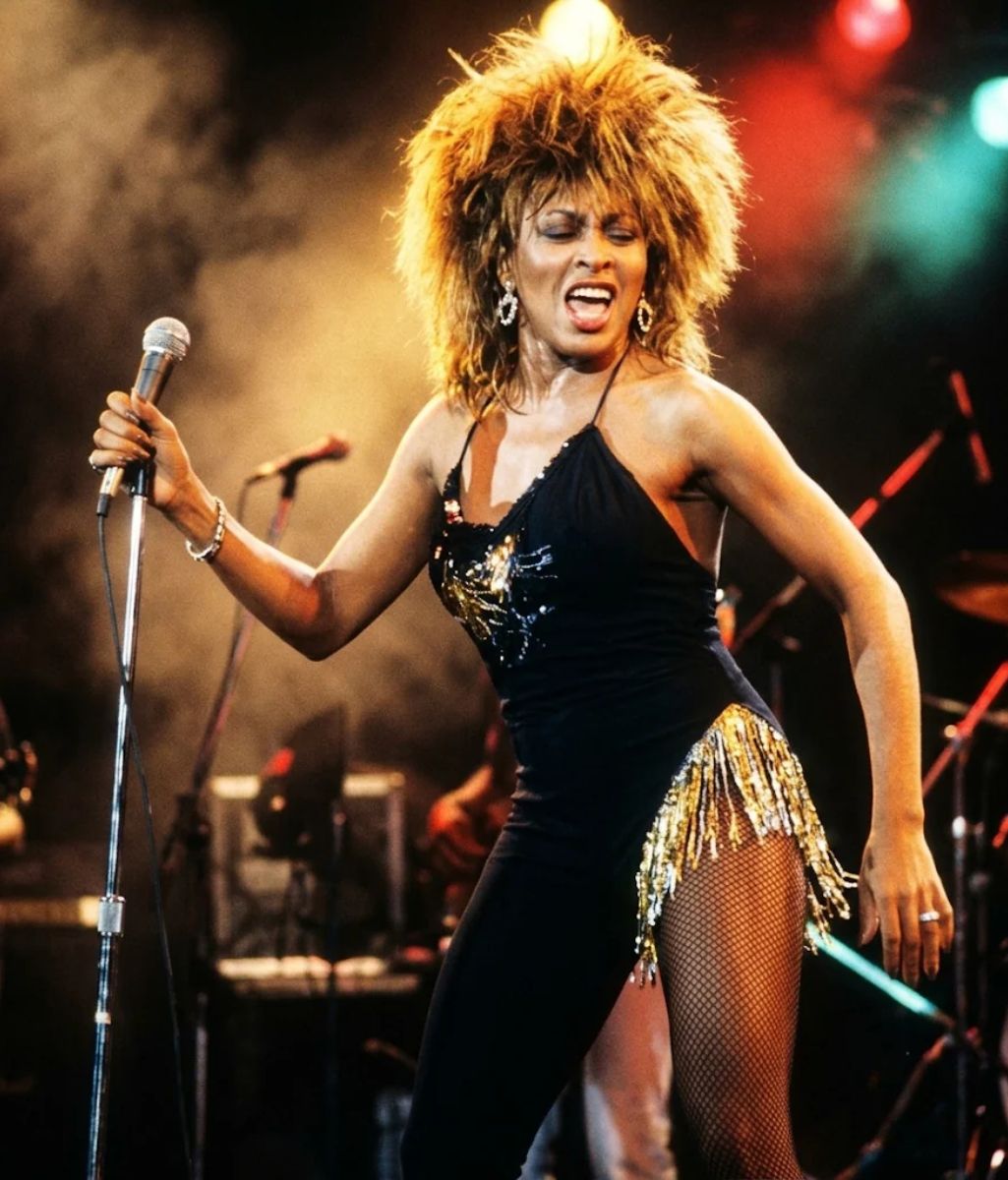
By 1986, Tina Turner no longer needed to prove that her comeback was real.
Two years earlier, Private Dancer had transformed her into one of the biggest stars in the world. “What’s Love Got to Do With It” had reached No. 1, the Grammys had followed, and audiences who once thought Tina belonged to an earlier era were suddenly watching her dominate the 1980s.
Then came a song that showed a very different side of her.
It was “Typical Male.”
Written by Terry Britten and Graham Lyle, the same songwriting team behind “What’s Love Got to Do With It,” the song was released as the lead single from Tina’s 1986 album Break Every Rule. Instead of the emotional caution of her earlier No. 1, “Typical Male” was playful, teasing and deliberately mischievous.
The lyrics turned romance into a kind of courtroom battle.
Tina sings to a man who approaches everything with logic, rules and arguments, while she tries to break through that carefully controlled exterior. The song plays with the idea of a woman challenging a man who thinks he understands exactly how relationships work, only to discover that emotion refuses to follow his rules.
Tina clearly understood the joke.
Her performance gave the song its personality. Rather than sounding vulnerable or uncertain, she delivered the lyrics with confidence, humor and just enough provocation to make every line feel like part of a game.
The music video pushed that idea even further.
Tina appeared opposite a suited man in a series of exaggerated confrontations involving giant objects, playful physical comedy and deliberately absurd imagery. At one point, she even wrestled with him, turning what could have been an ordinary love song into something closer to a battle of wills.
It was exactly the kind of performance that reminded audiences how fearless Tina could be.
The song also proved that Private Dancer had not been a one-time comeback.
“Typical Male” climbed all the way to No. 2 on the Billboard Hot 100, becoming another major American hit and one of the strongest singles of Tina’s solo career. The Rock & Roll Hall of Fame later described the track as both cheeky and catchy, a fitting summary of a record that allowed Tina to combine humor with the commanding presence audiences already loved.
What makes “Typical Male” especially memorable is how different it feels from the darker chapters usually associated with Tina Turner’s story.
Many of her most famous songs became connected to survival, independence and emotional pain. “Typical Male,” by contrast, gave her room to have fun.
She could flirt with the lyrics, exaggerate the drama and play with the audience rather than carrying the full emotional weight of her past.
That freedom mattered.
By the middle of the 1980s, Tina was no longer simply being celebrated as a woman who had escaped a difficult life. She had become a fully independent superstar capable of being serious one moment and completely playful the next.
“Typical Male” captured that lighter, wilder side perfectly. It was Tina Turner having fun with her own power — teasing, challenging and refusing to let anyone else decide how the Queen of Rock ’n’ Roll was supposed to behave.