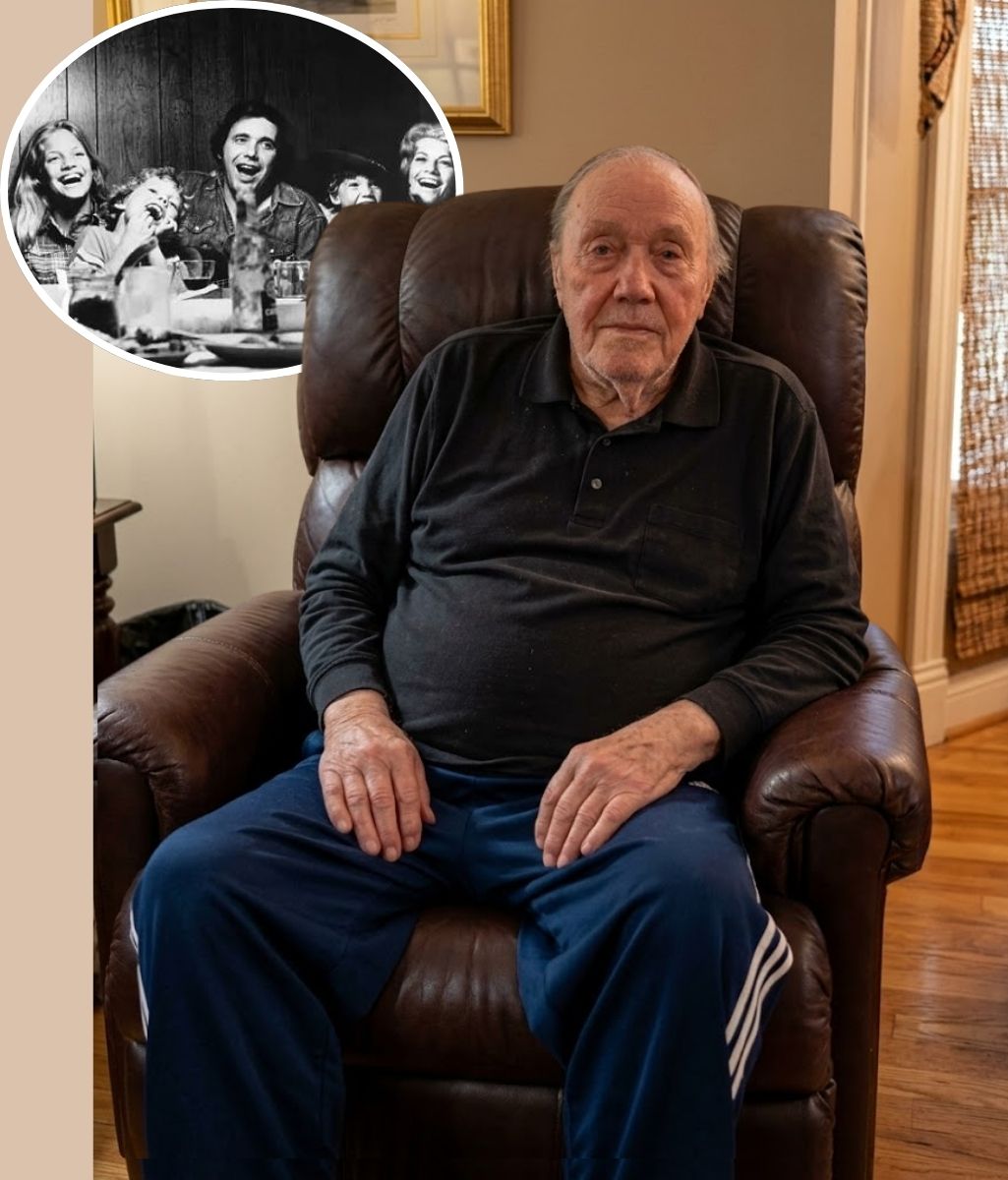
During the 1970s, Bobby Bare was enjoying one of the most fascinating periods of his career. He was recording ambitious albums, working with unconventional writers such as Shel Silverstein, pushing for greater creative freedom, and eventually reaching No. 1 with “Marie Laveau.” To audiences, Bare seemed completely at home in the unpredictable world of country music. Yet behind that public success was another story unfolding far from the stage: a marriage, children, and a household learning how to live with a father whose career could take him almost anywhere.
Bare had married Jeannie Sterling in 1964, just as his career was gathering enormous momentum. Jeannie already had a daughter, Cari Jean, from an earlier marriage, and Bobby adopted her after they married. The decision rarely appears among the famous milestones of his career, but it offers an early glimpse of a side of Bare that audiences did not encounter through chart positions or concert appearances.
Their family grew, and by the 1970s Bobby was balancing two very different worlds. One revolved around recording studios, touring, songwriters, musicians, and the constant demands of maintaining a successful career. The other existed at home, where being Bobby Bare the country star mattered considerably less than being a husband and father.
The contrast was especially striking because Bare’s career was becoming increasingly adventurous. After returning to RCA, he secured greater creative control over his recordings, an unusual degree of freedom in a Nashville system where labels and producers often determined much of an artist’s sound. That independence led Bare toward one of the most important creative relationships of his life.
Shel Silverstein became much more than another songwriter supplying Bare with material. His unusual imagination gave Bobby songs filled with humor, troubled characters, strange situations, and surprisingly tender observations about ordinary life. Their collaboration produced Bobby Bare Sings Lullabys, Legends and Lies, an album that became one of Bare’s defining projects of the decade.
Interestingly, the family world sometimes found its way into the music itself. The album did not feel like a distant Nashville production designed only for radio. Its storytelling atmosphere could be playful and intimate, reinforcing the impression that Bare was interested in music that sounded lived-in rather than carefully manufactured.
That quality mattered because Bobby Bare’s public persona was never built around pretending to be larger than life. Unlike some country stars who cultivated a carefully controlled image, Bare often seemed most comfortable simply telling stories. The same understated quality that defined his singing also appears to have shaped the way he approached his family, where he did not attempt to turn his children into extensions of his own celebrity.
That became particularly clear with Bobby Bare Jr. Growing up with a famous father could easily have created expectations that the younger Bare would follow the same musical formula. Instead, Bobby Jr. eventually developed a distinctly different musical identity, moving toward alternative country and rock rather than becoming a copy of his father.
One story from their relationship captures Bobby’s approach particularly well. When his son later sought guidance about navigating a music career, Bare essentially told him that he could not simply provide a formula for success. The industry Bobby Jr. was entering was different from the one his father had known, and the younger musician would have to discover his own way through it.
That attitude reveals something easily missed when looking only at Bare’s achievements. He had spent his own career fighting for the freedom to make decisions for himself, and he was willing to allow his children a similar independence. The man who resisted Nashville’s attempts to define him was not interested in completely defining the next generation either.
Of course, life inside the home of a touring country star was unlikely to be as simple as the public image suggested. Success required time away, constant professional obligations, and a schedule shaped by recording sessions and performances. Yet Bobby and Jeannie’s marriage endured through those demanding years, eventually lasting far beyond the decade in which Bare enjoyed some of his greatest creative success.
In 1974, “Marie Laveau” reached No. 1 on Billboard’s country chart, giving Bare the only solo chart-topper of his career. To fans, it was another major milestone in an extraordinary decade. At home, however, the trophy and chart position were only one part of a much longer story involving children growing up, a marriage continuing, and ordinary family life unfolding behind a famous name.
That may be the real secret behind Bobby Bare’s family story: there does not need to be a hidden scandal to make it compelling. The unexpected part is the contrast between the restless characters Bare sang about and the family life he continued building away from those songs.
His records were filled with people leaving home, losing their way, making mistakes, and trying to find somewhere they belonged. Yet behind the microphone was a man whose marriage to Jeannie would survive decades of changes in Nashville and whose children were allowed to develop identities beyond simply being Bobby Bare’s family.
Looking back at the 1970s, it is easy to focus on Shel Silverstein, “Marie Laveau,” creative freedom, and the remarkable music Bare produced. But another story was unfolding simultaneously, largely beyond the audience’s view.
While Nashville watched Bobby Bare become one of country music’s most independent storytellers, his family knew a different Bobby — the husband and father who returned home after the stage lights went dark.