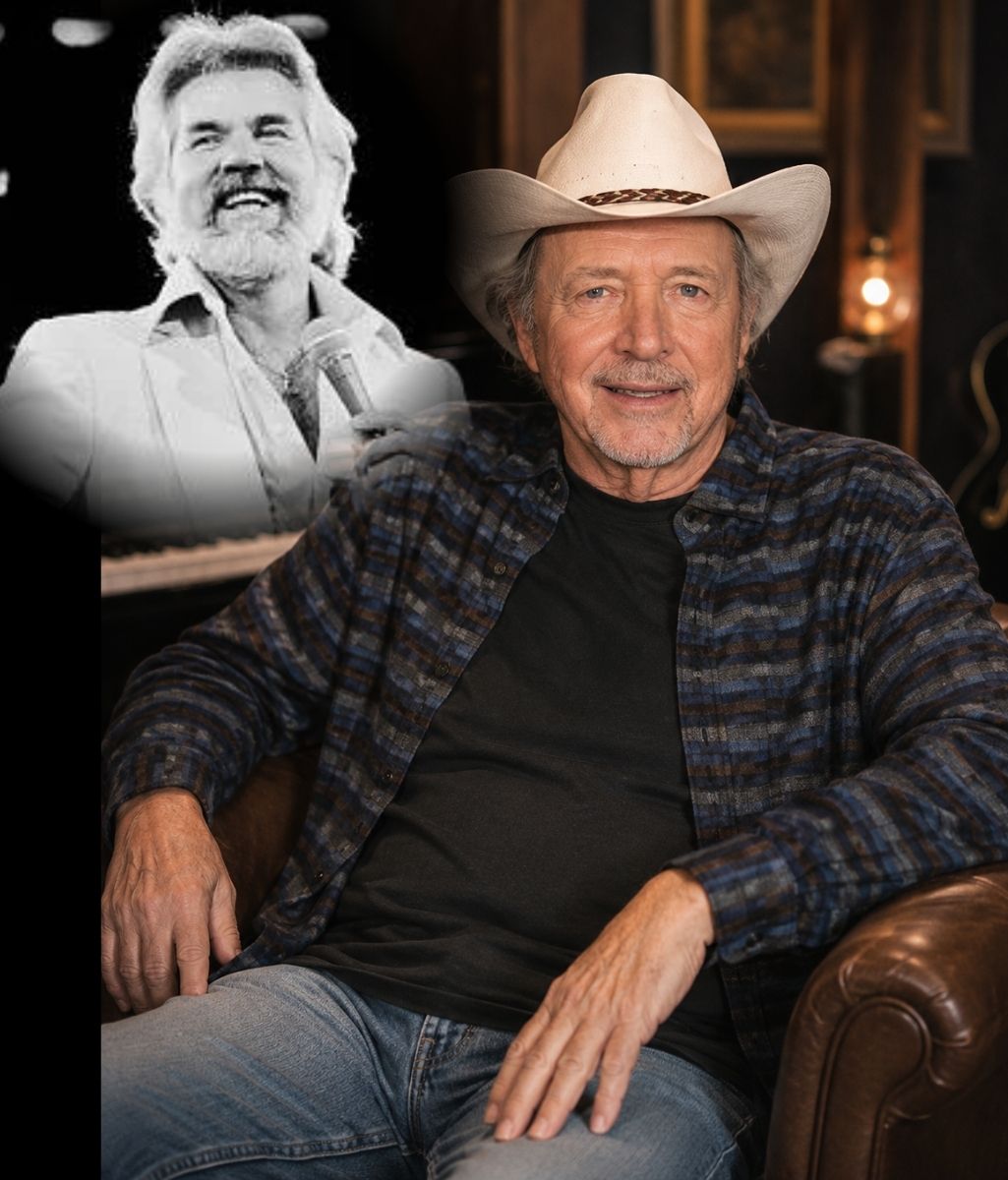
When Kenny Rogers died on March 20, 2020, at the age of 81, country music lost a voice that had crossed generations and genres. Tributes came from artists around the world, but one of the most personal came from Bobby Bare, a fellow Country Music Hall of Fame member who had known Rogers not merely as a superstar, but as a friend.
Bare’s message was simple, but the emotion behind it was unmistakable. Reflecting on the day the two men entered the Country Music Hall of Fame together in 2013, Bare recalled how strange it seemed that Rogers had not already been there. In Bare’s words, being inducted alongside him was a tremendous honor. He praised Kenny’s instinct for great songs, remembered his instantly recognizable voice, and ended with the words that mattered most: “I will miss my friend.”
Those few words revealed something that awards and chart statistics could never fully explain.
By 2013, both men had already lived extraordinary musical lives. Bobby Bare and Kenny Rogers were inducted into the Country Music Hall of Fame in the same class, alongside the late producer and songwriter “Cowboy” Jack Clement. The ceremony placed two very different artists beside each other at one of country music’s highest moments of recognition. Bare had built his reputation on conversational storytelling, folk-country influences and songs such as “Detroit City” and “500 Miles Away from Home.” Rogers had developed a sound that moved naturally between country and pop, carrying songs such as “The Gambler” to an enormous audience.
Yet when Bare looked back after Kenny’s death, he did not begin with sales figures or trophies.
He remembered the man.
Bare’s remark that he had assumed Rogers was already in the Hall of Fame was, in its own understated way, a tremendous compliment. Kenny had been so visible and influential for so long that his place among country music’s permanent legends apparently seemed obvious to Bare. When the two finally received that honor together, the moment became part of their shared history. Kenny himself later posted a photograph of the two men after their 2013 induction, another small reminder that their names had become linked on one especially meaningful night.
Bare also focused on one of Kenny Rogers’ greatest abilities: his instinct for songs. Rogers did not simply possess a distinctive voice. He knew how to recognize material that could become a story listeners would carry with them. Bare, himself famous for finding exceptional songs and songwriters, would have understood the importance of that gift better than most.
Then there was the voice.
Bare described Kenny as having a “magic voice” that listeners could recognize immediately. That observation gets close to the reason Rogers remained so enduring. Whether a song was reflective, dramatic or gently conversational, audiences rarely needed more than a few words to know who was singing. His voice carried warmth and experience, qualities that allowed listeners to feel as though the story was being told directly to them.
That quality connected the two men in an interesting way. Bare and Rogers sounded very different, but both built careers around the belief that the story inside a song mattered. Neither needed vocal acrobatics to hold an audience. Their strength came from making lyrics believable.
Perhaps that is why Bare’s farewell felt so appropriate.
There was no grand speech. No attempt to summarize Kenny Rogers’ entire career. Bare simply remembered a respected artist, an unforgettable voice and someone whose friendship mattered to him personally.
For longtime country fans, those words also bring the 2013 Hall of Fame moment into sharper focus. What once appeared to be simply a photograph of two legends receiving a deserved honor now carries another meaning. Seven years later, one of those men would be gone, and the other would look back on that shared evening with gratitude.
Country music history often remembers artists through No. 1 records, awards, sold-out concerts and famous songs. But musicians themselves sometimes remember something much quieter: long conversations, shared stages, mutual respect and the privilege of standing beside someone they admired.
That was the heart of Bobby Bare’s tribute.
He had watched Kenny Rogers become one of the most familiar voices in American music. He had stood beside him as they entered the Hall of Fame. And when Kenny was gone, all those accomplishments seemed to come down to one very human loss.
Bobby Bare wasn’t simply saying goodbye to Kenny Rogers the legend. He was saying goodbye to Kenny Rogers, his friend.