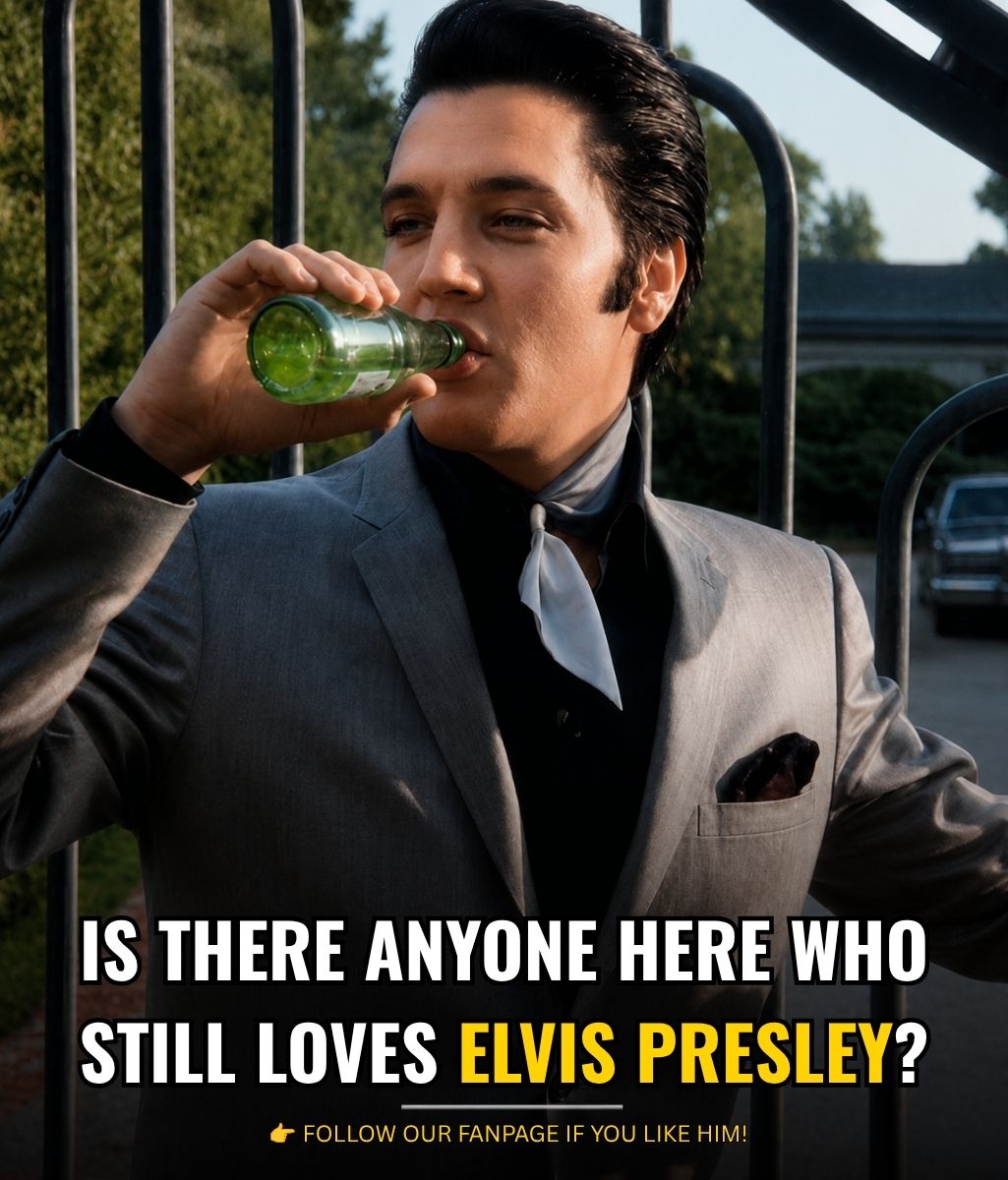
On August 15, 1977, Elvis Presley was not preparing to say goodbye.
He was preparing to go back on the road.
His next tour was scheduled to begin in Portland, Maine, on August 17, and everything at Graceland was moving toward another departure. Elvis had spent several weeks in Memphis after his final concert in Indianapolis on June 26, resting and preparing for the next leg of his 1977 touring schedule.
Nothing about the calendar suggested that the end was only hours away.
On the evening of August 15, Elvis followed the unusual nighttime routine that had become normal for him. He spent time at Graceland, visited his dentist late that night and returned home shortly after midnight with his fiancée, Ginger Alden. Fans were still gathered outside the gates, and one of the final known photographs of Elvis was taken as he returned to the estate.
Back inside, the night continued.
According to Graceland’s official history, Elvis spent the early morning handling last-minute tour details while also relaxing with family and members of his staff. He knew that later that evening he was supposed to board a plane for Maine and begin another series of concerts.
Yet his final hours also revealed how unusual his daily life had become.
During the early morning, Elvis went to the racquetball building with Ginger, his cousin Billy Smith and Billy’s wife Jo. They played for a while before eventually gathering near the piano.
There, only hours before his death, Elvis sat down and sang.
Accounts associated with Graceland say he performed “Unchained Melody” and “Blue Eyes Crying in the Rain.” There was no audience of thousands and no television cameras. It was simply Elvis at a piano inside his own home, singing for a handful of people close to him.
The moment feels especially haunting in hindsight.
Only weeks earlier, Elvis had performed “Unchained Melody” during what became some of his final filmed concert appearances. His physical condition had clearly changed from the young performer who had once shocked America with his energy, yet the voice could still carry enormous emotion.
By around 7 a.m., Elvis returned to his private suite to rest before the evening flight.
The tour luggage would soon need to move.
The musicians and crew were expecting another show.
Fans in Maine were expecting Elvis Presley.
But he would never leave Graceland.
Later that day, Elvis was found unresponsive inside the mansion. Emergency responders rushed him to Baptist Memorial Hospital in Memphis, where attempts to revive him failed. He was pronounced dead on August 16, 1977, at only 42 years old.
The announcement stunned the world.
What makes those final hours especially heartbreaking is how ordinary some of them were. There was a dentist appointment, conversation with family, a game of racquetball, music at the piano and preparation for another tour.
Elvis apparently expected there to be another airport.
Another city.
Another stage.
Another crowd waiting for the opening notes.
Instead, the June 26 concert in Indianapolis had already become his final live performance, although almost nobody watching that night knew it.
That is the painful contradiction at the center of Elvis Presley’s final day.
His professional life was still moving forward on paper, while his body had been showing signs for years that the pace was becoming increasingly difficult to sustain. The machinery surrounding Elvis Presley was preparing for another tour because touring was what Elvis Presley had always done.
But August 16 changed everything.
Only hours before he was supposed to begin another journey, Elvis was still talking about the road ahead. By nightfall, the tour had disappeared, Graceland had become a place of mourning, and the world was trying to understand how the King of Rock ’n’ Roll could be gone at only 42.