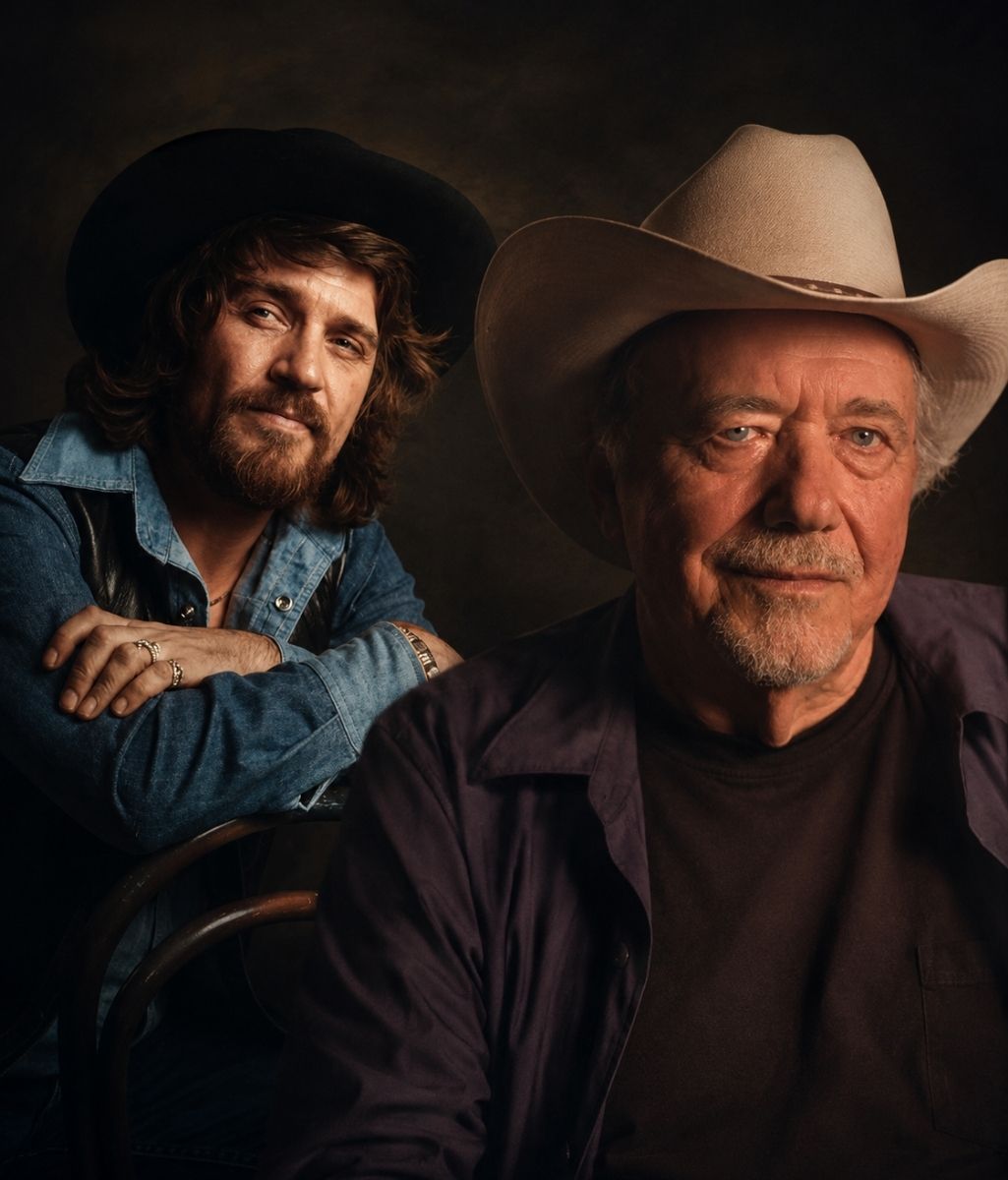
In 1964, Bobby Bare walked into J.D.’s in Phoenix and heard a singer who was still far removed from national country stardom. His name was Waylon Jennings, and although Bare could not have known everything that would follow, he recognized enough to pay attention. This wasn’t simply another performer he enjoyed hearing for an evening. Bare believed he had encountered someone Nashville needed to know about.
At the time, Waylon was nowhere near the image later generations would immediately recognize. The beard, the Outlaw Country reputation, the battles for creative freedom, and the legendary recordings were still ahead of him. He was working in Phoenix, building his sound and reputation without the national stature he would eventually command.
That distance between the Waylon of 1964 and the Waylon remembered today is what makes Bare’s reaction so remarkable. Bare himself was already enjoying an important period in his career after “Detroit City” and “500 Miles Away from Home.” He understood what it took for a distinctive voice to break through, and when he heard Waylon perform, he apparently believed the singer possessed something that should not remain confined to the local scene.
Bare did more than remember the name.
He decided to tell someone who could actually change Waylon’s future.
That person was Chet Atkins, the enormously influential RCA producer and Nashville figure who had also worked with Bare. According to accounts of the story, Bare contacted Atkins and urged him to pay attention to Jennings. Bare’s enthusiasm was hardly cautious: he reportedly described Waylon in terms comparing the excitement of discovering him to Elvis Presley, making it clear that this was not an ordinary recommendation.
The importance of that phone call becomes clearer when considering what Bare was actually doing. Nashville was competitive. Artists needed good songs, record-label support, radio attention, studio time, and audiences. Bare was recommending another talented male singer to people within his own professional world — someone who could eventually compete for many of the same opportunities.
Bare understood the irony himself. In later recollections, he joked about effectively “cutting my own throat” by helping bring such a talented performer into the picture. Beneath the humor was something revealing about his character: when Bare believed someone was genuinely good, his instinct was not necessarily to keep the discovery to himself.
Waylon ultimately made his way to RCA, beginning an important but sometimes frustrating chapter of his career. Nashville gave him greater exposure, but the tightly controlled recording system did not always fit the way Jennings wanted to make music. Producers and labels wielded considerable influence, and Waylon increasingly wanted authority over his own sound.
Years later, that struggle would become central to his legend.
Jennings eventually emerged as one of the defining figures of Outlaw Country, alongside Willie Nelson and others who challenged Nashville’s established system. The singer Bare had encountered in Phoenix became a symbol of artistic independence, helping prove that country performers could succeed while demanding greater control over their records.
And this is where the Bobby Bare story becomes even more interesting.
Long before Waylon’s rebellion became famous, Bare himself had been pushing toward greater creative freedom. When he returned to RCA in the early 1970s, he negotiated greater control over his recordings, including the opportunity to produce his own work. Bare’s approach did not carry the same dramatic public image later associated with the Outlaws, but the principle underneath it was remarkably similar: artists should have more authority over the music carrying their names.
That freedom helped Bare create some of his most distinctive work. His relationship with Shel Silverstein allowed him to embrace unusual characters, humor, darker stories, and material that did not always fit Nashville’s safest formulas. Their collaboration contributed to Bobby Bare Sings Lullabys, Legends and Lies and eventually to “Marie Laveau,” Bare’s only solo No. 1 country hit.
Seen in that larger context, the Phoenix story becomes more than an interesting Waylon Jennings anecdote. It reveals something fundamental about Bobby Bare. He had an instinct for independence, but he also had an instinct for recognizing it in other people.
Bare could have heard Waylon, enjoyed the performance, and gone home. Nothing required him to make the call. There was no guarantee Waylon would remember the gesture or that Bare would receive anything in return. Yet he used his own position in the industry to draw attention to someone who had not yet been given the same opportunity.
History would eventually create an interesting imbalance between the two men’s public images. Waylon became instantly associated with rebellion: the beard, the uncompromising attitude, the Outlaw records, and the famous struggle against Nashville control. Bobby Bare never cultivated that image as aggressively. He could challenge the system while still appearing like a polished Nashville professional, which made his independence easier for popular history to overlook.
Yet before Waylon became one of the men most closely associated with breaking Nashville’s rules, Bobby Bare had already recognized that something unusual was standing on a Phoenix stage.
Bare did not create Waylon Jennings. Waylon’s talent, determination, musical choices, and later battles belonged to Waylon himself. But careers are often shaped by moments when someone with influence notices a person before everyone else does, and Bare was one of those people at a crucial point in Waylon’s journey.
Decades later, the story says almost as much about Bobby Bare as it does about the legend Waylon became. Bare was willing to recognize talent even when helping it might create competition for himself, and the young singer he championed eventually became part of a movement built around the very artistic freedom Bare also valued.
Long before Waylon Jennings became one of the faces of Outlaw Country, Bobby Bare had already heard the future in his voice.