.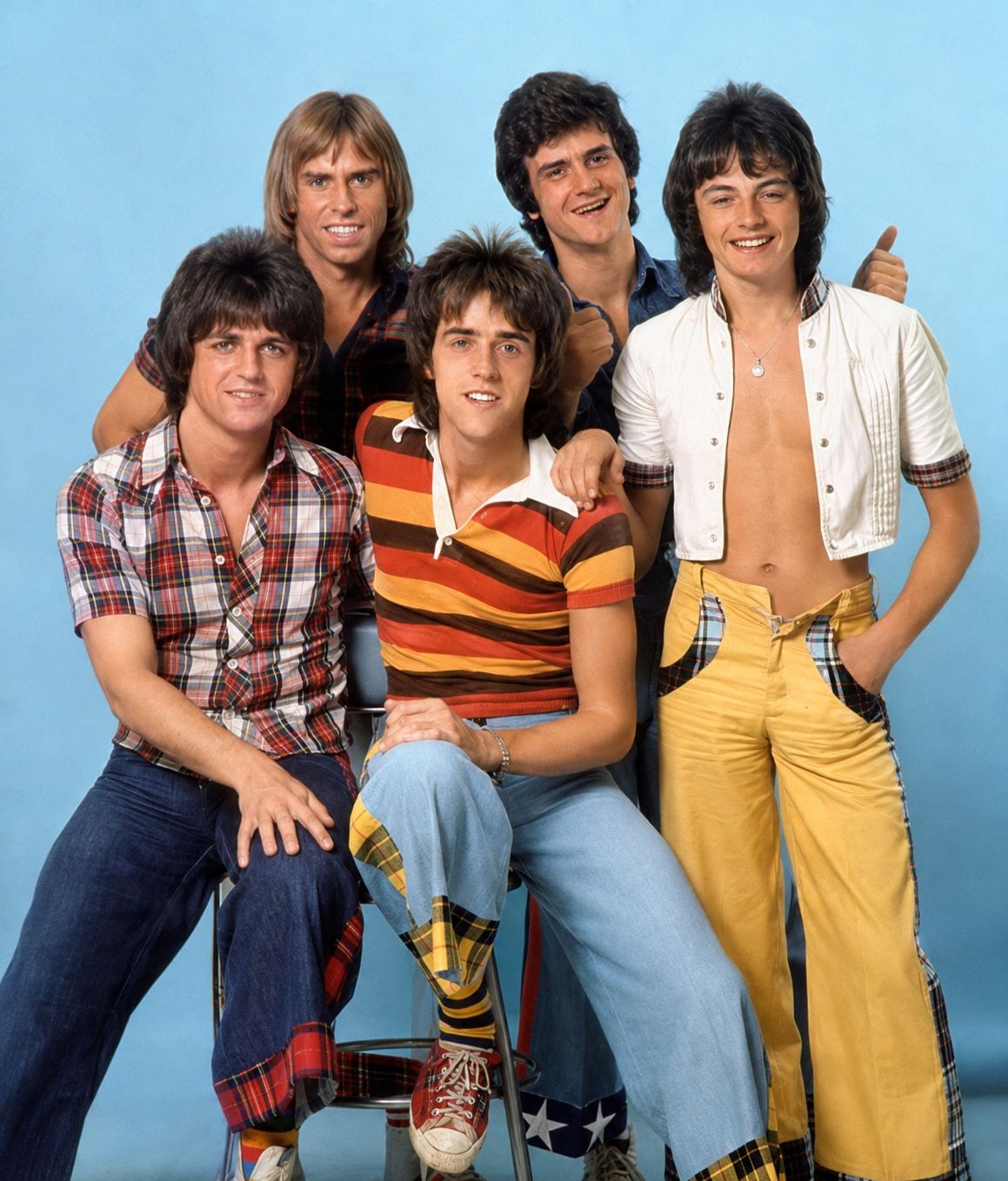
By 1975, The Bay City Rollers were already one of Britain’s biggest pop sensations. Teenagers wore tartan scarves, magazines filled their pages with photographs of the band, and songs such as “Bye Bye Baby” and “Give a Little Love” had already taken them to the top of the UK charts. In Britain, Rollermania was in full force, and the group had become much more than another successful pop act. For thousands of young fans, they represented fashion, excitement, identity and the kind of youthful obsession that could turn an ordinary television appearance into an event. What the Rollers had not yet achieved, however, was the same level of recognition in the United States.
The song that would finally change that had already been sitting in the band’s catalogue for years. It was “Saturday Night,” written and produced by Bill Martin and Phil Coulter. The song had first been recorded in 1973 with then-lead singer Nobby Clark, before the classic Rollers lineup had fully taken shape. After Clark left the group and Les McKeown joined as lead singer, the band recorded a new version with McKeown’s voice at the center. The track had all the ingredients that would later make it unforgettable: a pounding rhythm, a simple melody and the instantly recognizable chant of “S-A-T-U-R-D-A-Y Night!”
Despite everything that seemed commercially obvious about the song in hindsight, British audiences did not turn it into a hit. “Saturday Night” failed to chart in the United Kingdom, even as other Bay City Rollers singles were becoming huge successes. That fact makes the song’s later history even more remarkable. At a time when the band was already dominating parts of the British pop market, one of the recordings that would eventually become their international signature was essentially overlooked at home. There was no immediate indication that this particular song would become the record that changed the scale of their fame.
The story took a dramatic turn when the group began preparing for the American market. Clive Davis, the influential head of Arista Records, believed the Bay City Rollers had the potential to become a major success in the United States. Rather than relying only on the songs that had recently topped the British charts, Davis and the label looked through the band’s existing material and saw something special in “Saturday Night.” Its chant was simple enough for audiences to remember after one listen, while its celebration of weekend excitement felt perfectly suited to American pop radio.
Choosing the song was not an obvious decision. It had already failed to establish itself as a British hit, and the Rollers were entering an enormous market where audiences had no obligation to respond to a Scottish teen-pop phenomenon simply because Britain already had. The group’s tartan image could easily have been dismissed as a temporary craze, and the song itself had already been tested once without spectacular results. Yet once American radio stations began playing the Les McKeown version, listeners reacted in a completely different way.
The chant became the key. “S-A-T-U-R-D-A-Y Night!” was not merely a lyric; it became an invitation for listeners to participate. Fans could shout it immediately, clap with the beat and feel part of the performance without needing to know anything about the band beforehand. The song also matched the Rollers’ image perfectly. Their colorful clothes, youthful energy and carefully cultivated sense of fun suddenly made sense to American teenagers who were hearing the group for the first time. What Britain had passed over began gaining momentum across the Atlantic.
By the end of 1975, “Saturday Night” was climbing rapidly on the Billboard chart. Then, on January 3, 1976, it reached No. 1 on the Billboard Hot 100, giving the Bay City Rollers their first and only American chart-topper. The achievement transformed their international standing almost overnight. A group that had previously been viewed primarily as a British teen sensation now had the biggest single in the United States, and Rollermania suddenly had a much larger stage.
The success opened doors that would have been difficult to imagine only a short time earlier. The Bay City Rollers appeared on American television, performed before increasingly enthusiastic crowds and became a major part of the mid-1970s teen-pop landscape. Their self-titled American album went gold, while “Saturday Night” became the recording most closely associated with the band for many listeners in the United States. Even people who knew little about the group often recognized the opening chant immediately.
There is a strange irony in the way the song’s history unfolded. The Bay City Rollers had already experienced No. 1 success in Britain with other records, yet the song that ultimately defined them for many American fans was the one their home market had largely ignored. The story demonstrates how unpredictable pop music can be. A song can fail in one place, sit unnoticed for a period of time and then become enormous when it reaches the right audience under different circumstances.
More than fifty years later, “Saturday Night” remains one of the most enduring recordings associated with Rollermania. It still carries the excitement of an era when fans bought singles, decorated bedrooms with posters and waited impatiently for their favorite bands to appear on television. Its success also represents the moment when the Bay City Rollers stopped being simply a British phenomenon and became part of international pop culture.
“Saturday Night” did not create the Bay City Rollers, but it changed the size of their world. Britain had overlooked it, America turned it into a No. 1, and one unforgettable chant helped carry Rollermania across the Atlantic and into music history.