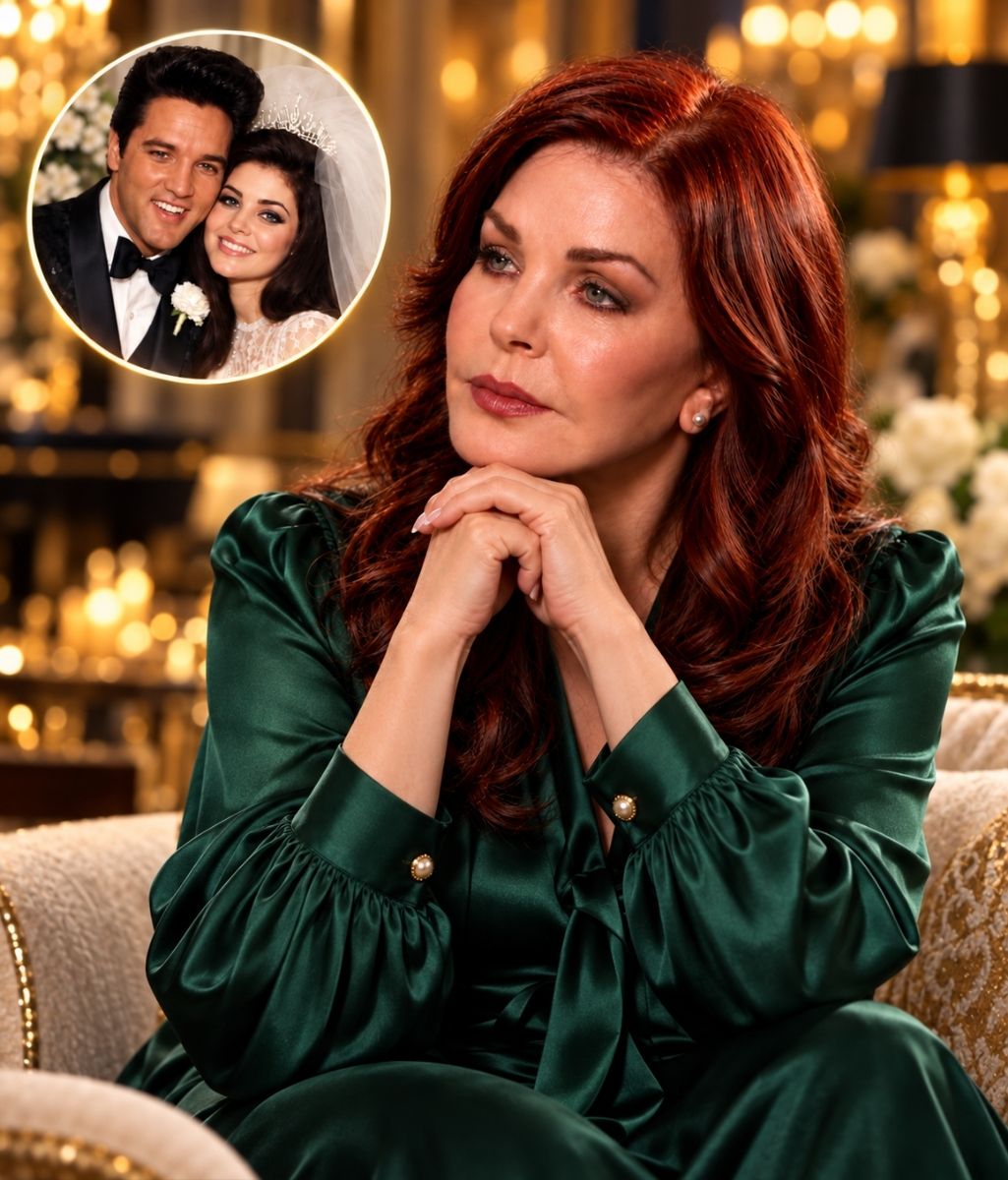
For millions of people, Elvis Presley was the King, a performer who could walk onto a stage and command an entire room before singing a single note. His confidence seemed effortless, his charisma appeared almost impossible to contain, and the crowds that followed him helped turn a young man from Mississippi into one of the most recognizable entertainers in history. Yet according to Priscilla Presley, the man who returned home after the applause was often very different from the larger-than-life figure the world believed it knew.
Priscilla has repeatedly described Elvis as surprisingly shy by nature, particularly when reflecting on the young man he had been before fame completely transformed his life. That description may sound difficult to reconcile with the performer who moved across television screens with such confidence, but it reveals one of the great contradictions of Elvis Presley. Onstage, he could appear fearless. Away from the lights, he could be private, uncertain, thoughtful, and much more sensitive to the opinions of others than his public image suggested.
That quieter side of Elvis had been there long before Graceland, Hollywood movies, and sold-out concerts. Priscilla has spoken about how nervous the young Elvis had been when he first entered Sun Studio, uncertain about how people would react to his voice and the unusual sound he was beginning to create. The confidence audiences later associated with him did not simply appear fully formed. It developed alongside a young man who was still trying to understand why people were suddenly paying attention to him and whether that attention might disappear as quickly as it had arrived.
Inside Graceland, Elvis could step away from the role everyone expected him to play. He loved music, conversation, jokes, gadgets, cars, late-night drives, and the freedom of being around people who knew him as more than a famous face. Priscilla has remembered his fascination with technology and even joked that Elvis sometimes seemed to imagine himself as James Bond, always interested in unusual gadgets and new devices. These small details reveal a man who could be playful and curious, not simply the serious figure preserved in famous photographs.
His humor was another part of his personality that did not always translate through records or carefully staged appearances. The Elvis known by family and friends could tease people, play practical jokes, and suddenly turn an ordinary evening into something memorable. That sense of humor mattered because his life outside the home was rarely ordinary. Almost everywhere he went, people wanted something from him, whether it was an autograph, a photograph, a performance, or simply a moment of his attention. Around those he trusted, he could temporarily stop being an international celebrity and enjoy the simple pleasure of making someone laugh.
Priscilla’s memories have also pointed to a more searching and reflective Elvis. He was interested in spirituality and questions that reached beyond fame, money, or success. Even at the height of his career, he was not satisfied simply with being admired. He read, asked questions, and looked for meaning in a life that had changed with extraordinary speed. During Elvis Week discussions, Priscilla has spoken about this personal search for spirituality alongside his love of road trips and the quieter interests that rarely appeared in the headlines surrounding him.
That search becomes easier to understand when considering the scale of Elvis’s fame. He became an international sensation while still very young, and with that fame came expectations almost no one could have prepared him to carry. Millions of people believed they knew him because they knew his songs, his movies, his clothes, and the way he moved onstage. Yet fame can create a strange distance between a person and the image the public builds around them. The more famous Elvis became, the harder it may have been for audiences to separate the man from “Elvis Presley” the phenomenon.
Priscilla experienced that difference firsthand because she knew him in spaces where there were no screaming crowds. She saw the routines, conversations, insecurities, humor, and quiet moments that could never fit comfortably inside the legend. Her recollections do not erase the confident performer fans remember, but they add another dimension to him. The man who could electrify thousands of people could also be deeply private. The singer whose voice seemed fearless could still wonder how people would respond to him. The celebrity surrounded by constant attention could still crave ordinary moments away from it.
One of the most revealing things about Elvis may be how seriously he took music itself. Long after success had made his name famous around the world, music remained more than a profession. Gospel, country, blues, rhythm and blues, and traditional pop were part of the emotional world that shaped him. He could sit with musicians and sing simply because he loved singing, without needing a stage or an audience. That private connection to music helps explain why so many people who knew him have spoken about the difference between Elvis the celebrity and Elvis the musician.
Priscilla has also helped preserve that more personal side of his story through her involvement with Graceland and projects examining his life beyond the familiar headlines. She has described Graceland as central to his legacy because it represents more than the public career. It was also his home, the place where the performer returned when the shows were over and where the distinction between the famous image and the private man became clearer.
Perhaps that is why Elvis continues to fascinate people so many decades later. The famous photographs tell only part of the story. They show the jumpsuits, the carefully styled hair, the microphones, the crowds, and the unmistakable confidence of a man who changed popular culture. Priscilla’s memories reveal something quieter behind those images: a shy young man who never entirely disappeared inside the King.
The side of Elvis that fans rarely saw was not necessarily darker or more dramatic. In many ways, it was simply more human. He could be nervous, playful, curious, reflective, and uncertain while still possessing the extraordinary presence that made millions of people believe he was larger than life.
The world saw Elvis Presley become the King, but Priscilla remembered the man who still existed when the crown came off, the doors closed, and the applause finally disappeared.