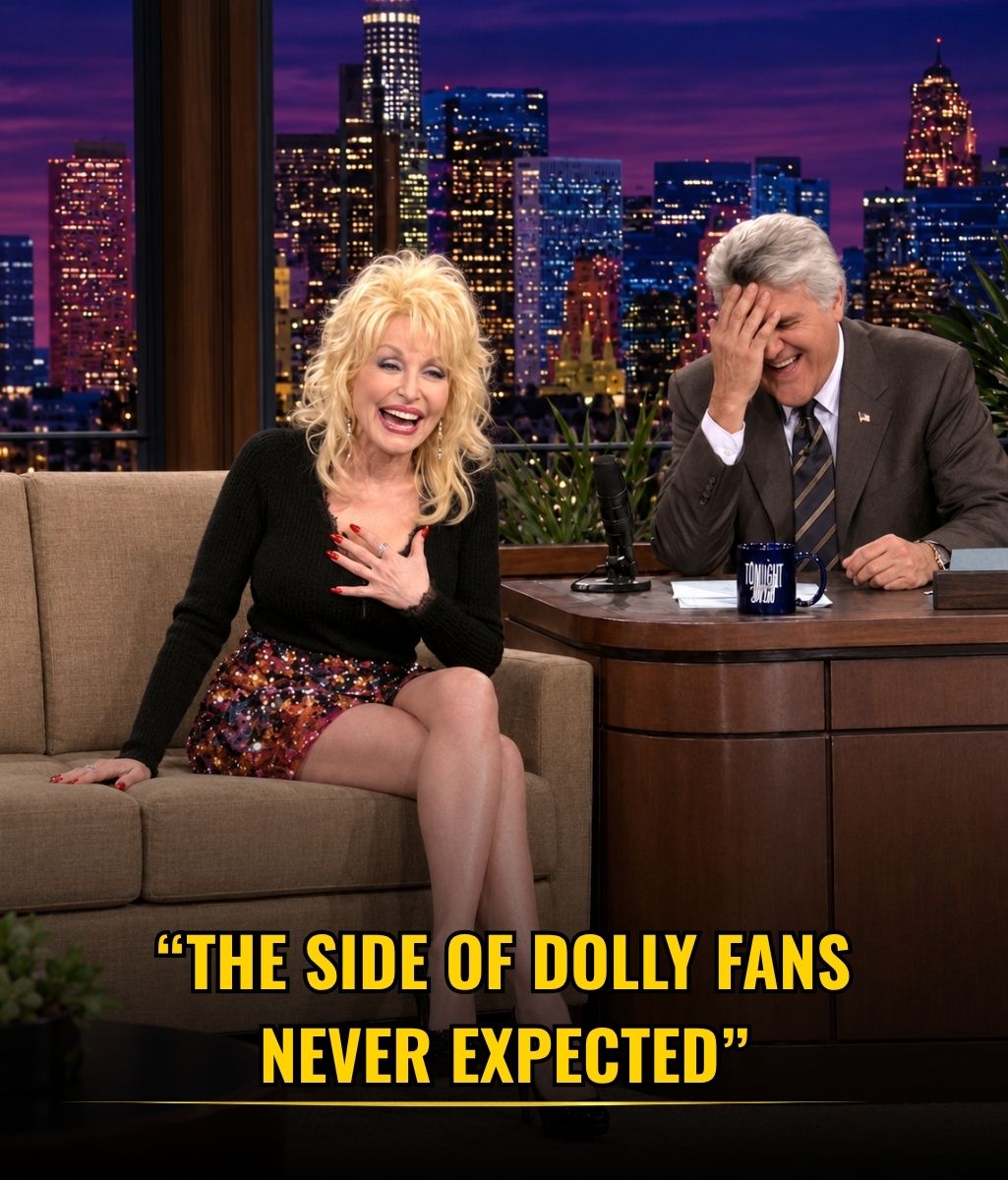
For decades, Dolly Parton was known for kindness, faith, country music, rhinestones, and an almost unbelievable ability to make strangers feel comfortable. But anyone who watched enough of her interviews eventually discovered another side of Dolly that was every bit as memorable. She could be wickedly funny, surprisingly risqué, and completely fearless about making herself the punchline before anyone else had the chance.
That humor was part of Dolly long before social media began collecting her best one-liners.
Interviewers could ask her about her hair, her figure, cosmetic surgery, sex, marriage, rumors, or almost any other subject that might make another celebrity defensive, and Dolly usually found a way to turn the conversation into a joke. The Guardian later observed that her jokes about her appearance and famous curves were not simply throwaway lines. They were part of the way she controlled conversations that might otherwise have become invasive.
Dolly understood exactly what people noticed when she entered a room.
She just refused to be embarrassed by it.
Her most famous jokes often began with the exaggerated image she had created for herself. Dolly openly laughed about the enormous wigs, high heels, rhinestones, tight clothes, and cosmetic enhancements that became part of her public identity. One of her most enduring lines was that it took a great deal of money to achieve such a deliberately inexpensive-looking style. She also joked that she was not a fashion icon so much as an eyesore, while explaining that her elaborate appearance was never accidental.
That self-awareness gave her an unusual kind of power.
People could laugh at Dolly, but only because Dolly was already laughing with them.
When journalists asked about her breasts, she did not pretend the question surprised her. In one interview, she essentially pointed out that they were impossible not to notice. Rather than become offended, she made the question sound ridiculous simply by acknowledging the obvious with perfect timing.
That became a pattern throughout her career.
If someone mentioned plastic surgery, Dolly joked about it.
If someone asked about aging, she turned it into a punchline.
If a conversation drifted toward sex, she rarely became shy.
The result was a public personality that could say things that might sound outrageous coming from somebody else, yet somehow remain warm rather than crude.
One of the funniest examples came from a completely unexpected source: Dolly the sheep.
When scientists cloned the sheep in the 1990s, the animal was famously named Dolly because the cloning process involved mammary gland cells. Years later, when asked how she felt about sharing her name with the world’s most famous cloned sheep, Dolly immediately understood the joke. She explained the biological connection in her own unmistakable way, pointing directly toward the part of her anatomy that had inspired the name before adding that she had no desire to be cloned herself.
It was classic Dolly.
The science was real.
The joke was obvious.
And she got there before anyone else could.
Her sense of humor also appeared whenever people tried to make her glamorous lifestyle sound more glamorous than it actually was. PEOPLE’s collection of Dolly interviews over several decades includes stories in which she admitted that despite her image, she enjoyed extremely ordinary habits and could be surprisingly unfiltered about them. At one point, she even joked about occasionally relieving herself off the porch, the kind of comment almost impossible to imagine coming from the perfectly styled woman seen on album covers and red carpets.
That contrast was part of what made her funny.
Dolly could look like someone who had spent hours preparing to enter a room and then speak like the funniest relative at a family gathering.
She was never too glamorous to sound country.
She was never too famous to make a dirty joke.
And she was rarely too precious about herself to risk looking silly.
Even politically sensitive situations sometimes ended with Dolly reaching for humor. When questions around elections and public controversy became uncomfortable, she once defused the situation with a joke about running for office herself because politics could apparently use another pair of “boobs.” The remark was pure Dolly: provocative enough to get a laugh, but clever enough to keep her from becoming trapped inside the argument itself.
That ability was not accidental.
Dolly understood humor as a survival skill.
Her sister Stella Parton has spoken about how laughter ran through the Parton family and helped them handle difficult periods. Stella described humor as something the sisters relied on when life became painful, a way of moving through hardship rather than pretending it was not there.
That background helps explain why Dolly could joke about subjects other people treated with embarrassment.
She had grown up poor.
She had been mocked for the way she dressed.
She entered an industry where women were routinely judged by their appearance.
She faced constant questions about her body, her marriage, her sexuality, her age, and whether her public image was somehow artificial.
Instead of letting those questions humiliate her, Dolly often turned them into material.
That was the genius behind the jokes.
Humor let her remain in control.
A journalist might think a question about her breasts was provocative, but Dolly could answer with something so funny that the interviewer suddenly became the one trying to keep up.
A critic might call her artificial, but Dolly had already built an entire philosophy around the contradiction. She openly acknowledged the wigs, makeup, clothes, and cosmetic work while insisting that the person underneath remained genuine.
The joke was never that Dolly did not know how she looked.
The joke was that anyone thought they were telling her something she did not already understand.
Even after decades in the spotlight, that mischievous side remained remarkably consistent. The same woman who could speak movingly about faith, childhood poverty, literacy, and family could seconds later make an outrageous joke about her body without changing personalities.
Both sides were Dolly.
That may be why her humor aged so well.
She was rarely trying to shock people simply for attention.
Instead, she used risqué jokes to puncture awkwardness, protect privacy, and remind everyone that she was fully aware of the spectacle she had created.
Fans saw the rhinestones.
They saw the wigs.
They heard the sweet Tennessee voice.
But underneath all of it was a woman with timing sharp enough to take control of almost any room.
Nobody needed to make fun of Dolly Parton.
She had already beaten them to it.
And most of the time, her joke was better.