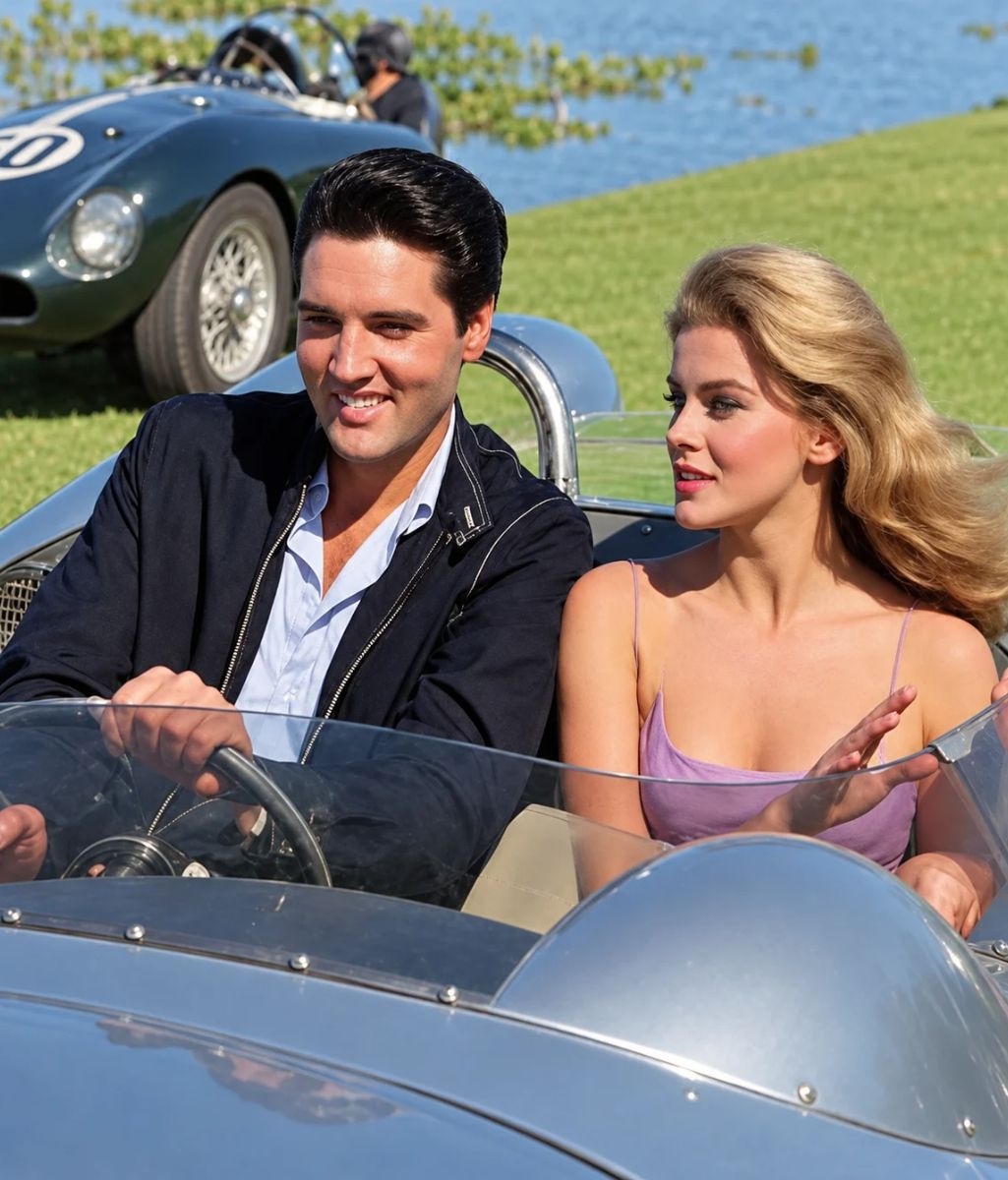
For decades, the chemistry between Ann-Margret and Elvis Presley has remained one of the most talked-about relationships in Hollywood history. Their connection began on the set of Viva Las Vegas in 1963, where audiences immediately noticed how naturally they moved, sang, and reacted to one another. What fans saw on screen was powerful, but according to Ann-Margret’s own later recollections, the bond between them extended far beyond the film.
Ann-Margret wrote that she and Elvis recognized something familiar in one another almost immediately. Both had experienced rapid rises to fame, both valued privacy, both were deeply attached to their families, and both understood what it felt like to live inside a public image that could quickly become larger than the person underneath it. She described an emotional electricity between them that became increasingly difficult to ignore as filming continued.
Their similarities made the connection feel natural, but those same circumstances also made the relationship complicated. Elvis was already tied to a life outside Hollywood, and Priscilla Beaulieu was still part of his future. Ann-Margret later acknowledged that she understood there were “commitments, promises to keep” in Elvis’s life, and that reality placed a limit on what the two of them could become.
That distinction matters because their story is often retold as though Ann-Margret simply rejected Elvis or decided she no longer wanted him. Her own account suggests something much more difficult. The feelings were real, but so were the circumstances surrounding them. They could talk about marriage, imagine what life together might look like, and still recognize that Elvis had responsibilities and promises that he intended to honor.
For Ann-Margret, that meant accepting a painful truth: sometimes two people can care deeply about each other and still be unable to build a life together.
The relationship eventually ended, but the affection did not simply disappear. Ann-Margret later wrote about Elvis with extraordinary warmth, describing him as someone who shared many of her instincts and understood parts of her life that few others could. Even after they went separate ways, the connection remained strong enough that Elvis continued remembering important moments in her career.
For years, he sent her a large flower arrangement shaped like a guitar whenever she opened a new engagement. The gesture became a private tradition between them and continued long after Viva Las Vegas had become part of Hollywood history. The fact that Elvis kept sending those flowers suggests that whatever had ended romantically had not erased the affection or respect between them.
Ann-Margret eventually married actor Roger Smith in 1967, and their marriage lasted until his death in 2017. What is especially striking is that Smith appears to have understood the unusual place Elvis still held in her life. Ann-Margret later wrote that Roger was not jealous of the friendship and that he accepted Elvis as someone who occupied a unique category of his own.
That acceptance gave Ann-Margret a kind of emotional freedom that may have allowed the friendship with Elvis to survive without threatening the life she had chosen. Elvis even visited her backstage after her marriage to Smith and spoke privately with her about how he still felt. She remembered the moment as serious and deeply emotional, but it did not change the direction either of their lives had taken.
The years that followed turned Elvis into an even larger legend, but Ann-Margret remained unusually private when discussing him. In interviews, she often refused to dwell on the darker parts of his later life, even when interviewers pressed her. On Larry King Live, she made it clear that the loss remained deeply personal and that some parts of the story were not things she wanted to reduce to public conversation.
That restraint is important because it reveals how seriously she regarded their history.
She did not need to keep retelling the relationship to prove it mattered.
She did not need to turn Elvis into a regret.
She did not need to pretend that the ending meant the feelings had never existed.
Instead, she allowed the relationship to remain what it had been: intense, complicated, meaningful, and ultimately impossible to continue.
The reasons were larger than attraction.
Elvis had promises he intended to keep, and Ann-Margret understood that those promises would shape the decision whether either of them liked it or not. Their connection could survive emotionally, but it could not easily become the future they once discussed.
That is what makes their story so enduring.
Fans often search for one dramatic reason why Ann-Margret “couldn’t be with Elvis,” but her own words point to something more human. They were not separated by a lack of feeling. They were separated by timing, existing commitments, and lives that were already moving in directions neither could fully reverse.
Years later, Ann-Margret still spoke about Elvis with affection and protected certain memories rather than exploiting them. The fact that she remained so careful may be one of the clearest signs that the relationship meant more to her than a Hollywood story.
Ann-Margret could not build a life with Elvis Presley, not because their connection was too weak, but because both of them understood that love does not always erase the promises already made to someone else.