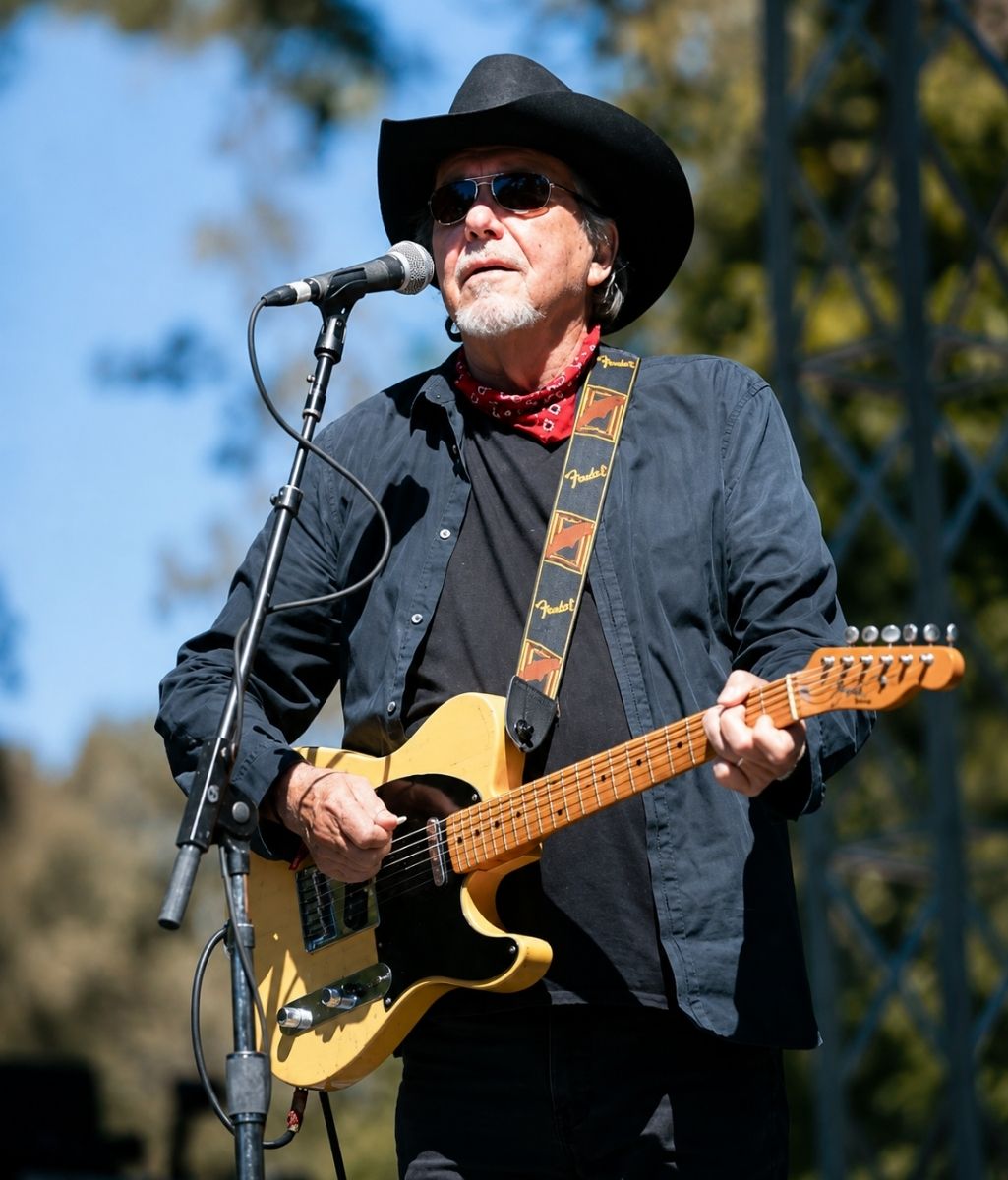
Long before “500 Miles Away From Home” became one of Bobby Bare’s signature recordings, the song began with a simple moment on the road. Bare was driving home from San Diego with his friend Don Bowman when he heard Peter, Paul and Mary singing “500 Miles,” an old folk song built around the loneliness of being far from home. Something about the title stayed with him. By the time Bobby Bare was finished with it, that familiar folk idea had become a record that sounded almost as if it had been written specifically for his voice.
Bare later remembered hearing the song and immediately being struck by it. Around the same period, Glen Campbell, who lived nearby, had recorded an instrumental version of the tune and brought it to him. Bare took the basic idea and wrote a new set of lyrics, transforming the traditional folk material into the version country fans would come to know as “500 Miles Away From Home.”
What made the song so powerful was not complexity. Its emotional world was painfully simple: a man is hundreds of miles from home, short of money, carrying loneliness and shame, and unable to simply turn around and go back. The older folk song had already captured that feeling of displacement, but Bare’s recording placed it directly inside the emotional language of early-1960s country music.
The farther he traveled, the more “home” seemed to matter.
That theme fit Bobby Bare almost perfectly. His voice never needed dramatic orchestration or exaggerated heartbreak to make loneliness believable. He could sing as though he were simply telling you what happened, allowing the sadness to settle slowly rather than forcing it. In “500 Miles Away From Home,” that restrained delivery became part of the song’s power. The narrator does not sound like a man performing his misery for an audience. He sounds like someone sitting alone with the consequences of where life has taken him.
There is another reason the song feels especially meaningful when placed beside Bobby Bare’s own story. Bare had known instability from childhood. His mother died when he was only five, and afterward his family was separated as his father struggled to care for the children. Bobby spent parts of his youth moving among relatives and different homes. It would be too much to claim that “500 Miles Away From Home” was directly autobiographical, but themes of distance, displacement, and longing for home were hardly foreign to the man singing them.
The timing of the record also mattered enormously. In 1963, Bare was emerging as a major artist at RCA Victor. Earlier that year, “Detroit City” had established him with another song about distance and homesickness—a factory worker living far from the Southern home he desperately missed. Then came “500 Miles Away From Home,” reinforcing an image that would become closely connected with Bare: the wandering man whose body has traveled farther than his heart ever wanted to go.
The result was much bigger than a niche country record. Released in 1963, “500 Miles Away From Home” reached No. 5 on Billboard’s country chart and No. 10 on the Billboard Hot 100, while also climbing to No. 4 on the adult contemporary chart. At a time when country, folk, and pop audiences often occupied separate corners of American music, Bobby Bare had found a song capable of reaching all three.
That crossover success reveals something important about Bare’s early career. His RCA recordings did not fit neatly into a single box. Even Bobby later acknowledged that many of those records had as much connection to folk music as traditional country, simply because those were the kinds of songs that attracted him at the time. “500 Miles Away From Home” may be one of the clearest examples: an old folk foundation, rewritten and delivered by a country singer, then embraced by mainstream pop listeners.
But charts alone do not explain why the song has endured. Plenty of records became hits in 1963 and eventually disappeared from everyday memory. “500 Miles Away From Home” survived because its central feeling never became outdated. Almost everyone understands what it means to miss somewhere—or someone—that once made life feel secure.
For some listeners, “home” in the song may mean an actual house or hometown. For others, it becomes a person, a family, or a period of life that can never quite be recovered. That ambiguity allows the song to change as the listener grows older. Someone hearing it at twenty may think about leaving home for the first time. The same person hearing it decades later may think about parents who are gone, a hometown that has changed, or a life they can visit only through memory.
That is where Bobby Bare’s performance becomes especially effective. He never tells listeners exactly how they should interpret the loneliness. He gives them enough room to bring their own lives into the song.
The success of “500 Miles Away From Home” also helped cement one of the most important periods in Bare’s career. Along with “Detroit City,” it became one of the records that transformed him from a singer searching for his place into an artist with a recognizable identity. Years later, retrospectives on Bare’s career would still single out those two 1963 songs as the recordings that helped establish him as a major country performer.
Perhaps the most fascinating part of the story is how casually it began. There was no grand Nashville writing session designed to manufacture a crossover hit. Bobby Bare simply heard a song while traveling, recognized something inside it that spoke to him, remembered the idea, and reshaped it until it became his own.
From that small moment came one of the recordings most closely associated with his name.
More than six decades later, “500 Miles Away From Home” still carries the same quiet ache. The production belongs to another era, but the feeling does not. A man is far away. He wants to go home. For reasons that may involve money, pride, circumstance, or all three, he cannot.
And Bobby Bare sings it without trying to make the sadness bigger than it already is.
Maybe that is exactly why it still hurts.