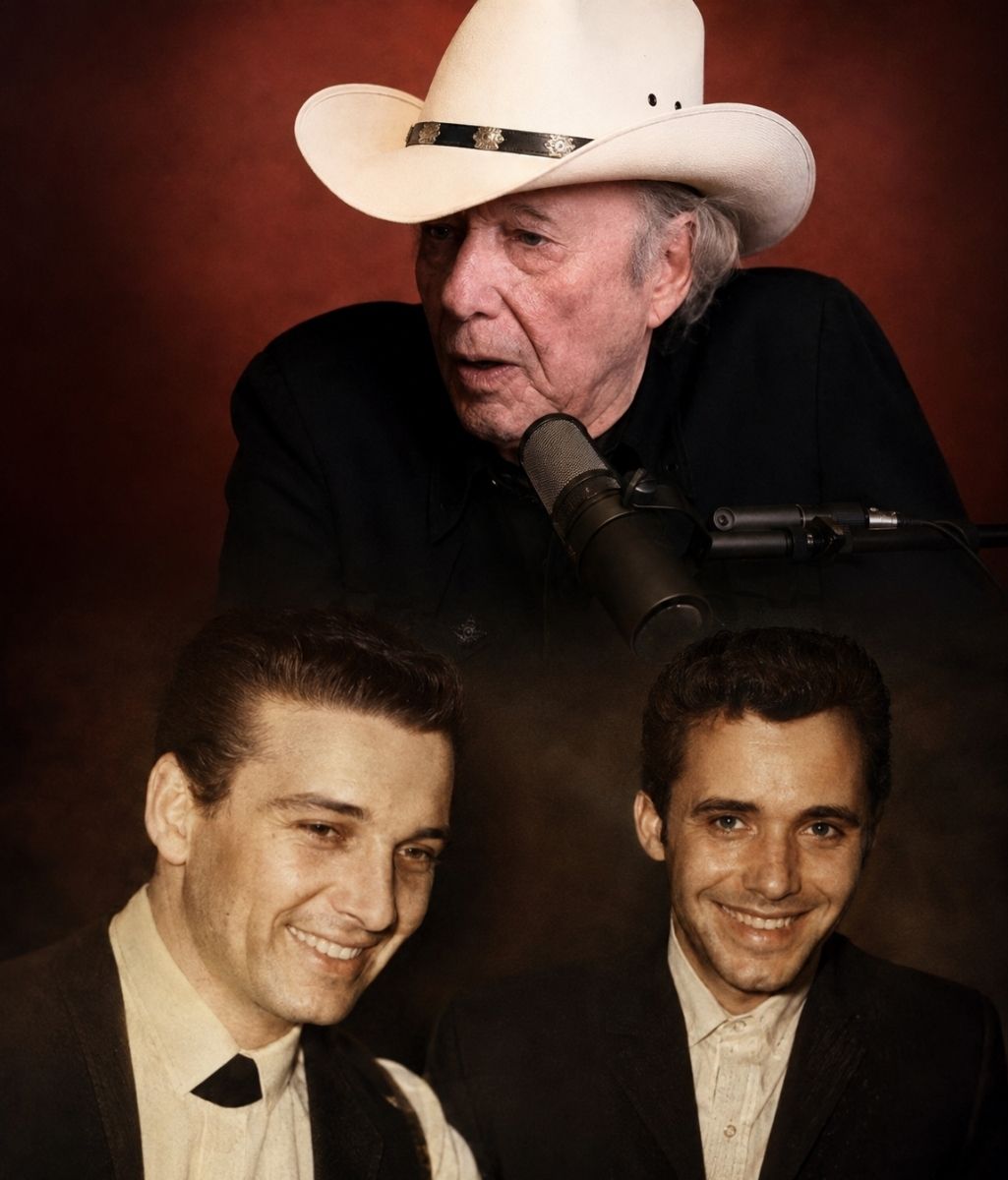
There are moments in country music history that seem small when they happen, only to become extraordinary when we look back decades later. For Bobby Bare and Waylon Jennings, one of those moments began not inside a Nashville recording studio or a record company office, but after Bare saw Waylon performing at JD’s in Phoenix, Arizona. Bare was already an established artist, and he immediately recognized something unusual in the young performer standing on that stage. Waylon had presence, confidence, strong songs, and the ability to command a room. Bare believed he was watching someone who deserved a much bigger opportunity. What makes the story remarkable is that Bobby Bare also understood that helping Waylon succeed could eventually create serious competition for himself.
Bare was so convinced by what he had seen that he decided to do something about it. While traveling from Phoenix toward Las Vegas, he stopped at a public telephone booth and called Chet Atkins, one of the most influential figures at RCA in Nashville. Bare told Atkins that Waylon was the kind of artist who needed to be on a major record label and urged him to take a serious look at the young singer. It was an incredibly simple act — one musician making a telephone call on behalf of another — but that call would become part of a much larger chain of events. Chet Atkins eventually contacted Waylon and brought him to Nashville, helping open the door to the next major chapter of Jennings’ career.
What makes Bobby Bare’s decision even more meaningful is that he apparently understood exactly what he was risking. Bare later recalled that recommending Waylon felt almost like “cutting my own throat.” It was a striking way to describe the situation, but his reasoning was understandable. Bare and Jennings could appeal to many of the same listeners, record similar kinds of material, and compete for songs, attention, radio play, and opportunities. In the music business, where careers can depend on getting the right song at the right moment, helping another talented performer enter your own territory is not necessarily the safest professional move.
But Bare did it anyway. He believed Waylon Jennings was simply too talented to remain outside the major-label world. Rather than protecting his own position, he helped another artist move forward. That decision says something important about Bobby Bare that can easily be overlooked when discussing his own successful recording career. He was not only a performer with an ear for great material; he also had an extraordinary instinct for recognizing talent in other people.
And Waylon Jennings was not the only future country music legend to benefit from that instinct.
Years later, Bare became involved in music publishing and crossed paths with a songwriter named Billy Joe Shaver. Shaver was hardly a polished Nashville industry figure. His personality could be intense, unconventional, and difficult to forget. Bare reportedly found him unusual and even somewhat intimidating at first. But once he paid attention to the songs, everything else became secondary. Bobby Bare recognized that Billy Joe Shaver could write.
That recognition mattered enormously. Bare decided to work with Shaver and became part of the network that helped introduce his songwriting to important Nashville artists. Most significantly, Bare helped connect Billy Joe Shaver with Waylon Jennings, while Shaver’s songs also found their way into the wider circle of respected writers and performers that included figures such as Tom T. Hall and Willie Nelson.
What happened afterward became part of country music history.
Waylon Jennings became deeply interested in Shaver’s writing, and that connection ultimately helped produce “Honky Tonk Heroes,” the landmark 1973 album built overwhelmingly around Billy Joe Shaver’s compositions. The record sounded different from much of the polished Nashville country being produced during that period. Shaver’s writing was direct, rugged, personal, and uncompromising, while Waylon increasingly wanted greater control over how his own records sounded. Together, those elements created something that felt remarkably authentic.
“Honky Tonk Heroes” would eventually be regarded as one of the defining records associated with the rise of Outlaw Country. Its importance went far beyond a collection of songs. The album represented a changing attitude among artists who wanted more control over their music and who were willing to challenge Nashville conventions about how country records should be made.
And hidden inside that history is a fascinating connection.
Bobby Bare had helped open a door for Waylon Jennings. Then he helped open another door for Billy Joe Shaver. Eventually, those two men walked through the same door together — and helped change country music.
It is difficult to know exactly how history might have unfolded without those introductions. Waylon Jennings was enormously talented and determined, and Billy Joe Shaver possessed a songwriting voice too distinctive to remain hidden forever. Perhaps both men would have found their opportunities through other paths. But history happened the way it happened, and Bobby Bare was standing at several crucial intersections.
That is what makes his role so fascinating. Bare did not need to become the central figure in every story. Sometimes he simply recognized something special in another person and helped put that person in the right room. He saw Waylon Jennings before Nashville fully understood what Waylon could become. He recognized the power in Billy Joe Shaver’s songs before Shaver became one of the most respected songwriters of his generation.
For longtime country fans, there is something especially moving about stories like this because they remind us that legendary careers rarely develop in isolation. Behind famous albums, unforgettable songs, and celebrated performers are often friendships, introductions, recommendations, and small acts of faith that the public never sees.
Imagine Bobby Bare standing at that telephone booth decades ago. There was no way for him to know everything that would follow. He could not have known exactly what Waylon Jennings would eventually mean to country music, nor could he have predicted the enormous influence that the Outlaw movement would have on future generations. He simply knew that Waylon was good enough to deserve a chance.
And he made the call.
Years later, another connection involving Bare would help bring Waylon Jennings and Billy Joe Shaver together, contributing to an album that became a cornerstone of a changing country music landscape.
Bobby Bare built an extraordinary legacy through his own records and performances, but perhaps one of the most revealing parts of his story can be found in the careers he quietly helped along the way. He was willing to recognize greatness even when that greatness might someday stand beside him — or compete with him.
Sometimes country music history is made beneath bright stage lights. Sometimes it happens inside famous Nashville studios. And sometimes, it begins with one artist believing in another strongly enough to stop at a telephone booth and make a call that could change everything.