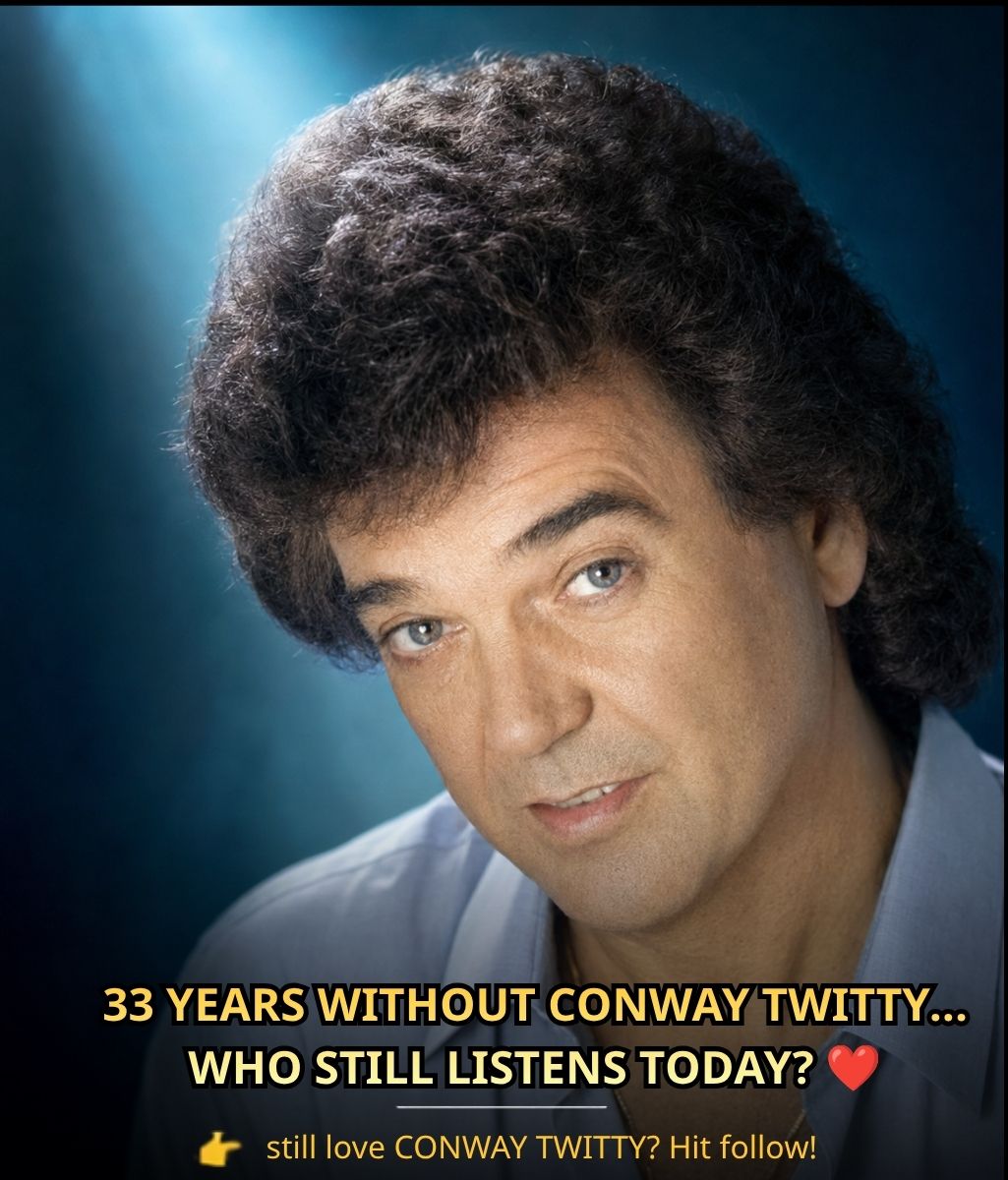
When Conway Twitty recorded “That’s My Job” in 1987, he was already one of the most recognizable and respected voices in country music. By then, generations of listeners had heard him sing about family, heartache, devotion, regret, and the complicated moments that make ordinary lives unforgettable. But “That’s My Job” was different. Written by Gary Burr, the song told a deeply personal story about the relationship between a father and his son, beginning with the fears of childhood and gradually moving toward the realization that a parent’s love can remain one of the strongest forces in a person’s life. Conway did not need a dramatic performance to make that message powerful. He simply told the story in the warm, measured voice his fans knew so well, allowing every line to carry its own emotional weight. What no one listening in 1987 could have known was how differently the song would feel only a few years later.
At its heart, “That’s My Job” is built around a simple idea: a child wants to know that someone will always be there. As the story unfolds, that reassurance grows into something much larger. The father is not presented as a distant figure or an untouchable hero. He is simply a steady presence — someone who offers comfort, guidance, and protection when his son needs it most. That simplicity is exactly what gives the song its strength. Anyone who has ever looked back on a parent, grandparent, or another important figure from childhood can understand the feeling. Sometimes the people who quietly stand beside us become the ones whose absence is felt the most.
Conway’s performance made that message especially convincing. He had an extraordinary ability to make a carefully written song sound as though he were remembering something from his own life. There is no need for excessive drama in his delivery. He lets the story unfold naturally, almost as if he were sitting across the room telling it to an old friend. That was one of Conway Twitty’s greatest strengths as a storyteller. He didn’t simply sing the words — he made listeners believe the memories behind them. For many fans, that quality turned “That’s My Job” into much more than another country single. It became the kind of song people associated with their own fathers, their own childhoods, and conversations they wished they could hear one more time.
Then came June 5, 1993. Conway Twitty died suddenly at only 59 years old, bringing an extraordinary career to an unexpected end. For longtime fans, the news meant losing a voice that had accompanied them for decades. His records remained, of course, but listening to certain songs afterward could never feel exactly the same. And among the recordings that seemed to acquire a deeper meaning was “That’s My Job.” The words had not changed. Conway’s voice had not changed. But the listener had. What had once sounded like a moving story about a father reassuring his son could now bring an entirely different kind of emotion. The man singing those reassuring words was suddenly no longer there.
That is one of the strange powers of music: time can completely change a song without changing a single note. A recording can sit untouched for decades while life continues around it. People grow older. Families change. Children become parents themselves. The voices we once heard every day become memories. Then an old song begins playing, and suddenly a moment from years ago feels remarkably close again. For listeners who first heard “That’s My Job” when it was new, returning to it decades later can carry precisely that kind of emotional force.
There is also something especially moving about the way the song changes perspective as its story develops. What begins through the eyes of a child gradually becomes a reflection on what a father’s presence truly means. Childhood fears eventually give way to adult understanding. The son begins to recognize that the person who once seemed permanent will not always be there. That realization is what gives the song its lasting emotional power. It is not simply about being protected when we are young. It is about reaching the point in life when we finally understand everything someone quietly did for us — sometimes only after years have passed.
For older listeners, that message can become even stronger. A person who heard the song one way at 30 may hear something completely different at 60 or 70. Perhaps their father is no longer there. Perhaps they have become parents or grandparents themselves. Perhaps they now understand sacrifices that were invisible to them as children. That is why songs like “That’s My Job” seem to grow alongside their listeners. The recording stays young while the audience carries decades of memories back to it.
And Conway’s voice remains right there, preserved exactly as it sounded in 1987. That may be the most bittersweet part of returning to the recording today. We know how Conway’s story eventually ended, yet when the song begins, he is still there behind the microphone. His voice has not aged. The performance has not faded. For those few minutes, listeners can return to a time when Conway Twitty was still recording new music and nobody knew how suddenly his final chapter would arrive.
More than three decades after his death, “That’s My Job” remains one of Conway Twitty’s most deeply affecting recordings, not because its original meaning disappeared, but because time added another layer to it. What began as a moving story about a father and son became, for many listeners, a reminder of the people who once promised to be there and the memories they left behind. That is why longtime Conway fans may find themselves stopping when this particular song comes on. They know what is coming. They have heard it before. Yet somehow, after all these years, it can still catch them by surprise.
And perhaps that is the part of the story that makes “That’s My Job” so difficult to hear without remembering Conway himself. He recorded a song about the enduring presence of someone we depend on, never knowing that years later his own familiar voice would become exactly that kind of presence for generations of country music fans. Conway Twitty may have left the stage in 1993, but every time “That’s My Job” begins to play, that unmistakable voice returns — and for a few minutes, an old friend from country music’s past feels close again.