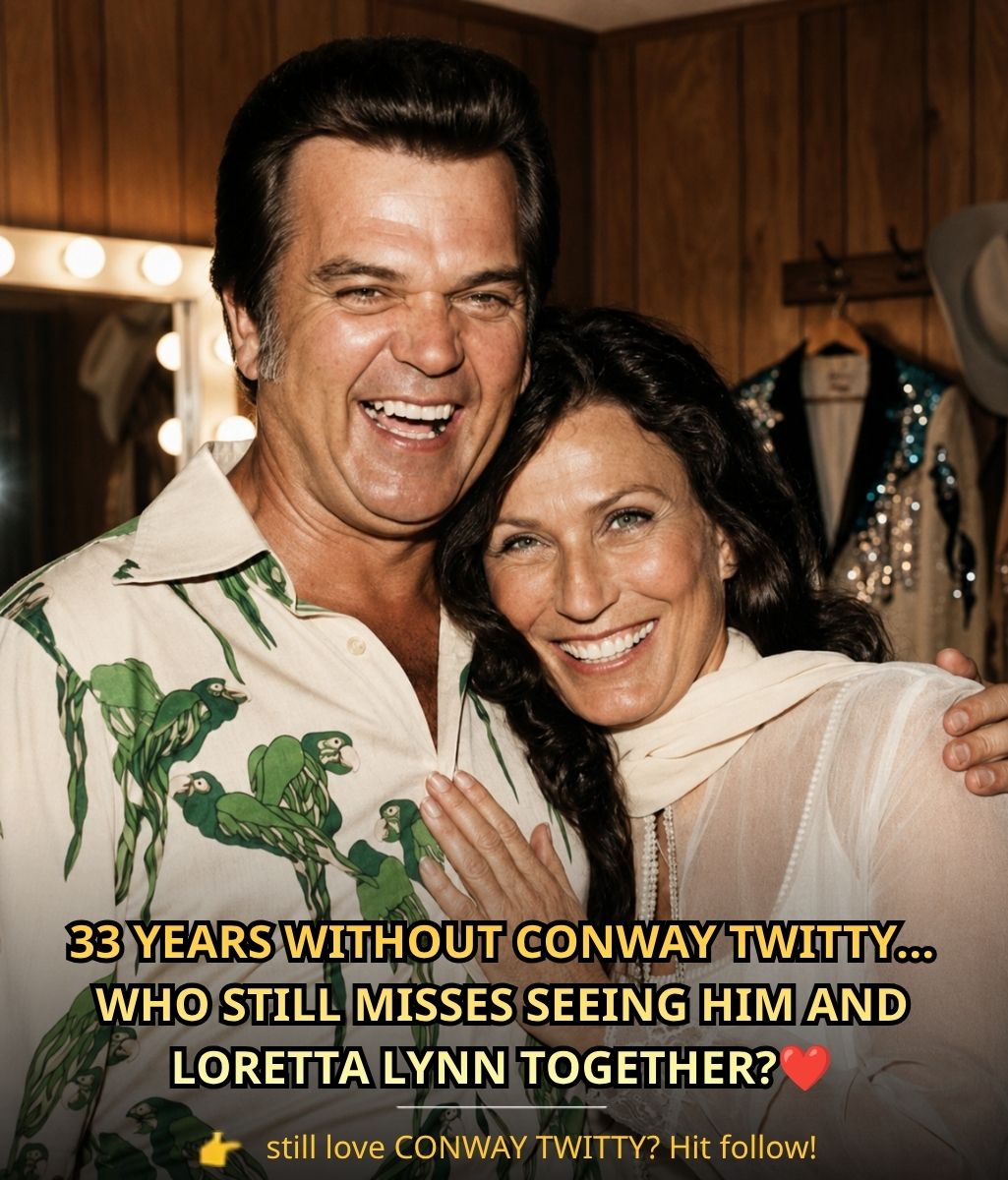
They sang about forbidden love so convincingly that millions of country fans began wondering where the song ended — and the real feelings began.
For years, country music fans watched Loretta Lynn and Conway Twitty stand side by side onstage and wondered the same thing: Was there something more between them? It wasn’t difficult to understand why people asked. When Loretta and Conway sang together, they didn’t simply sound like two stars sharing a microphone. They sounded like two people having a conversation no one else was supposed to hear. A glance, a smile, the way Conway would lean toward Loretta during a lyric, and the way she could answer him with that unmistakable voice of hers — sometimes, it all felt almost too convincing. And the songs only made the mystery stronger.
When Two Country Legends Found the Perfect Partner
By the early 1970s, both Loretta Lynn and Conway Twitty were already major names in country music. But when they began recording together, something unusual happened: their voices seemed made for each other. In 1971, they released “After the Fire Is Gone,” a song about two married people searching for the love and affection missing from their relationships. The subject matter was intimate, and Loretta and Conway made it feel even more so. The song became a major country hit and earned them a Grammy Award for Best Country Vocal Performance by a Duo or Group. It was only the beginning.
They followed it with memorable recordings including “Lead Me On,” “Louisiana Woman, Mississippi Man,” “As Soon as I Hang Up the Phone,” and “Feelin’s.” Together, they became one of country music’s defining duet partnerships. But their success created something else too: rumors. The more believable their performances became, the more fans began wondering whether the emotions they heard in those songs were entirely part of the performance.
Fans Saw Something They Couldn’t Quite Explain
Listen to an old Loretta and Conway performance today and it is easy to see why audiences became fascinated. They weren’t stiff performers simply taking turns singing their lines. They teased each other, smiled at each other and looked completely comfortable together. Most importantly, they knew how to make a song feel personal. When Conway sang a romantic line to Loretta, it sounded as though he meant it. When Loretta answered him, she could make thousands of people in an auditorium feel as though they were witnessing a private conversation.
That chemistry became part of their magic. Naturally, some fans wondered whether what they saw onstage continued after the curtain came down. Every lingering look and playful exchange seemed to give the rumors another reason to survive. Yet the truth about Loretta and Conway may be more interesting than simply turning their story into a secret romance.
Their Chemistry Didn’t Need a Secret Romance
Both artists had complicated personal lives away from the stage. Loretta’s marriage to Oliver “Doolittle” Lynn was famously turbulent, something she spoke and wrote about openly over the years. Conway also experienced multiple marriages during his lifetime. Those realities made speculation surrounding the duet partners even easier for fans to believe.
But what Loretta and Conway built together was something that can easily be overlooked when their relationship is reduced to romantic rumors: trust. A great duet requires more than two talented singers. Each performer has to know when to push forward and when to pull back. They have to listen to one another and allow the other voice enough room to tell half of the story. Loretta and Conway mastered that skill. It was why songs about desire, loneliness, arguments and complicated relationships sounded so believable when they sang them. They could step inside the characters of a song and make audiences believe every word.
Then Everything Suddenly Changed
On June 5, 1993, Conway Twitty died at just 59 years old after becoming ill following a performance. For country music, it meant losing one of the genre’s most recognizable voices. For Loretta, it also meant losing the man who had stood beside her on some of the most important recordings of her career. There would be no new Loretta-and-Conway duet, no new stage performance and no familiar exchange between those two unmistakable voices.
Suddenly, the recordings they had made together carried a different weight. Songs that once sounded playful, romantic or even flirtatious became reminders of a partnership that could never be recreated. Fans could still return to the records and old performances, but the possibility of seeing those two voices meet again in a new song was gone.
Maybe That Was the Real Secret All Along
Fans may always wonder exactly what Loretta Lynn and Conway Twitty felt when they looked at each other across a microphone. Perhaps that mystery is part of what keeps their performances so fascinating decades later. But their legacy doesn’t need an undiscovered romance to make it remarkable. What we can hear on those old records is already powerful enough: two extraordinary country singers found someone who understood how to meet them inside a song.
Together, Loretta and Conway could make heartbreak sound real, flirtation sound effortless and a three-minute country song feel like a glimpse into somebody’s private life. That connection produced some of the most memorable duets country music has ever known. And all these years later, something remarkable still happens when “After the Fire Is Gone” or “Louisiana Woman, Mississippi Man” begins to play. For a few minutes, Conway is standing beside Loretta again. The two voices meet, the chemistry returns, and fans are reminded why they never stopped wondering about Loretta Lynn and Conway Twitty in the first place.