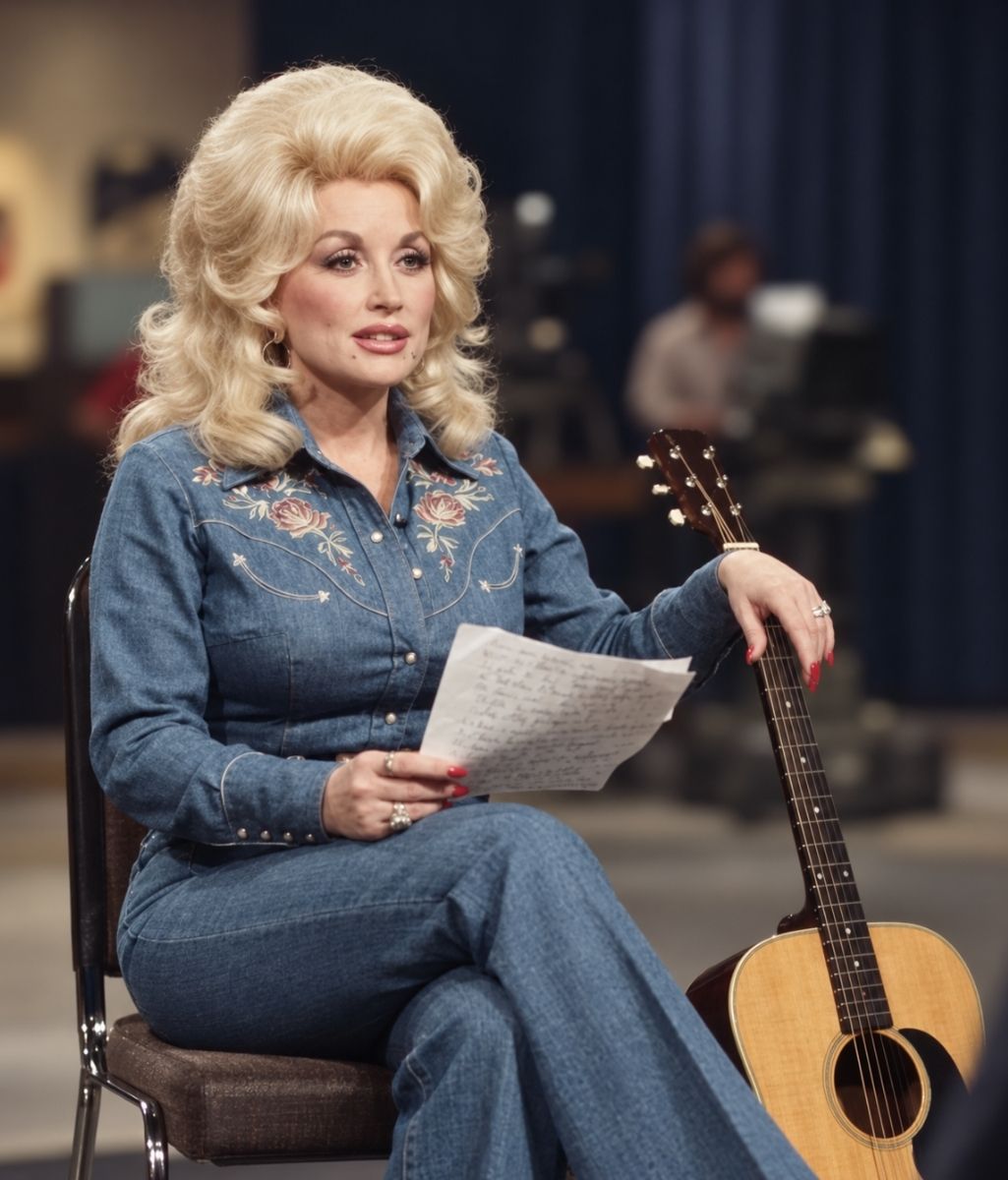
When Dolly Parton was only 20 years old, she had none of the things that would later make her one of the most powerful names in entertainment. There was no Dollywood, no global catalog of standards, no Hollywood career, and no fortune built from decades of songwriting. She was still a young woman from East Tennessee trying to establish herself in Nashville, but she had already learned one lesson that would quietly shape almost everything that came afterward: if she created something valuable, she needed to understand who owned it.
That lesson did not come from a lawyer, a record executive, or a famous producer. It came from her father, Robert Lee Parton Sr., a hardworking man who could not read or write but whom Dolly repeatedly described as one of the smartest people she had ever known. In a 2017 BBC interview, Dolly remembered her father warning her not to let other people take advantage of her and telling her to keep her mind on her business. She carried that advice into Nashville and began thinking about the music industry not only as an artist, but as a businesswoman.
That was unusual for someone so young, especially a female country singer entering the industry in the 1960s. Dolly was still trying to convince people to record her songs and give her opportunities, yet she was already thinking about what those songs might be worth years later. Around 1966, when she was 20, she and her uncle Bill Owens established Owe-Par Publishing, allowing them to retain control over the copyrights to much of the material they were creating rather than simply giving those rights away to someone else.
At the time, Dolly did not have a legendary catalog to protect. Her first Billboard country hits were still ahead of her, with “Dumb Blonde” and “Something Fishy” not reaching the chart until 1967. She was essentially protecting songs before anyone could know how valuable those songs might eventually become. The Library of Congress timeline shows that in 1965 she and Bill Owens had been signed to Fred Foster’s Combine publishing operation, while 1966 brought important songwriting success when Bill Phillips reached the country Top 10 with Parton-Owens compositions.
That early decision became far more important as Dolly’s songwriting career exploded. Songs such as “Jolene,” “Coat of Many Colors,” “9 to 5,” and especially “I Will Always Love You” proved that her greatest financial asset was not simply her voice or stage presence. It was her ability to write songs that other people would continue performing, recording, licensing, and rediscovering for generations.
The value of ownership became dramatically clear when Elvis Presley wanted to record “I Will Always Love You.” Dolly was thrilled by the possibility, but the proposed deal reportedly required her to surrender a large share of the publishing rights. She refused. Emotionally, the decision was extremely difficult because she admired Elvis and desperately wanted to hear him sing her composition, but professionally, it was consistent with the principle she had adopted while still in her twenties: do not give away control of something simply because a powerful person wants it. Music Week later highlighted that Dolly’s insistence on retaining publishing was exactly why she could make such a decision.
Years later, history made that choice look extraordinary.
When Whitney Houston recorded “I Will Always Love You” for The Bodyguard in 1992, the song became a worldwide phenomenon. Because Dolly had retained ownership of the composition, she continued to receive songwriter and publishing income as Whitney’s version sold millions of copies, dominated radio, and became one of the most recognizable recordings of all time. The young woman who had insisted on keeping control of her songs long before she was wealthy was now benefiting from a decision made decades earlier.
What makes the story more meaningful is the person who first planted that idea in her mind.
Robert Lee Parton Sr. had grown up with very little formal education. Dolly later explained that his inability to read and write probably prevented him from fulfilling some of his own dreams, even though she believed he had extraordinary practical intelligence. His experience eventually inspired another major part of Dolly’s legacy, the Imagination Library, which she created in 1995 to provide free books to young children.
In other words, two enormous parts of Dolly Parton’s life came from lessons she learned by watching her father.
His business instincts taught her to protect what she created.
His struggles with literacy inspired her to help children learn to read.
Those lessons ultimately produced very different results, but they came from the same place: Dolly never forgot where she came from, and she never dismissed wisdom simply because it did not arrive with a formal education.
Her decision to control her publishing also became the foundation for a much broader way of thinking about business. Dolly later expanded into film and television production, tourism, merchandising, Dollywood, hospitality, and other ventures, but the pattern remained similar. She wanted to understand what she owned, who controlled it, and how a successful project could continue creating value long after the original moment had passed. The BBC noted that this combination of songwriting ownership and diversification helped build the business empire that existed alongside her music career.
That is why the decision Dolly made at 20 deserves more attention than it usually receives.
It did not look dramatic at the time. There was no huge check, no famous award, and no guarantee that the songs she was protecting would ever become valuable. She was simply a young songwriter deciding that her work belonged to her and that she needed to treat creativity with the same seriousness as any other business asset.
Decades later, that decision helped her say no to Elvis Presley when the price was too high. It allowed her to benefit when Whitney Houston transformed one of her songs into a global phenomenon. It gave her leverage over a catalog that became one of the most valuable pieces of her legacy, and it helped establish a principle she would follow for the rest of her career.
The reason behind it was not greed, ego, or some sophisticated Wall Street strategy.
It was advice from a father who could not read a contract himself but understood something many successful artists learn too late.
Know what belongs to you, and be very careful before you give it away.