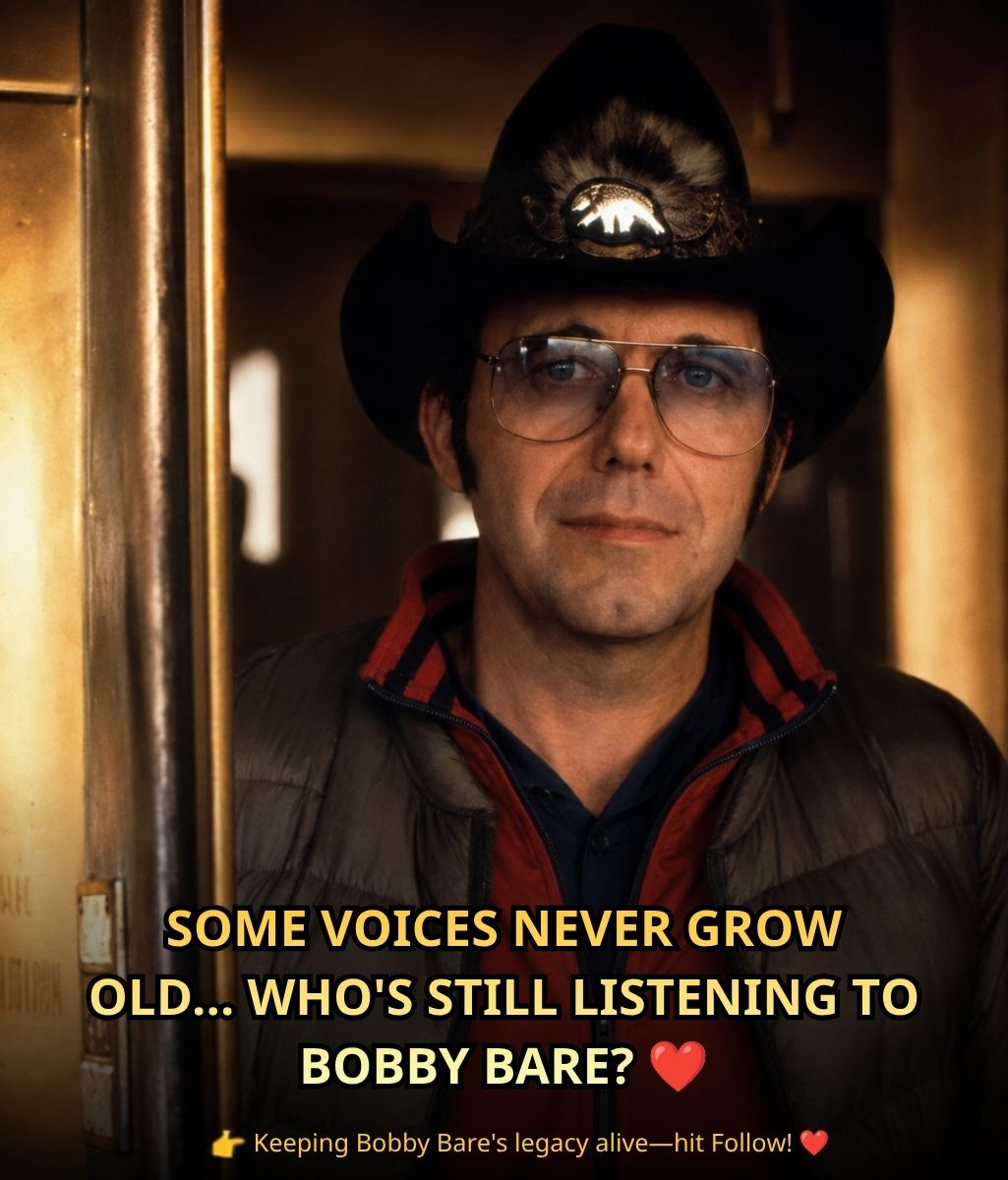
By the time Bobby Bare had established himself in Nashville, he had already achieved what countless young singers spent their lives chasing. He had major records, a recognizable voice, the backing of a powerful label, and a place inside the country music establishment. For many performers, that would have been enough. But Bare was never completely comfortable simply following a path someone else had chosen for him. As his career developed, one question became increasingly important: Who should decide what a Bobby Bare record actually sounded like?
That question went far beyond contracts or record-company politics. Bare wanted greater influence over which songs he recorded, how an album was shaped, which songwriters he worked with, and what kind of stories he brought to listeners. He had built his reputation partly because of his remarkable instinct for recognizing a strong song, and the more experience he gained, the harder it became to accept the idea that other people should always make the final creative decisions.
RCA had played an important role in Bare’s rise. Working within the Nashville system brought him opportunities, professional production, and records that introduced his voice to a national audience. But the Nashville establishment of that era could also be highly structured. Producers and record companies often exercised considerable influence over repertoire, arrangements, musicians, and the overall sound of an artist’s recordings. For a singer who increasingly trusted his own musical instincts, that structure could eventually feel restrictive.
Bare’s desire for independence therefore represented something larger than dissatisfaction with one company. He was beginning to believe that an artist should have the freedom to take responsibility for his own music—even when that freedom involved risk.
Walking away from security is easy to romanticize decades later. At the time, however, it could be a dangerous decision. A major record label offered distribution, promotion, studio resources, industry connections, and stability. Leaving that environment meant giving up certainty without knowing whether greater creative freedom would produce greater commercial success.
Yet Bare’s career had never been built entirely on safe decisions.
What separated him from many conventional Nashville performers was his fascination with songs that felt unusual, literary, humorous, uncomfortable, or deeply human. He was drawn toward writers with distinctive voices and was willing to record material that did not always fit neatly into the polished formulas dominating country radio. His collaborations and support for songwriters such as Shel Silverstein reflected the same instinct: the story mattered more than simply following whatever style happened to be commercially fashionable.
This independent streak became especially significant as country music moved toward the era later associated with Outlaw Country. Bare was not simply copying a movement after it became popular. His insistence on greater control over repertoire and production helped place him among the artists who challenged Nashville’s traditional balance of power between performers, producers, and labels.
The word “outlaw” can sometimes create the wrong impression. The real rebellion was often much quieter. It was about musicians saying, in effect, “I know what I want my records to sound like.” It was about choosing songs because they carried truth rather than because they followed a proven formula. It was about trusting musicians, writers, and instincts that might not have passed through the usual Nashville approval process.
Bare increasingly wanted that responsibility.
And responsibility was exactly what creative control meant. Freedom did not guarantee better records. If an album failed, an artist who demanded control could no longer simply blame the system. The success or failure belonged much more directly to him.
Bare accepted that bargain.
His later work demonstrated how naturally he could thrive when given room to shape an album around personality and storytelling. Rather than treating an LP merely as a collection of potential singles, he could pursue material with a distinctive point of view. That freedom suited an artist whose greatest strength had always been his ability to make listeners feel that someone was sitting across the room telling them a remarkable story.
Looking back, the significance of Bare’s decision becomes clearer. He was not rejecting success. He was redefining what success meant. Hit records mattered. Recognition mattered. A long career mattered. But for Bare, none of those things could completely replace the satisfaction of knowing that the music carrying his name also carried his judgment.
That is why this chapter of his career still matters. Bobby Bare had already found a place inside Nashville. The safer choice would have been to protect it and continue working within the system that had helped make him famous.
Instead, he kept pushing for something more difficult to measure.
Ownership of his artistic direction.
In an industry where success often encourages artists to stop taking risks, Bobby Bare moved in the opposite direction. He had already proved that Nashville could make him successful. What he wanted to discover next was whether Bobby Bare could make music on Bobby Bare’s own terms.