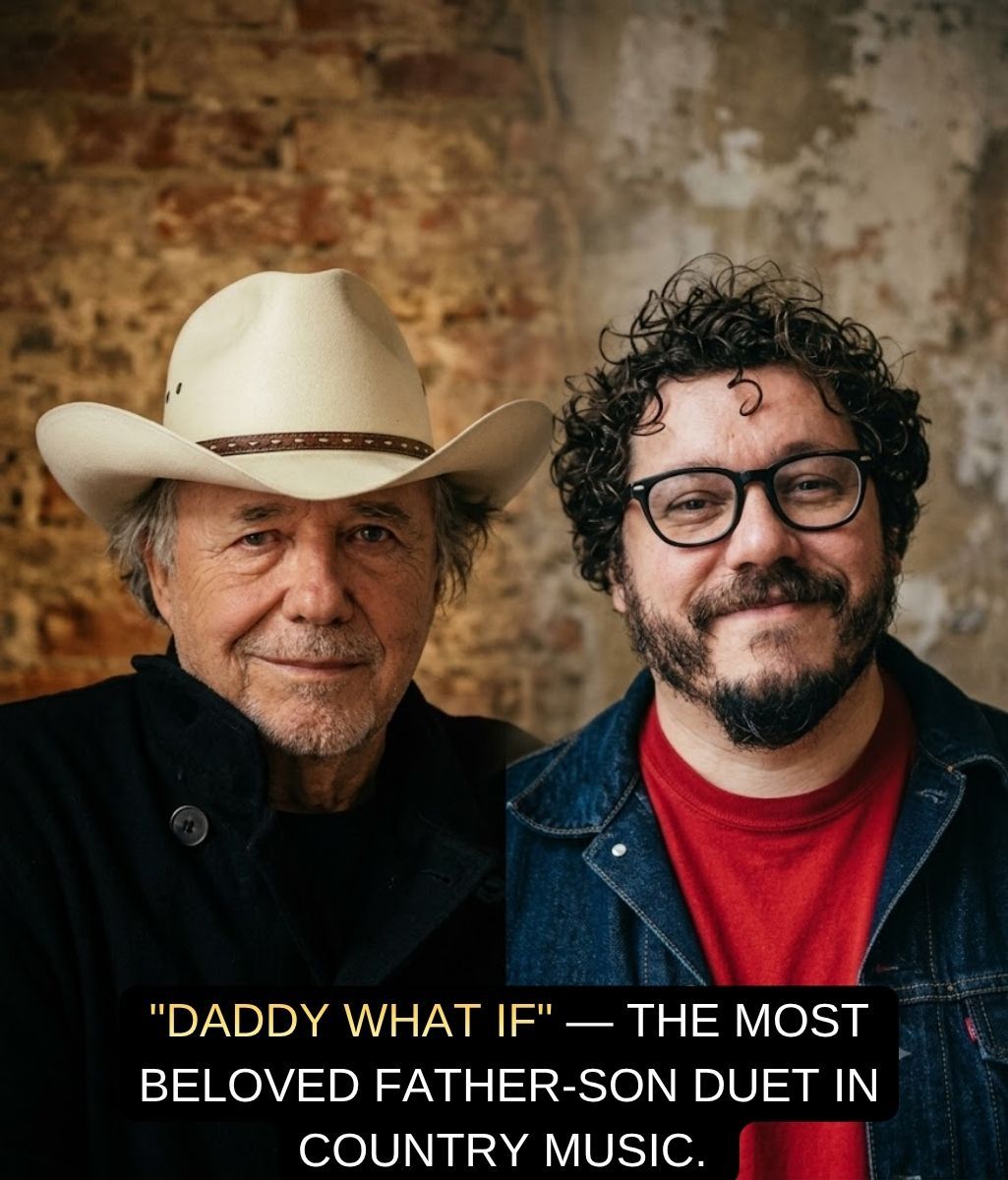
Some songs become popular because of their unforgettable melodies. Others earn their place in history through remarkable performances or groundbreaking production. But every so often, a song comes along whose greatest strength is simply its honesty. “Daddy What If” is one of those rare recordings. More than five decades after its release, it continues to be celebrated not merely as a country hit, but as one of the most beloved father-and-son duets ever recorded.
What makes this song so extraordinary is that it captures something that cannot be manufactured inside a recording studio. It preserves a genuine conversation between Bobby Bare and his five-year-old son, Bobby Bare Jr., allowing listeners to hear a moment of childhood exactly as it unfolded. The questions are simple, innocent, and filled with the endless curiosity that only a young child can possess. Bobby Bare’s responses are calm, reassuring, and overflowing with quiet affection. Together, they created something that feels less like a performance and more like an intimate family memory shared with the world.
Unlike many recordings of its era, “Daddy What If” did not rely on elaborate production techniques or carefully crafted studio effects to leave a lasting impression. There were no dramatic vocal arrangements, no complicated orchestration, and no attempt to overwhelm listeners with spectacle. Instead, the song placed complete trust in something far more powerful—the natural bond between a father and his child.
Every question asked by young Bobby feels authentic because it reflects the way children naturally see the world. They wonder about impossible things, ask questions that adults often overlook, and approach life with complete sincerity. Rather than treating those questions as childish, Bobby Bare answered them with warmth, patience, and respect. That gentle exchange transformed an ordinary conversation into a timeless piece of music that continues to resonate across generations.
The beauty of “Daddy What If” also lies in its remarkable simplicity. Bobby Bare never tried to overshadow his son’s voice or turn the recording into a showcase for his own talent. Instead, he allowed the innocence of childhood to remain at the center of every verse. His steady, comforting voice serves almost like an anchor, giving listeners the reassuring presence of a father who is fully engaged with his child. That balance between youthful wonder and parental wisdom gives the song an emotional depth that few recordings ever achieve.
For many listeners, hearing “Daddy What If” brings back memories of conversations they once shared with their own fathers or children. It reminds parents of a time when their sons and daughters filled the house with endless questions, and it reminds grown children of moments they may not have fully appreciated until years later. Those memories become even more meaningful as families grow older and time quietly moves forward.
Perhaps that is why the song has remained so deeply loved for more than fifty years. Musical styles have changed. Recording technology has advanced beyond anything imaginable when the song was first released. Entire generations of country artists have come and gone. Yet “Daddy What If” continues to find new audiences because the emotions it expresses are universal. Every family understands the value of those brief seasons when children are small enough to believe their parents have answers for everything.
The recording also stands as a beautiful reminder that some of life’s greatest moments are never planned. Bobby Bare could not have known that singing alongside his young son would create one of the most enduring family recordings in country music history. What began as a heartfelt duet eventually became a treasured classic, proving that authenticity often leaves a far greater legacy than perfection.
Even today, listeners continue to discover “Daddy What If” for the very first time. Younger generations often encounter it through family recommendations, classic country playlists, or stories about Bobby Bare’s remarkable career. Despite being created in a completely different era, the song still feels fresh because genuine love never becomes outdated. Its message does not depend on trends or changing musical tastes. Instead, it speaks directly to experiences that every family understands.
Looking back, it becomes clear that “Daddy What If” was never simply about questions and answers. It was about trust, love, patience, and the quiet joy of spending time together. Those are the moments that become priceless as years pass, and those are the memories that music has the unique ability to preserve forever.
More than half a century later, “Daddy What If” remains far more than a successful country recording. It has become a lasting symbol of family, innocence, and the irreplaceable bond between a father and his child. In a world where so much music is built around bigger productions and louder performances, this gentle conversation between a father and his five-year-old son continues to remind us that the songs we treasure most are often the ones that capture life’s simplest truths. Sometimes, all it takes is one child’s curious question and one father’s loving answer to create a masterpiece that will continue touching hearts for generations to come.