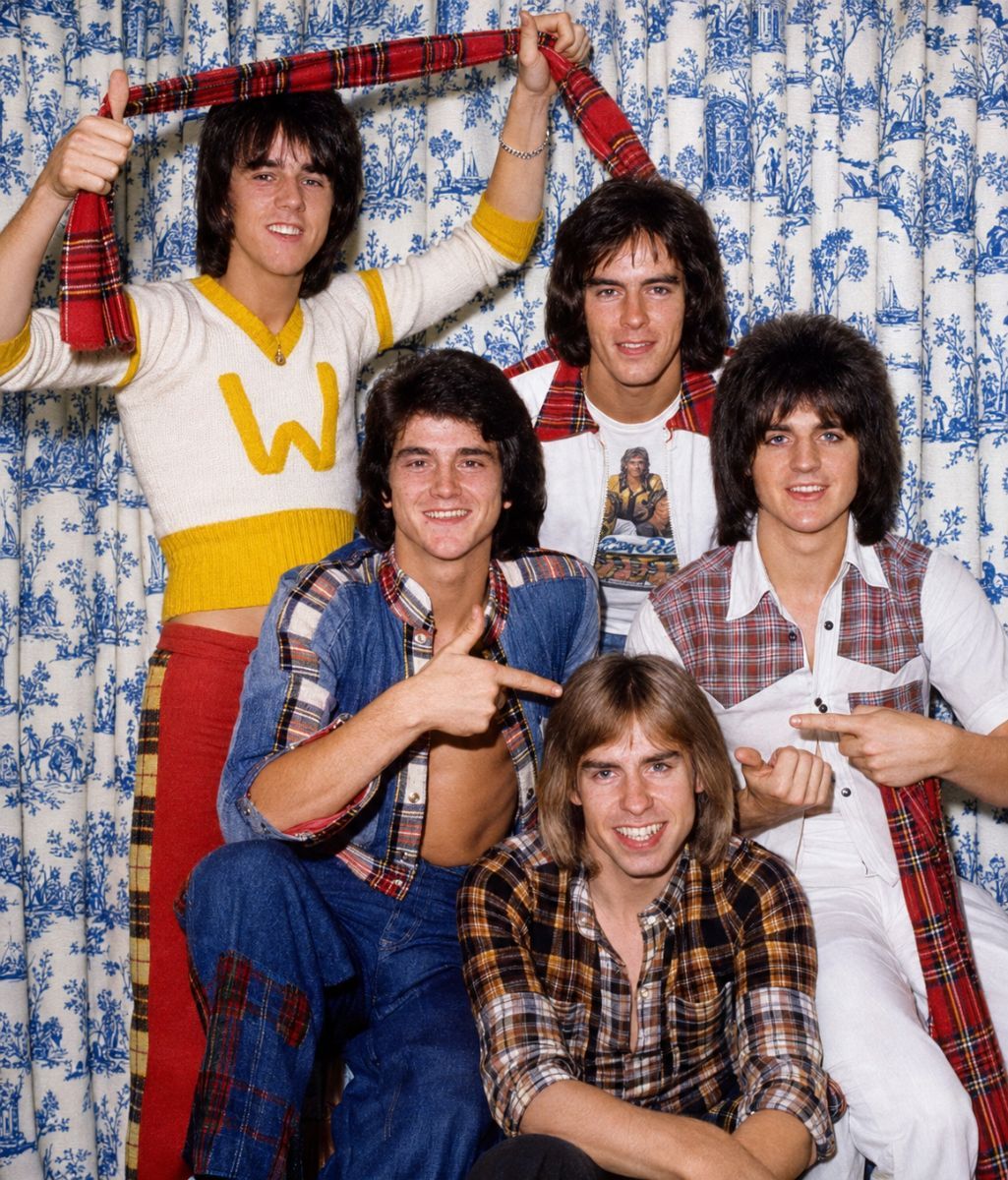
When Les McKeown died suddenly in April 2021 at the age of 65, the news carried a particular sadness for anyone who had grown up during the height of Rollermania.
For millions of fans, Les was forever the young frontman standing beneath the stage lights in tartan, singing songs such as “Shang-a-Lang,” “Bye Bye Baby,” “Give a Little Love” and “Saturday Night.” His voice became inseparable from the most successful years of the Bay City Rollers, and his energetic stage presence helped turn the Scottish group into an international phenomenon.
Yet behind the familiar photographs was a far more complicated history.
The members of the Bay City Rollers did not always remain close after the glory years ended. There were disagreements over money, reunions, ownership of the group’s name and the way the band’s history should be remembered. Les and Stuart “Woody” Wood were among those whose relationship had not always been easy.
That is why Woody’s words after Les died carried such weight.
Speaking after learning of the death, Woody did not pretend that everything between them had always been perfect. He openly acknowledged that he and Les had experienced disagreements over the years, but he immediately placed those differences aside and offered heartfelt condolences to Les’s wife Peko, his son Jubei, and the wider Bay City Rollers fan community.
Woody described the moment as a sad day in the history of the band.
He also chose to remember something much older than the arguments.
Before Woody himself became one of the familiar faces of the Rollers, he had been working around the group when Les first arrived. Les joined in 1973, replacing singer Nobby Clark, and Woody remembered seeing one of those first performances firsthand.
According to Woody, Les brought new energy into the band.
He remembered him as a powerful live performer, full of movement and excitement, someone capable of transforming the atmosphere the moment he stepped onto the stage.
That memory mattered because Les’s arrival came at a critical moment.
Within a short period, the Bay City Rollers exploded into one of the defining pop phenomena of the 1970s. The screaming crowds became so intense that newspapers compared the hysteria surrounding the group to Beatlemania, while the band sold millions of records and became household names across Britain, Europe, North America and beyond.
Despite everything that happened later, those years remained part of a history the members could never completely separate from one another.
Even Derek Longmuir spoke in a similar way after Les died. He acknowledged that they too had experienced differences, but said he preferred to remember the extraordinary years they spent traveling the world together at the height of Rollermania. He called Les a brilliant frontman and a great entertainer and offered his condolences to the family.
Those reactions revealed something important about the Bay City Rollers story.
The band’s history was never as simple as the smiling photographs suggested.
There had been affection, rivalry, extraordinary success, arguments and long periods when former members followed separate paths. Fame created memories they shared forever, but it also created tensions that could not always be repaired.
In 2015, however, Les, Woody and Alan Longmuir reunited for a comeback tour, and tickets sold rapidly as longtime fans returned to hear the music of their youth once again. For a brief period, men who had lived through decades of complicated history stood together again beneath the Bay City Rollers name.
Alan died in 2018.
Three years later, Les was gone as well.
By then, every disagreement seemed smaller beside the reality that another piece of the original Rollermania era had disappeared.
Woody’s tribute did not rewrite their history, and perhaps that is what made it meaningful.
He did not claim that they had always been best friends. He did not erase the disputes or pretend that the years between them had been simple. Instead, he acknowledged the difficulties while still recognizing what Les had brought to the band and what his death meant to the people who had shared that extraordinary chapter of music history.
For longtime fans, that honesty made the message especially moving.
The Bay City Rollers were never simply five smiling young men frozen forever in a 1970s photograph. They were real people whose relationships changed with time, fame and disappointment. When Les McKeown died, Woody did not deny those differences — he simply chose to remember the performer who had once brought new life to the band and to send sympathy to the family left behind.