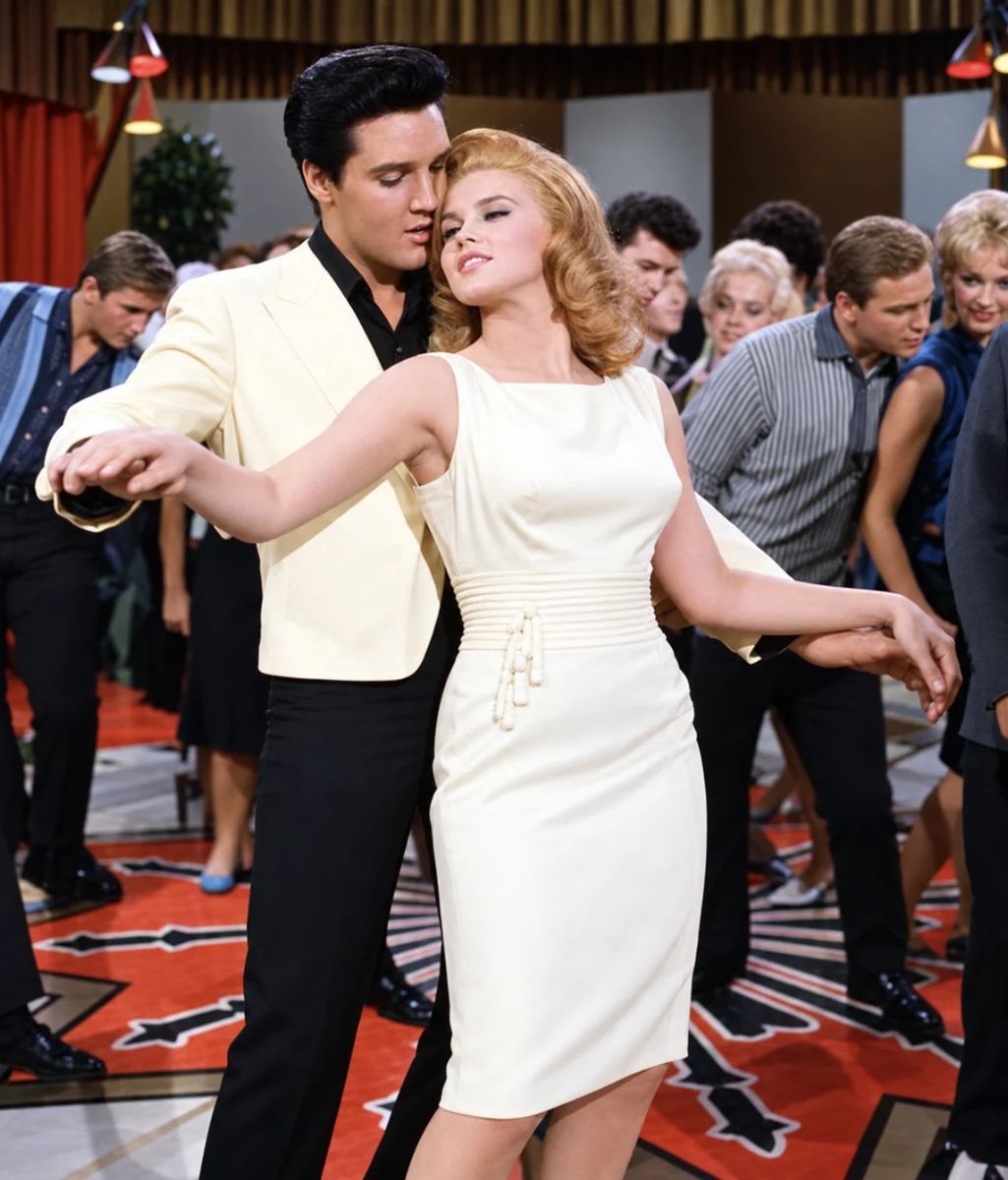
When Elvis Presley and Ann-Margret met while making Viva Las Vegas in 1963, the chemistry between them was difficult to hide. Audiences would later see that energy on screen, but according to Ann-Margret’s own recollections, the connection developed just as strongly away from the cameras. They were both young, enormously famous, private by nature and transformed whenever music or performance gave them permission to become larger than themselves.
Ann-Margret later wrote that she and Elvis felt an immediate sense of recognition in one another. They shared similar backgrounds, strong family ties, faith and a love of performing, while both understood the strange isolation that could come with sudden celebrity. She remembered an emotional electricity between them that became increasingly difficult to ignore as filming continued.
For Elvis, Ann-Margret appeared to represent something unusually familiar. People around the production noticed how alike they could seem when performing, and she was sometimes described as a female counterpart to Elvis because both could appear quiet offstage and explosive once the music started. Their shared energy helped make Viva Las Vegas one of the most memorable films of Elvis’s Hollywood years, but it also turned a professional partnership into a personal relationship that quickly attracted attention outside the studio.
The relationship became complicated because Elvis already had Priscilla Beaulieu in his life. Ann-Margret later acknowledged that she and Elvis discussed marriage, but she also understood that he had existing “commitments” and promises that could not simply be ignored. Those circumstances created a painful contradiction because the attraction between them was genuine, yet Elvis was already moving toward a future that had been taking shape before Ann-Margret entered his life.
That is where the story becomes more revealing from Elvis’s side.
He did not behave as though Ann-Margret had meant nothing to him once the romance began to fade. According to accounts cited in later biographies, Elvis at one point even asked Colonel Tom Parker about taking on Ann-Margret’s career, although the idea went nowhere after Parker made clear that managing her would take attention away from Elvis himself. The episode suggests that Elvis was thinking about her future as well as his own, even if he ultimately remained centered on the career and life already surrounding him.
Eventually, the two moved apart romantically, but their connection did not disappear.
That distinction is one reason their story has fascinated fans for so long. Elvis could have allowed the relationship to vanish once the film was finished and the publicity surrounding them faded, yet the evidence suggests something more enduring. They remained in contact, attended each other’s performances and continued exchanging gestures of affection long after the possibility of becoming a couple had passed.
One of the most memorable examples came after Ann-Margret married Roger Smith in 1967. Elvis visited her backstage before one of her performances and spoke privately with her about the feelings he still carried. Ann-Margret later remembered the encounter as serious and deeply emotional, making clear that whatever had ended between them romantically had not been erased from Elvis’s heart.
Even more telling was the tradition Elvis maintained for years.
Whenever Ann-Margret opened a new engagement, Elvis sent her a large flower arrangement shaped like a guitar. The gesture continued until his death in 1977, long after both of their lives had moved in different directions. It was not the behavior of a man trying to restart an old relationship, but it was also difficult to dismiss as meaningless. The flowers became a quiet reminder that Elvis still remembered what Ann-Margret had represented during one of the most intense periods of his Hollywood life.
Ann-Margret’s marriage to Roger Smith lasted for decades, while Elvis went on to marry Priscilla in 1967. Their lives followed separate paths, but Ann-Margret later made clear that Roger understood the unusual friendship she continued to share with Elvis and did not treat it as a threat to their marriage. That acceptance allowed an old relationship to become something different without forcing either person to pretend the past had never existed.
Looking back, the most interesting part of Elvis’s side of the story may be what he did not do.
He did not publicly turn Ann-Margret into an enemy after the romance ended, and he did not erase her from his life simply because circumstances had made a future together impossible. Instead, he kept a respectful connection alive through private visits, performances, gifts and the annual flowers that became their quiet tradition.
That history gives their relationship a different meaning than the simple question of whether Elvis should have chosen Ann-Margret over Priscilla.
Real lives rarely fit such clean alternatives.
Elvis could have cared deeply for Ann-Margret while still feeling bound by promises and expectations elsewhere. Ann-Margret could have loved him while recognizing that those commitments were real. Both could eventually build different lives while continuing to carry affection for a relationship that had once seemed powerful enough to change everything.
When Elvis died on August 16, 1977, Ann-Margret attended his funeral in Memphis. By then, nearly fourteen years had passed since Viva Las Vegas first brought them together, yet their connection had survived in a quieter form long after the romance itself had ended.
That may be why fans still return to their story.
It was never simply about two attractive stars who fell for each other while making a movie. It was about timing, loyalty, career, promises and a connection that proved difficult to erase even after both people understood they could not build a life around it.
Elvis Presley and Ann-Margret did not end up together, but the years that followed suggest that the King never treated what happened between them as something easily forgotten.