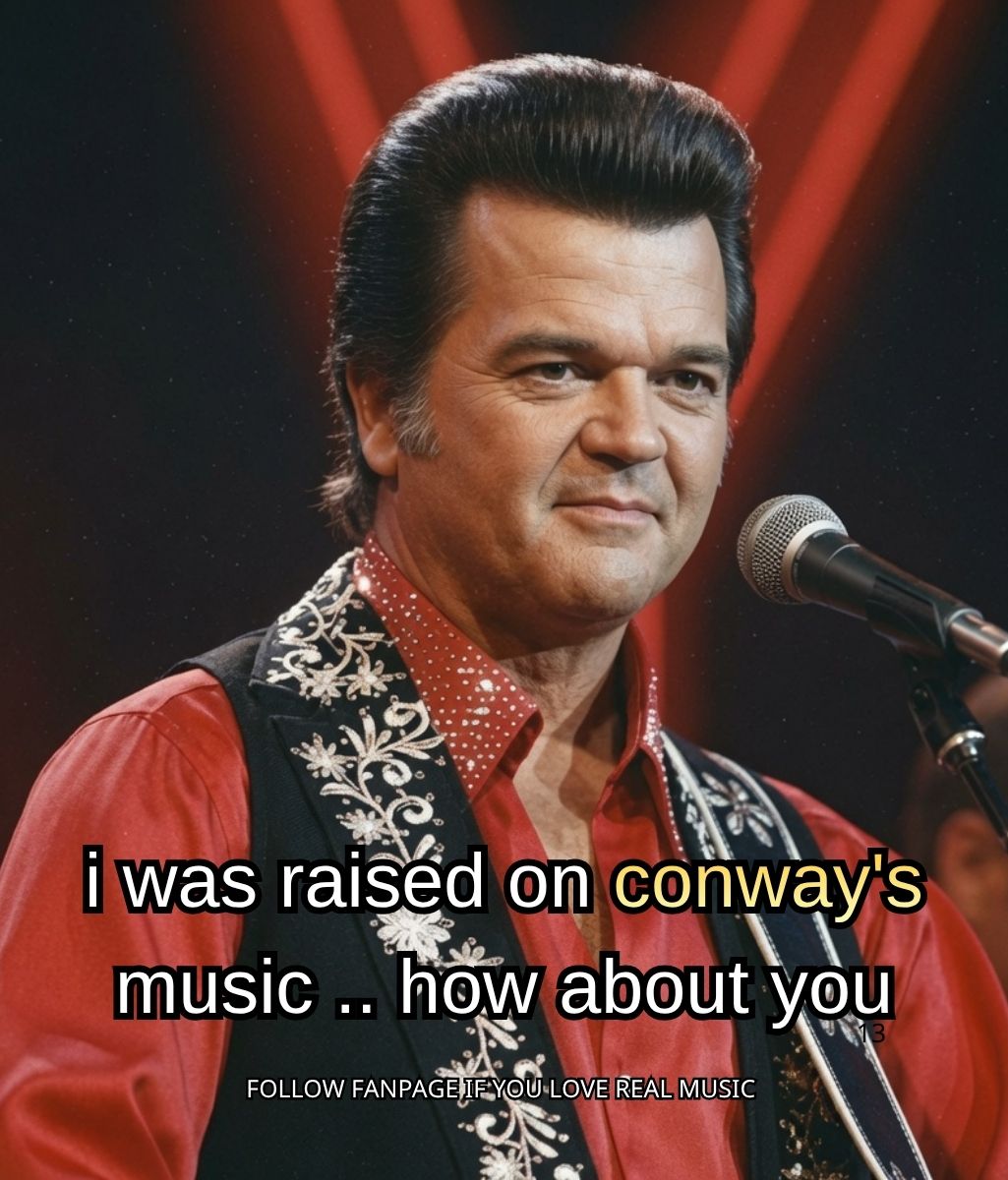
His concerts could feel almost like religious revivals, yet Conway Twitty built that extraordinary devotion through something increasingly rare in show business: mystery. He rarely spoke onstage, avoided much of the machinery of celebrity, and allowed his songs—and the silence surrounding them—to create a connection with audiences that became part of his legend.
Thousands of voices could fill a concert hall before Conway Twitty had said much of anything. The excitement surrounding his appearances could become so intense that comedian Jerry Clower famously called him “The High Priest of Country Music.” It was an unforgettable nickname, and it captured something unusual about the atmosphere Twitty could create. His audiences were not merely waiting to hear familiar hits. They arrived with the kind of anticipation reserved for someone whose music had already become deeply connected to their lives. Yet the man at the center of all that emotion often remained remarkably restrained.
Twitty did not rely on elaborate speeches or endless conversation between songs to hold a crowd. For years, he was known for saying very little onstage. There were no lengthy explanations before every number and little effort to turn the concert into a showcase of personality between performances. Even the familiar ritual of leaving the stage only to return for an encore was something he generally avoided. Instead, he walked out, delivered the music with unmistakable conviction, and allowed the songs themselves to carry the evening. In a business where performers often worked hard to make themselves seem larger than life, Twitty discovered that saying less could sometimes make an artist seem even more compelling.
That restraint became even more fascinating because it did not end when the concert was over. Away from the stage, Twitty often kept his distance from the traditional machinery of country music celebrity. He was not constantly chasing interviews, television appearances, or industry gatherings simply to remain visible. While other stars understood that publicity could keep their names in front of audiences, Twitty built his career around a very different philosophy. He seemed content to let a record, a concert, and that unmistakable voice speak for him. The result was an artist whom millions of people knew intimately through music while still knowing surprisingly little about the man once the microphone was turned off.
And perhaps that was exactly why the connection became so powerful. Mystery gave Conway Twitty something publicity could never manufacture. Fans had room to imagine the person behind the songs. Every restrained gesture onstage mattered more because there were fewer of them. Every lyric seemed more personal because it was not surrounded by explanations. When he sang about longing, devotion, loneliness, regret, or the complicated emotions of ordinary life, listeners did not need him to explain what the song meant. His delivery had already done the work.
His voice was perfectly suited to that approach. Twitty possessed a rich, controlled style that could move from quiet vulnerability to commanding intensity without losing its intimacy. He did not have to shout to dominate a room. A pause, a change in phrasing, or the way he held a note could draw thousands of people toward the stage. The quieter he became, the more closely people seemed to listen. That was the paradox at the heart of Conway Twitty’s appeal: the less he appeared to demand attention, the more attention he received.
It also helped create a striking contrast between the performer and the reaction around him. Onstage stood a man who could appear calm, disciplined, and almost private. In front of him were crowds filled with enormous excitement. The audience supplied the noise; Conway supplied the control. That contrast helped give his concerts their unusual intensity and explains why Clower’s “High Priest” nickname proved so memorable. There was a sense of ceremony to the performances—not because Twitty deliberately tried to make them grand, but because his restraint allowed audiences to treat every song like an event.
This approach would be difficult to imagine in today’s world of constant visibility. Modern performers are expected to maintain an almost continuous presence through interviews, videos, social media, behind-the-scenes material, and personal updates. Conway Twitty came from an era when a star could leave something unexplained. He understood, intentionally or instinctively, that audiences did not always need complete access to the person behind the music. Sometimes distance created curiosity, and curiosity made the next appearance matter even more.
Yet mystery alone could never have sustained a career of his magnitude. Beneath the quiet persona was an artist whose catalog became deeply woven into country music history. Twitty ultimately accumulated dozens of No. 1 country hits and became one of the genre’s most recognizable voices. His recordings endured because the emotional connection listeners heard was genuine. The mystery surrounding him may have drawn people closer, but the music gave them a reason to stay.
That is what makes Conway Twitty’s stage presence so fascinating decades later. He proved that charisma does not always require constant movement, conversation, or spectacle. Sometimes charisma is the confidence to stand before thousands of people and trust a song to do what words between songs cannot. Sometimes the most commanding person in the room is the one who refuses to compete with the noise.
When Conway Twitty stepped onto a stage, he did not need to explain why he mattered. He appeared. He sang. And when the final song was finished, he left. The audience was left with the music—and with the unanswered questions surrounding the quiet man who had just commanded an entire room.
Perhaps that was the secret behind “The High Priest of Country Music.” Conway Twitty understood something many entertainers spend their entire careers trying to learn: you do not always become unforgettable by revealing more of yourself. Sometimes, you become unforgettable by knowing exactly what to leave unsaid.
Video