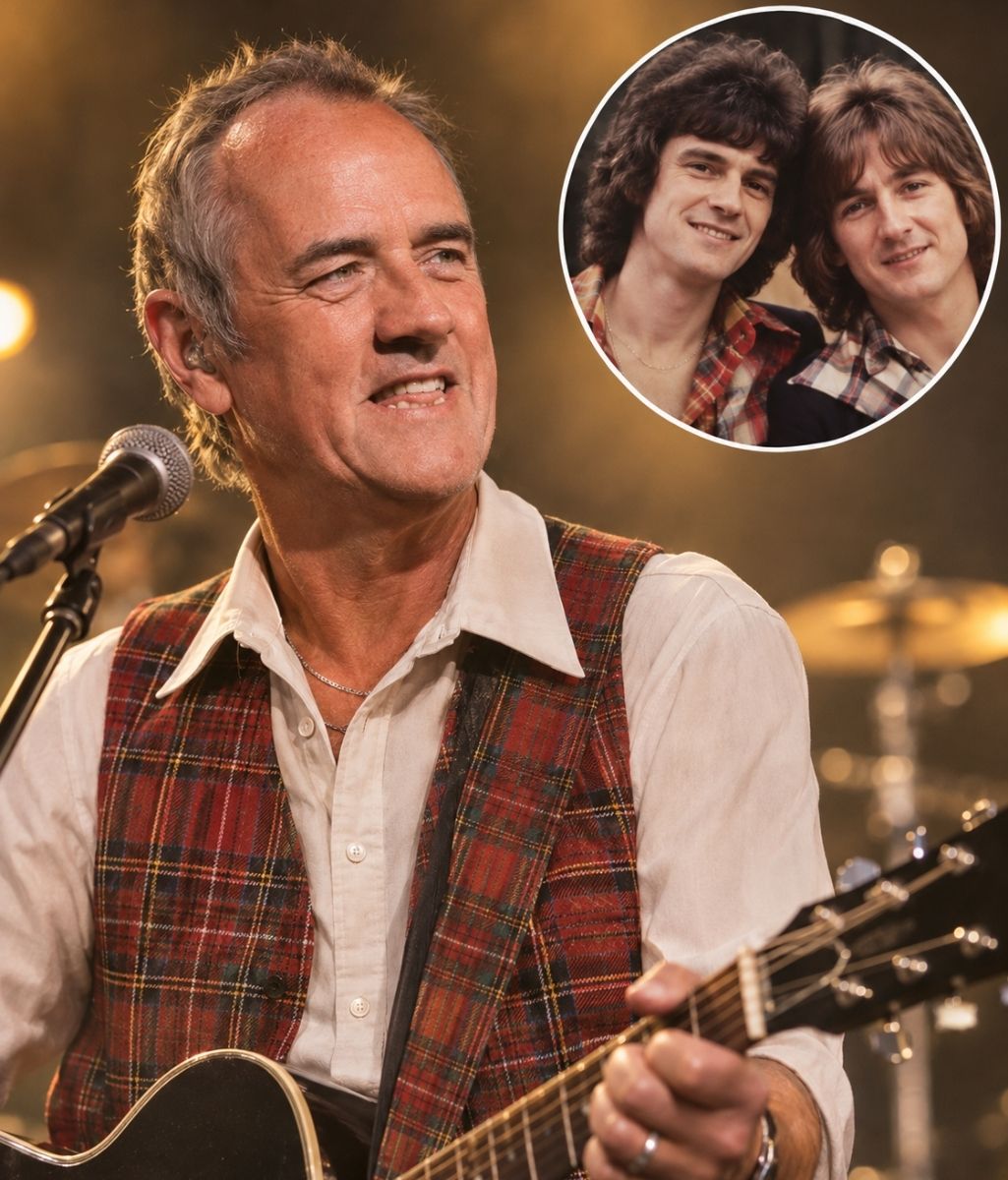
More than half a century has passed since the Bay City Rollers first sent millions of teenagers into a frenzy, transforming five young Scottish musicians into one of the biggest pop sensations of the 1970s. Their distinctive tartan outfits, infectious melodies and youthful energy created a phenomenon that became known around the world as Rollermania, leaving behind memories that an entire generation continues to treasure.
Today, the Bay City Rollers are still performing, although the faces standing beneath the stage lights are considerably different from those that once appeared on bedroom walls and magazine covers. At the center of the current lineup is Stuart “Woody” Wood, a member of the band’s legendary five-piece lineup, who has continued carrying the Rollers’ musical legacy forward alongside a new generation of musicians.
For Woody, however, keeping the band alive carries an emotional significance that goes far beyond nostalgia or commercial success. Two of the men with whom he experienced the extraordinary heights of Rollermania are no longer here, making every return to the stage a reminder of both the happiness they shared and the people they have lost.
In 2015, Woody reunited with Les McKeown and Alan Longmuir for a comeback that many longtime fans had never expected to witness. After decades of disagreements, separate careers and financial disputes, the three musicians returned to Glasgow’s Barrowland Ballroom, where audiences once again experienced the excitement of hearing those familiar songs performed together.
What nobody could have known at the time was how precious that reunion would eventually become. Alan Longmuir, a founding member whose contribution helped establish the Bay City Rollers long before their international breakthrough, died in July 2018. Less than three years later, in April 2021, Les McKeown died at the age of 65, leaving behind the unmistakable voice that had defined the group’s greatest commercial successes.
Their deaths gave Woody’s decision to continue performing a profoundly different meaning. Speaking about the band’s future, he explained that keeping the music alive for the fans had become especially important following the loss of Les and Alan. He acknowledged that neither man could ever be replaced, while expressing pride in continuing the legacy they had helped create together.
That distinction explains much about the Bay City Rollers of today. The current musicians are not attempting to erase the past or recreate the original lineup as though nothing has changed. Instead, they are bringing the familiar songs to audiences who still associate them with some of the happiest moments of their lives.
In 2024, the band released Keep On Rollin’, an album combining new material with fresh recordings of familiar favorites. Their activities continued throughout 2026, with concert dates across Britain and Ireland demonstrating that the appetite for the music of Rollermania has survived remarkably well.
The stage musical Rollers Forever has also introduced another way of celebrating the group’s legacy, focusing on the experiences of the devoted fans whose teenage years were shaped by their music. Woody even described the accompanying single as a love letter to those supporters, acknowledging the extraordinary loyalty that has endured across generations.
For many of those fans, hearing “Shang-A-Lang,” “Bye Bye Baby,” “Saturday Night” or “Give a Little Love” is about much more than enjoying an old pop record. Those melodies can bring back memories of childhood bedrooms, school friendships, first romances and evenings spent waiting for the Rollers to appear on television. They can also recall people who once shared those experiences but are no longer here to sing along.
Perhaps that is why the band’s 1977 recording “Don’t Let the Music Die” feels particularly meaningful today. Although it was recorded decades before the losses that would reshape the group’s history, its title captures the significance of Woody’s continuing commitment to the music.
The original Bay City Rollers can never stand together onstage again, but the songs they created remain a living connection between the musicians who are gone, the people who continue performing them, and the millions of fans who never stopped loving them. Every time Woody returns to the stage, another chapter of Rollermania continues, carrying the memories of Les and Alan into a world that has changed almost beyond recognition.
Video