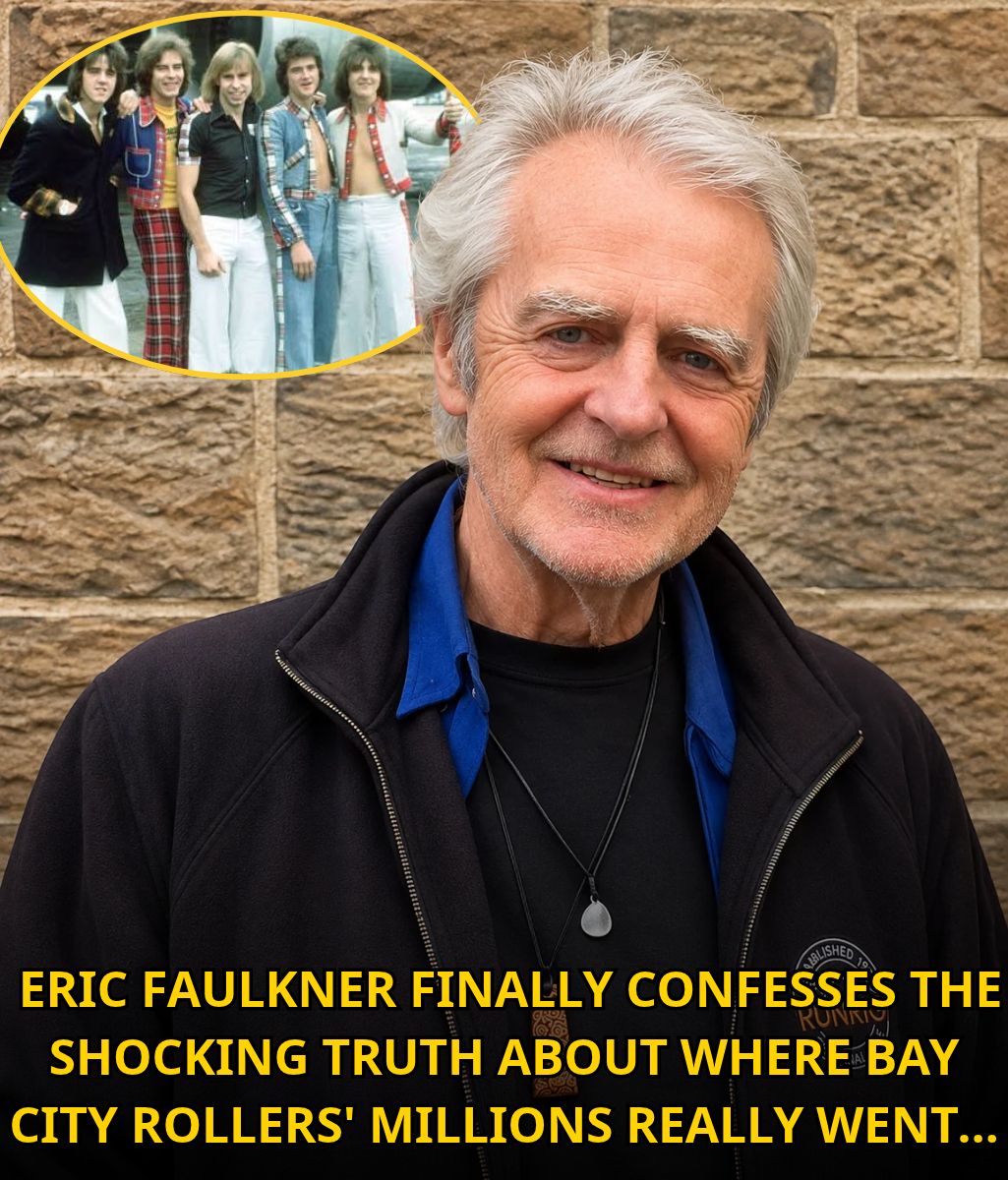
During the height of Rollermania, Eric Faulkner appeared to have everything a young musician could possibly want. As a guitarist and songwriter for the Bay City Rollers, he traveled the world, performed before enormous crowds and watched the Scottish group become one of the most successful pop sensations of the 1970s. Their records sold in extraordinary numbers, their faces appeared on countless magazine covers, and their distinctive tartan clothing became an international fashion phenomenon.
Yet behind that remarkable success was a financial mystery that would follow Faulkner and his former bandmates for decades. Despite the enormous commercial value of their music, the musicians maintained that they had received only a fraction of the royalties they believed they were entitled to, raising an uncomfortable question about who had benefited most from Rollermania.
During their teenage years, the members had entered a complicated world of management agreements, recording contracts and commercial arrangements. With concerts, television appearances and recording sessions consuming much of their time, understanding the financial machinery behind their success was a considerable challenge. The young musicians had become internationally recognizable performers, but their celebrity status did not necessarily give them control over the money generated by their recordings.
The problem became increasingly difficult to ignore after the group’s popularity declined. Although their years of chart domination had ended, songs such as “Saturday Night,” “Bye Bye Baby” and “Give a Little Love” continued to circulate through compilations, reissues and other commercial releases, creating an ongoing source of revenue from recordings made decades earlier.
In March 2007, Eric Faulkner joined Les McKeown, Stuart Wood, Alan Longmuir, Derek Longmuir and Duncan Faure in filing a lawsuit against Arista Records. The former members claimed they were owed tens of millions of dollars in unpaid royalties, bringing a dispute that had troubled them for years into public view.
Perhaps the most startling detail concerned the payments themselves. According to the lawsuit, the musicians had received approximately $254,392 in September 1997, which they described as the only royalty payment made to them during the period in dispute. Considering the band’s enormous commercial success, they believed the amount fell dramatically short of what they should have received.
The record company maintained that unresolved questions surrounding the distribution of royalties among former members had contributed to the withholding of payments. Reports at the time also indicated that money was being retained in an escrow account while the dispute remained unresolved. Rather than providing a simple explanation involving one person taking the band’s fortune, the case exposed a complicated network of contractual obligations, accounting disagreements and competing financial claims.
For Faulkner and his former bandmates, obtaining answers meant enduring years of legal proceedings. In 2011, their case was permitted to continue, but the dispute would not finally conclude until an out-of-court settlement was reached in 2016, almost nine years after the lawsuit began.
The precise financial terms were not publicly disclosed. However, author Simon Spence, who investigated the group’s history for his biography of the Bay City Rollers, subsequently reported that individual members received less than £70,000 under the settlement. Although that figure was never publicly confirmed through the settlement agreement itself, it presented a remarkable contrast with the millions the musicians had originally sought.
By then, more than forty years had passed since the world first became fascinated with the young men in tartan trousers. The teenagers who had bought their records had grown older, while the musicians themselves had spent a substantial part of their adult lives pursuing compensation for music that continued to entertain generations of listeners.
What makes Eric Faulkner’s involvement particularly significant is that he was not merely a recognizable face within the group. As a musician and songwriter, he helped shape the sound that made the Bay City Rollers internationally famous, making his participation in the legal battle an important part of the group’s complicated legacy.
The public may never know precisely how every dollar generated by Rollermania was distributed, particularly because the final settlement remained confidential. Nevertheless, the court proceedings revealed a financial reality that stood in striking contrast to the glamorous image presented to millions of teenage fans.
The Bay City Rollers gave an entire generation some of its happiest musical memories, yet the men responsible for creating those memories spent decades fighting for a share of the fortune their success had generated. Rollermania made them internationally famous, but fame and financial security turned out to be two very different things.