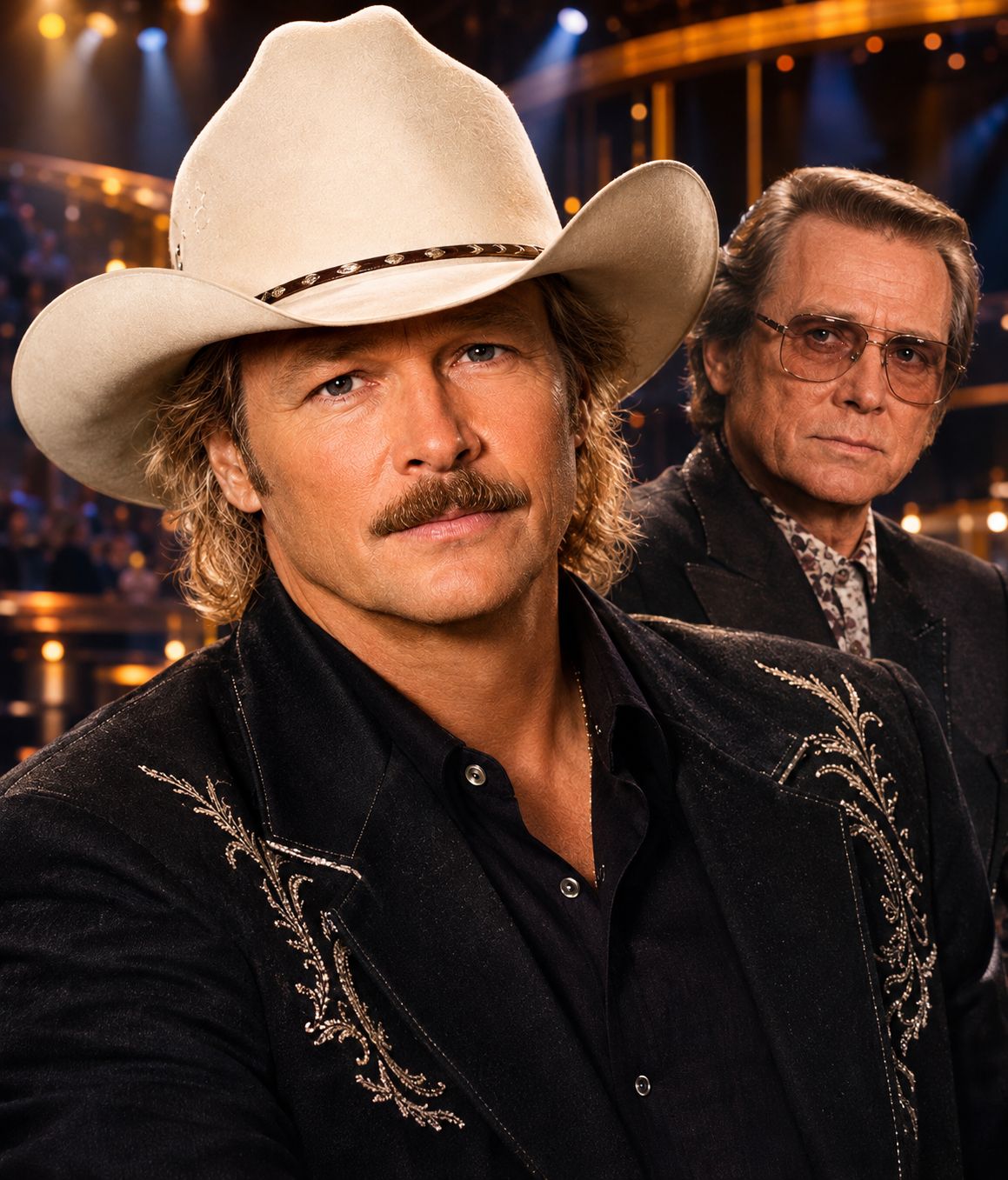
By the late 1990s, George Jones had already spent more than four decades proving that country music could carry an entire lifetime inside three minutes. His voice had survived changing trends, personal chaos and generations of younger singers, yet one night at the CMA Awards exposed an uncomfortable question that country music still struggles with today: what happens when the industry begins moving past the very legends who built it?
George was scheduled to perform “Choices,” a song that had become one of the most meaningful recordings of his later career. The lyrics reflected regret, responsibility and the consequences of decisions made over a lifetime, themes that sounded especially powerful coming from a man whose struggles with alcohol, addiction and missed performances had long been public knowledge.
But there was a problem.
George was reportedly told that he would have only a shortened amount of time to perform the song on the televised broadcast. Rather than cut it down, he chose not to appear.
Then Alan Jackson stepped onto the stage.
Alan had grown up listening to George Jones and had long regarded him as one of the greatest singers country music had ever produced. During his own CMA performance of “Pop a Top,” Jackson suddenly stopped the song before it was finished. Without giving the audience a long explanation, he began singing “Choices.”
The meaning was impossible to miss.
Alan never needed to ask George a literal question in front of the cameras. His decision asked something much larger on George’s behalf: If country music no longer has time for George Jones to sing an entire song, what exactly are we making time for?
Accounts of the night say George was backstage and deeply moved by what Alan had done. The moment became one of the most remembered demonstrations of respect between two generations of country singers because Jackson risked disrupting his own nationally televised performance to defend an artist who had influenced him long before he became a star himself.
Their connection only grew stronger afterward.
George later described Alan as a true friend, and shortly before his death he wrote Jackson a personal letter thanking him for years of friendship and for spending time with George and Nancy. George even invited Alan to take part in a planned final concert in November 2013, an event he would never live to see.
When George died on April 26, 2013, Alan answered that old question in another way.
At George’s funeral inside the Grand Ole Opry House, Jackson walked quietly onto the stage and performed “He Stopped Loving Her Today.” There was no dramatic introduction. As the song reached its final lines, George’s casket remained only a short distance away, turning lyrics fans had heard for decades into something almost unbearably literal.
Years later, the Grand Ole Opry even combined George’s 1993 performance of the song with Alan’s 2013 funeral rendition, creating a digital duet between the singer who made it immortal and the friend who helped carry it forward.
That is why the question behind that old television moment has never really disappeared.
Every generation of country music eventually has to decide what it will do with the voices that came before it. New stars will arrive, sounds will change and television will always chase the next big moment, but artists such as George Jones cannot simply be replaced by whoever comes next.
Alan Jackson never had to look George Jones in the eye and ask whether country music still respected its legends. On live television, he answered the question himself — by stopping his own song and making sure George’s voice was heard anyway.