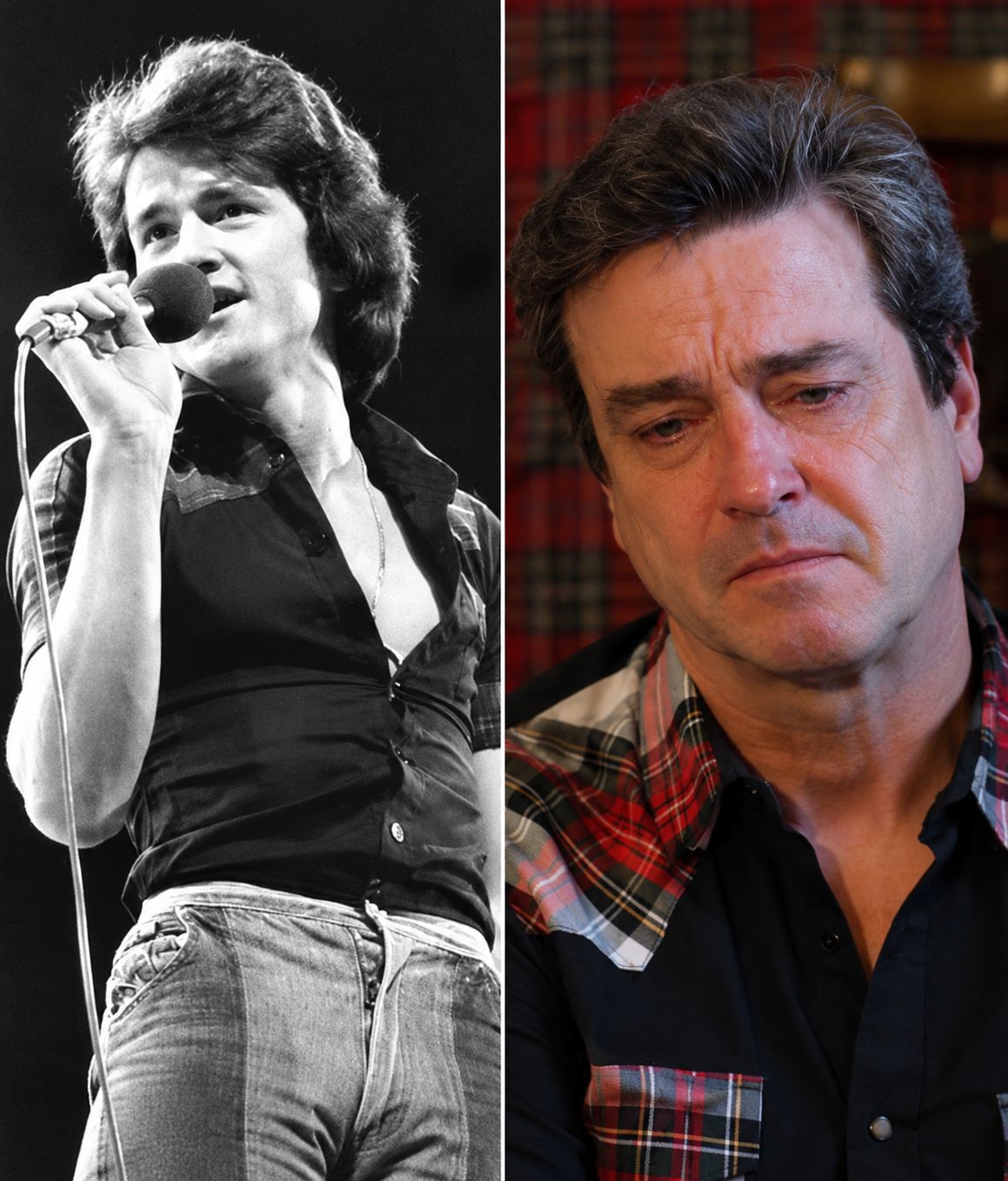
For anyone who remembers the Bay City Rollers at the height of Rollermania, it is difficult to imagine a world in which Les McKeown was not surrounded by noise.
During the mid-1970s, his face appeared on bedroom walls, his voice came through radios across Britain and beyond, and thousands of teenagers screamed whenever the Rollers stepped onto a stage. Songs such as “Bye Bye Baby,” “Shang-A-Lang,” “Give a Little Love” and “Saturday Night” turned the group into one of the biggest pop phenomena of the decade.
Then the crowds disappeared.
By December 1993, when Les sat down for a rare interview about his work with the Bay City Rollers and the changes in his personal life, the world around him looked very different. The interview survives as a revealing snapshot of a man trying to keep a connection with the music that had once made him famous while also adjusting to a life after the extraordinary intensity of Rollermania.
That transition was not simple.
Les had left the classic Rollers lineup in 1978, after disagreements about the musical direction of the band. Years later, he said he had wanted the group to continue working with the strongest outside songwriters available, while other members increasingly wanted to write and produce their own material. Les eventually lost that argument and walked away.
He did not completely disappear from music.
Les recorded solo material, found some success in Japan and continued writing and performing. Yet the scale of what came afterward could never easily match what he had experienced with the Bay City Rollers.
That difference mattered more than fans may have realized.
In later interviews, Les described the psychological impact of going from being an international superstar to living a far more ordinary life. He admitted that somewhere beneath the surface, it could be difficult to accept that the world which had once revolved around the band had moved on. He described the feeling of having once been a superstar and then suddenly no longer being one, while part of him still wanted to return to that extraordinary level of fame.
For someone who had become famous while still a teenager, that loss of identity could be especially complicated.
Les joined the Rollers in 1973 and later remembered the early years as an incredible adventure. He traveled the world, experienced a level of attention few young people could ever imagine and felt, in his own words, as though his entire teenage world had exploded around him.
When that world ended, ordinary life must have felt unusually quiet.
By the mid-1980s, Les had returned from London to Edinburgh, married and had a child. He later said he had considered retiring from music and settling into family life. However, as income from his earlier recording career slowed, he began looking for new projects and eventually formed his own version of the Bay City Rollers to perform the songs audiences still wanted to hear.
That decision became central to his life after fame.
Rather than trying to erase the Rollers years, Les learned how to live alongside them.
Throughout the 1990s and beyond, he continued performing versions of the old hits under names associated with the Bay City Rollers. The audiences were smaller than they had been during Rollermania, but the connection remained powerful because many of the people standing in front of him were the same fans who had loved the band as teenagers.
Les later acknowledged that this period was not always easy.
He described himself as only “half-heartedly” doing the Bay City Rollers circuit through parts of the 1990s and early 2000s, while personal struggles gradually became more serious. After the deaths of both of his parents, painful memories from his earlier life began returning, and his problems with alcohol intensified before he eventually entered rehabilitation in 2008.
Yet even during those difficult years, the music itself was never the enemy.
After treatment, Les came to believe that performing the old songs could actually become something positive again. He returned to touring with renewed focus and eventually performed far more concerts with his own Rollers lineup than the original classic lineup had managed during the brief peak of Rollermania.
That makes the 1993 interview especially poignant today.
Les was standing somewhere between two lives.
Behind him was a period of fame so intense that it had permanently shaped his identity. Ahead of him were decades of touring, personal struggles, rehabilitation, reunions and another long relationship with the music he had never completely been able to leave behind.
For fans, the heartbreaking part is not that Les stopped loving the Bay City Rollers.
He never really did.
The difficult truth was that the world of Rollermania could not last forever, even for the people who had lived inside it.
The screaming crowds grew quieter.
The charts moved on.
The teenage faces grew older.
But Les kept returning to the songs because they were one part of his past that still allowed him to feel connected to the happiest moments of that extraordinary period.
The Bay City Rollers gave Les McKeown a level of fame most people could never experience, but learning how to live after that fame may have been one of the hardest parts of his story. Years after Rollermania ended, he was still searching for a way to carry the music forward without being trapped forever inside the teenager the world remembered.