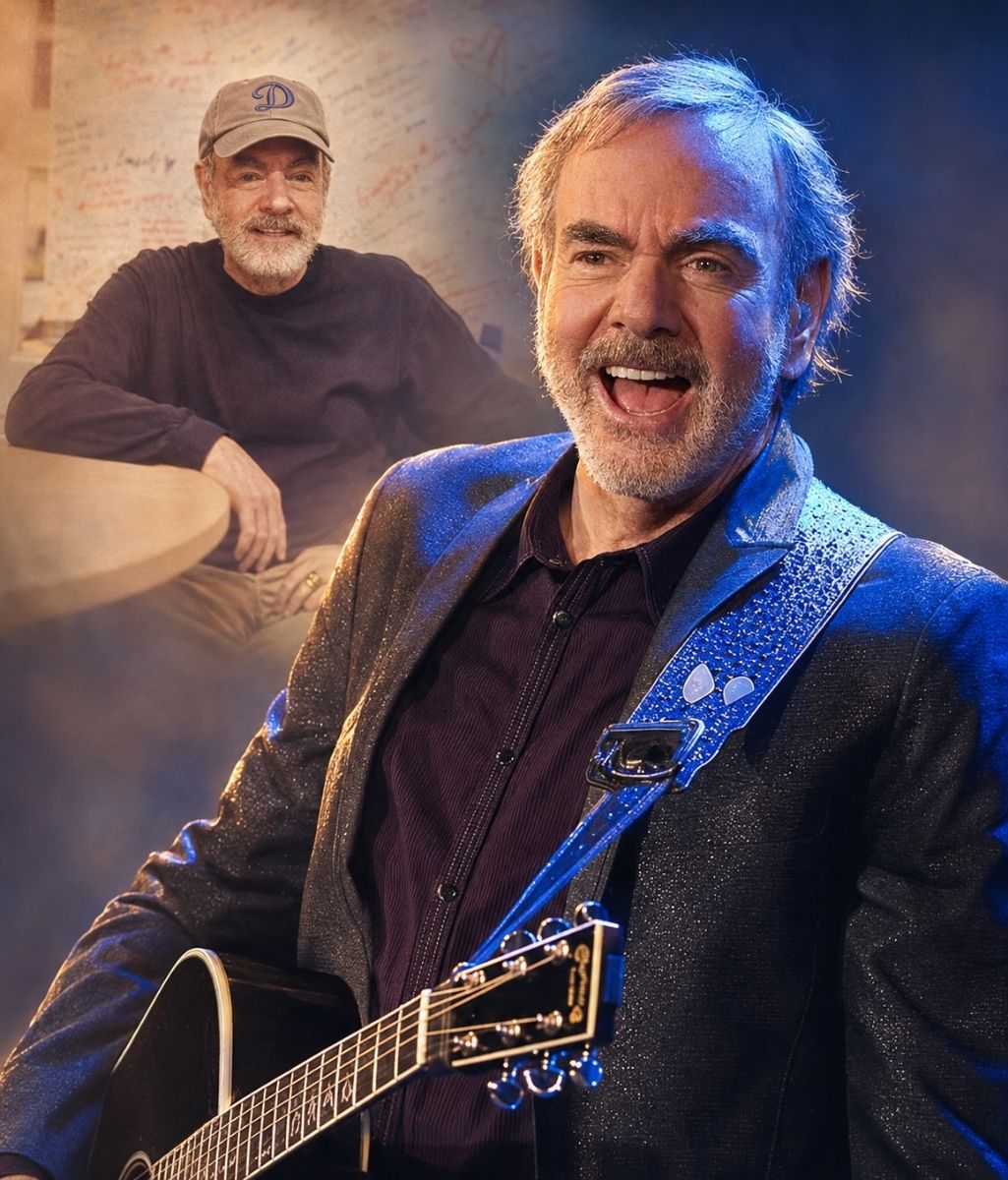
For decades, Neil Diamond seemed completely at home in front of thousands of people.
He could walk onto a stage, hear the first roar from the crowd and suddenly become larger than life. Songs such as “Sweet Caroline,” “Cracklin’ Rosie,” “Song Sung Blue” and “I Am… I Said” turned concerts into communal celebrations, while Diamond’s deep voice and confident stage presence made him look like a man who had been born for the spotlight.
But Neil himself described something very different once the performance ended.
In a 2003 interview with Larry King, Diamond admitted that he was naturally shy and introverted. When King asked how such a quiet man could become so commanding onstage, Neil explained that performing seemed to activate another part of him entirely. He even described the performer audiences saw as almost “that other guy” who appeared when the lights came on.
Once the show ended, that version of Neil disappeared.
Offstage, he preferred privacy, quiet routines and a life far removed from the image audiences knew. In another interview, Diamond said he tried to live quietly because the public side of fame could easily take over if he allowed it. He believed a performer could be a star for a few hours, but no one could realistically live as a star every moment of the day.
That contrast shaped his songwriting as well.
Diamond described writing as almost the opposite of performing. Onstage, everything was noise, energy and outward emotion. Writing, by comparison, was solitary and reflective. He would sit alone with an idea and slowly turn it into a song, often discovering parts of himself only after the song was finished.
That may explain why so many of his most famous songs feel deeply personal.
Even when Neil was not consciously writing autobiography, themes of loneliness, identity and searching for connection appeared again and again. “Solitary Man” became an obvious example, but the same emotional tension can also be heard in “I Am… I Said,” a song built around isolation and the strange feeling of belonging nowhere completely.
Neil once admitted that he had never entirely rid himself of that sense of being alone, even while living inside a world filled with millions of fans.
Fame did not necessarily make ordinary life easier.
In a 1982 interview, Diamond said that being a husband, father or friend could actually be more difficult than performing. Onstage, the rules were simple: he knew why he was there and what the audience expected. Real life, he said, was much more complicated.
That tension followed him through marriages, family life and decades of touring.
Later, after marrying Katie McNeil in 2012, Neil appeared to find more balance. Katie has described their relationship as a friendship first, built around supporting one another through difficult and happy periods. Neil himself said he had finally found the woman of his dreams after years of believing he might never build the lasting relationship he wanted.
That quieter side of Neil Diamond rarely appeared in the sequined shirts and stadium photographs.
The public saw the confident performer.
The people closest to him knew the reflective songwriter, the private family man and the shy personality who preferred to remain out of the spotlight whenever possible.
Neil Diamond could command an arena with thousands of people singing every word back to him, but when the lights went out, he returned to a much quieter world. Perhaps that contrast is exactly why his songs connected so deeply: behind the superstar was always a solitary man trying to understand himself.