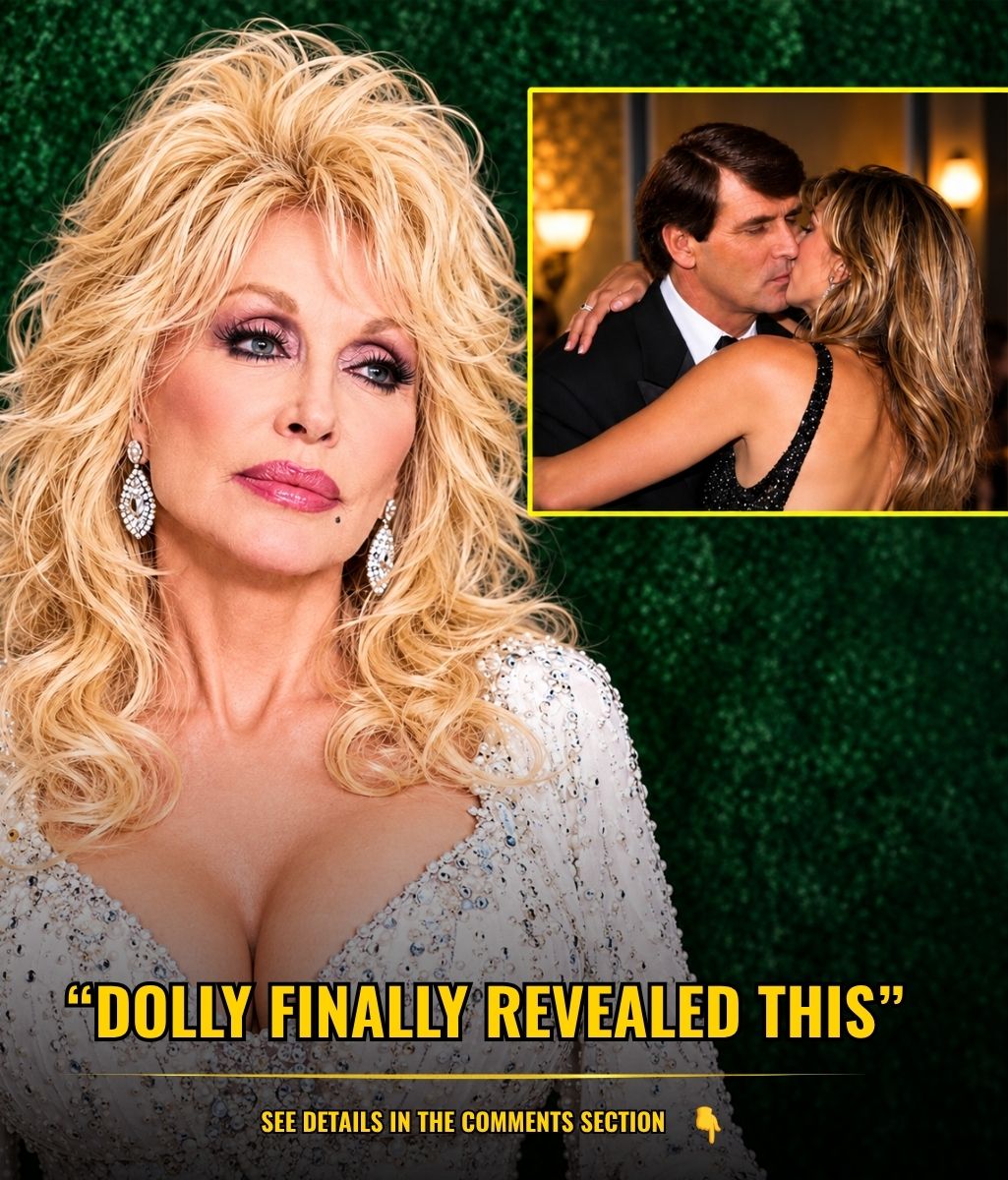
For nearly six decades, Dolly Parton lived one of the most public lives imaginable while sharing it with a man who seemed determined to remain almost completely invisible. Dolly stood beneath spotlights around the world, walked red carpets, appeared on television, toured internationally and became one of the most recognizable women in entertainment. Carl Dean, meanwhile, stayed home and rarely appeared beside her.
For years, that contrast created one of the biggest mysteries surrounding Dolly Parton’s private life. How could a marriage survive when one person belonged to the world while the other wanted almost nothing to do with fame? The answer Dolly repeatedly suggested was surprisingly simple: that difference may have been exactly what made them work.
Dolly first met Carl outside the Wishy Washy Laundromat in Nashville in 1964, shortly after she arrived in the city to pursue her dreams. Two years later, on May 30, 1966, they married in a tiny ceremony in Ringgold, Georgia. Only Dolly’s mother, the minister and his wife were there. Even at the beginning, their marriage was private, and it stayed that way.
As Dolly’s career exploded, Carl quickly discovered that he wanted no part of celebrity life. He did not enjoy public events, did not seek attention and never tried to build a career around being “Dolly Parton’s husband.” Dolly once explained that Carl simply was not the type of person who wanted to live in the spotlight. He believed that once he stepped into that world, he might never have privacy again, and Dolly thought he was right.
That choice inevitably created rumors. Over the decades, some people even questioned whether Carl was real because he was seen so rarely in public, while others interpreted his absence as evidence that the marriage must have been distant. But the private picture Dolly described was almost the opposite.
Their life together was filled with ordinary rituals. They traveled in an RV, stayed in inexpensive roadside hotels and enjoyed quiet moments away from cameras and crowds. Dolly packed food into picnic baskets, and the two would find a peaceful riverbank where they could eat together. Carl sometimes brought her the first daffodils of spring and wrote her small poems. To Dolly, those gestures mattered far more than glamorous celebrity dates.
And that is the detail that changes the entire story. Carl’s absence from Dolly’s public life was not evidence that he was absent from her life. It was how they protected it. Dolly could return from a world filled with applause to a husband who had little interest in the machinery of fame surrounding her. He provided something the entertainment industry could not: normality.
Her official biography later described Carl’s love, support and consistency as the foundation Dolly could return to whenever she came home from the road. Their personalities were also radically different. Dolly was outgoing, talkative and comfortable being the center of attention, while Carl was quiet and reserved. Dolly once joked that she was the performer and Carl preferred staying behind the scenes.
Yet instead of creating distance between them, those differences apparently gave each person room to remain themselves. Dolly explained the secret of their marriage in unusually straightforward terms: they liked each other, respected each other and laughed a lot. For all the mythology surrounding one of entertainment’s longest celebrity marriages, Dolly repeatedly returned to those simple ideas rather than offering some complicated formula for romance.
Her sister Stella Parton later offered an even more intimate description. Stella called the marriage between Dolly and Carl “very unique and very deep.” She remembered Carl as a private man who enjoyed a quieter life and remained fascinated by Dolly’s personality and humor even after decades together. Their differences, Stella suggested, complemented each other rather than dividing them.
They never had children, another part of their marriage that frequently attracted public curiosity. But they built a life around family, nieces and nephews, travel, work and the routines they created together away from Nashville’s cameras. In 2016, fifty years after their original wedding, Dolly and Carl renewed their vows. Even that celebration remained characteristically personal. They had already spent half a century together, but Dolly joked that she was ready to drag him “kicking and screaming” into the next fifty years.
Carl died in March 2025. For the first time in almost six decades, Dolly faced life without the man who had been there since before the world knew her name. She later released “If You Hadn’t Been There,” a deeply personal tribute to Carl that reflected just how central he had been to the life behind the public image.
Looking back at their marriage after his death made the little details feel even more significant: the riverbank picnics, the RV trips, the flowers, the poems and the quiet evenings away from cameras. Those were the memories Dolly chose to talk about when explaining what made their relationship last. It was not the awards, the expensive gifts or the red carpets.
Perhaps that is the most revealing part of their story. For almost 59 years, the world watched Dolly Parton become larger and larger, while Carl Dean seemed to disappear further and further from view. But behind closed doors, that may have been exactly the arrangement both of them wanted.
Dolly belonged to millions of fans when the stage lights were on. When those lights went dark, she had a place where she did not need to be Dolly Parton the superstar. She could simply be Dolly, and Carl Dean was already there.