By 1976, Dolly Parton had already proven that she could write hit songs, command a stage, and stand beside some of country music’s biggest names. She had scored major successes with songs such as “Jolene,” “I Will Always Love You,” “Love Is Like a Butterfly,” and “The Bargain Store,” but she was still fighting for something even more important than another hit record: the right to define her own career on her own terms.
For years, Dolly had been closely associated with Porter Wagoner, the established country star who had brought her onto his television show in 1967. Their partnership helped introduce Dolly to a national audience, and together they became one of country music’s most recognizable duos. Yet by the early 1970s, Dolly increasingly wanted to step beyond the role of featured singer and duet partner. She wanted to write her own future, make her own decisions, and prove that she could succeed without remaining permanently attached to someone else’s show.
That decision was not simple.
Leaving Porter meant walking away from the platform that had helped build her career. It also meant risking the possibility that audiences might not follow her once she was standing entirely on her own. Dolly had already begun that separation in 1974 when she left Porter’s road and television operation, but 1976 became the year when the break truly felt complete. The Library of Congress timeline notes that Dolly’s own syndicated television show premiered that year and that she ended her long professional association with Wagoner.
That television show was simply called Dolly.
On paper, the title looked almost modest, but its meaning was enormous. For years, viewers had seen Dolly inside someone else’s format. Now the program was built around her. She was no longer the featured woman standing beside a more established male star. She was the host, the central personality, and the reason the show existed.
The series was ambitious for Nashville television at the time. Contemporary reporting described it as a large-budget syndicated production shot at Opryland and other locations around Nashville. It was designed to showcase Dolly not just as a country singer, but as a broader entertainer who could move between music, comedy, conversation, and mainstream television.
That shift mattered because Dolly was already thinking beyond the boundaries of traditional country music.
She wanted to remain rooted in where she came from, but she did not want those roots to become a cage.
The show featured country performers alongside artists from other corners of popular culture, including Ronnie Milsap, Kenny Rogers, Emmylou Harris, Linda Ronstadt, KC and the Sunshine Band, Anne Murray, and many others. The lineup reflected Dolly’s growing desire to reach audiences who might never have watched a conventional country-music program.
Even the structure of the show reflected her identity. “Love Is Like a Butterfly” opened the program, while “I Will Always Love You” was used as the closing theme. Those choices linked the new television chapter directly to songs Dolly had written herself, reinforcing the idea that the show was not merely displaying Dolly Parton the performer. It was presenting Dolly Parton the songwriter, storyteller, and independent creative force.
Yet the most revealing thing about Dolly is that even this victory came with complications.
Years later, Dolly admitted that she had not been completely happy with the final version of the program. She felt that some of its production choices did not always reflect who she really was, and the demanding schedule eventually became exhausting. The show lasted only one season, but that does not diminish its significance. In many ways, the experience taught Dolly an important lesson about creative control: having your name on something is not always the same as having complete control over what it becomes.
That lesson would become increasingly important as her career expanded.
And in October 1976, another symbolic moment arrived.
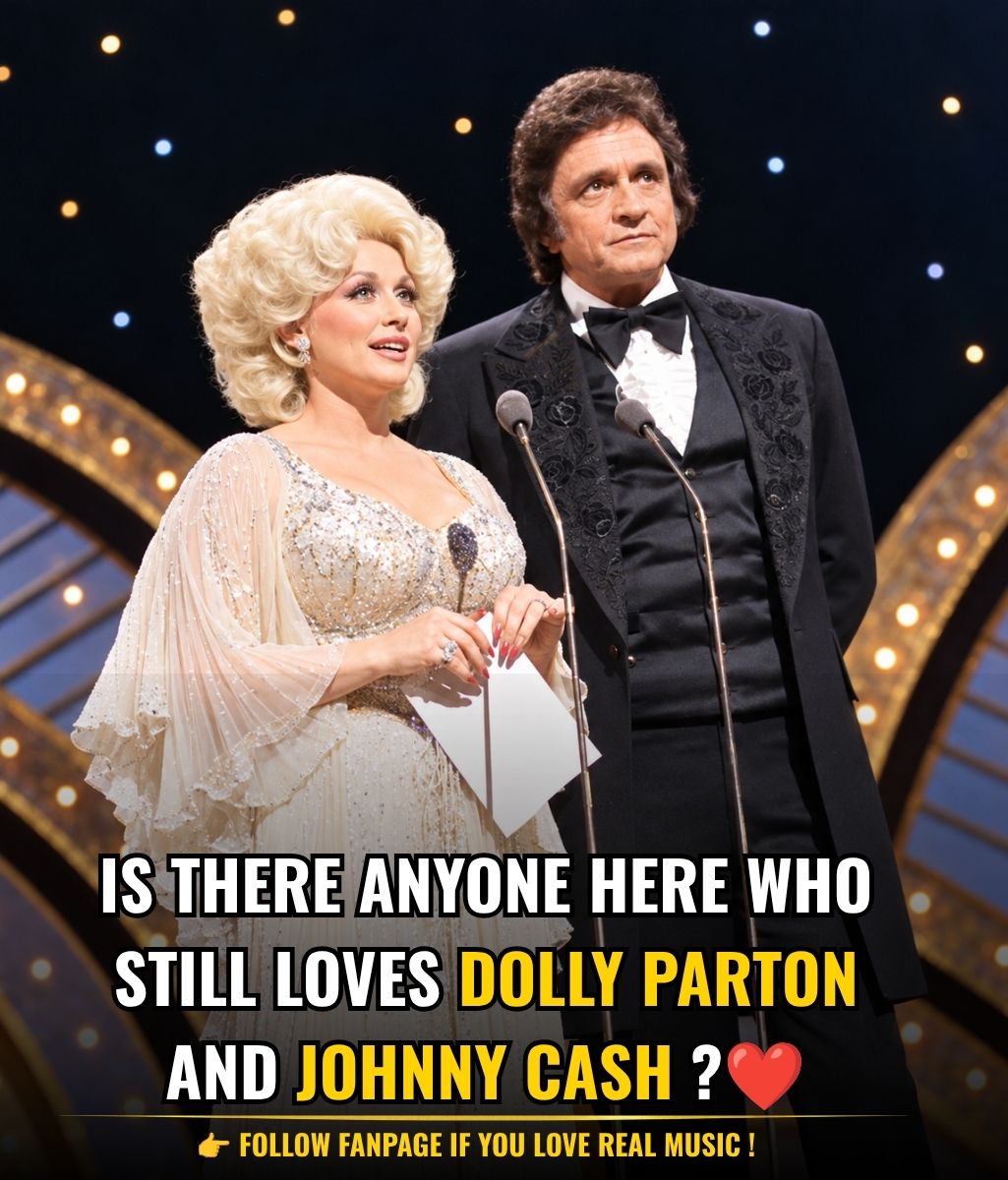
At the 10th Annual CMA Awards in Nashville, Dolly was named Female Vocalist of the Year. The ceremony was co-hosted by Johnny Cash and Roy Clark, placing Cash in the room at a moment when Dolly’s growing independence was being publicly recognized by the country music establishment.
Johnny Cash’s presence carried its own special meaning in Dolly’s story.
Their connection went back much further than 1976. In 1959, when Dolly was only 13 years old, Johnny Cash introduced her at the Grand Ole Opry, where she performed George Jones’ “You Gotta Be My Baby” and reportedly earned three encores. Long before Dolly had her own television show, her own business empire, or international fame, Cash had been there at one of her earliest major appearances.
That makes the image of Cash watching Dolly stand on her own nearly two decades later especially powerful.
The young girl he had once introduced at the Opry had become a major artist in her own right.
She was no longer waiting for someone else to give her a place on the stage.
She had built one for herself.
The transformation did not happen overnight. Dolly had spent years proving herself as a songwriter, fighting to record material she believed in, and making difficult decisions about when to stay and when to walk away. Her departure from Porter Wagoner had been one of the most emotional choices of her career, and “I Will Always Love You” had famously emerged from that transition. By 1976, the emotional goodbye had evolved into something more concrete: independence.
The year became a dividing line between two versions of Dolly Parton.
Before it, she was already successful.
After it, she was increasingly in control of the direction that success would take.
That distinction would shape everything that followed. Dolly would move further into pop music, films, business, television, and eventually one of the most recognizable entertainment brands in America. The woman who had once entered Nashville hoping someone would give her a chance was beginning to understand that the most important opportunities were sometimes the ones she created herself.
Johnny Cash had witnessed the beginning of that journey when Dolly was still a teenager.
In 1976, he was there again as the country-music world watched her claim another level of independence.
Dolly Parton did not simply become more famous that year. She proved that she could step out of someone else’s spotlight, build one of her own, and decide for herself where it would shine next.