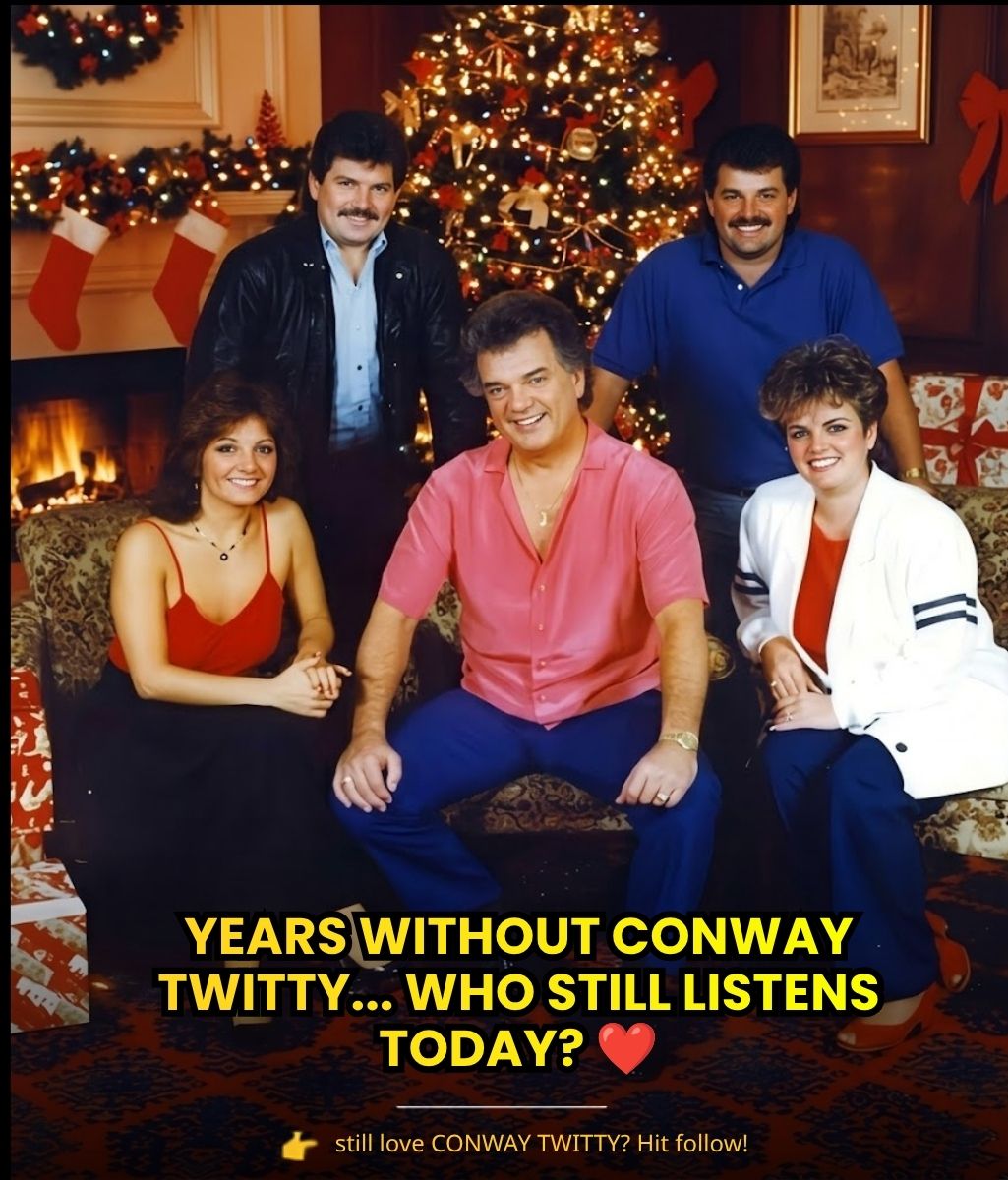
At the height of his fame, Conway Twitty created something few country singers had ever attempted. Twitty City became a destination where fans could step into the world of one of Nashville’s biggest stars, drawing visitors to Hendersonville, Tennessee, to see the grounds associated with the man behind “Hello Darlin’.” Yet beyond the public image and famous gates was another side of the property that mattered far more personally to Conway: Twitty City was also built around his family.
By the early 1980s, Conway had already achieved the kind of career most performers could only imagine. He had accumulated an extraordinary run of country hits, built a hugely successful partnership with Loretta Lynn, and developed a loyal audience that followed him from record to record. Rather than treating that success only as something to enjoy privately, Conway envisioned a place where fans could feel closer to the world surrounding his music. Twitty City opened to the public in 1982 and soon became one of the most recognizable country music attractions in the Nashville area.
Visitors came to see Conway’s mansion, memorabilia, landscaped grounds, and the carefully created environment surrounding the complex. At Christmas, Twitty City became particularly famous for its elaborate holiday displays, attracting families who returned year after year. For fans, it offered something different from simply buying a record or attending a concert because they could physically enter a place carrying Conway Twitty’s name and feel, at least briefly, closer to the singer they had followed for years.
But there was another reason the property was important to Conway. His children and their families had homes within the Twitty City complex, creating a family environment behind the tourist attraction. Conway had spent much of his adult life traveling, recording, and performing, and success had demanded countless hours away from ordinary family routines. Twitty City gave him an opportunity to bring parts of that family world physically closer together.
That contrast is what makes the story so revealing. During visiting hours, Conway Twitty was the country superstar whose career had produced one hit after another. Fans arrived hoping to catch a glimpse of the man they knew from records and television, while the property itself represented the enormous success he had achieved. After the crowds left, however, the same grounds could return to something much more ordinary: a place where Conway was surrounded not by ticket buyers and admirers, but by his own family.
It was a side of Conway that could easily disappear beneath his public image. His deep voice, carefully styled appearance, and romantic country songs helped create one of the most recognizable personas in the genre. Yet Conway was also a father to four children — Michael, Joni, Kathy, and Jimmy — and the family dimension of Twitty City shows that his ambitions extended beyond creating a monument to his own fame.
Conway’s relationship with his fans also shaped the unusual character of the property. Unlike a completely private celebrity estate hidden behind walls, parts of Twitty City were deliberately opened to visitors. Conway understood that the people buying his records and attending his concerts had made his extraordinary career possible, and the attraction became a way of allowing them into a carefully controlled portion of his world without completely surrendering the family’s private space.
This balance between public and private life made Twitty City something more complicated than a tourist attraction. During the day, it could function as part of the Conway Twitty brand, displaying the success of a man who had risen from humble beginnings to become country royalty. When the public activity ended, the property still contained homes, relatives, and the everyday relationships that existed behind the famous name.
The arrangement also reflected the enormous scale Conway’s career had reached. He was no longer simply a singer moving from studio to stage. By then, his name was attached to business interests and a physical destination that thousands of country fans recognized. Twitty City became a visible symbol of the empire Conway had spent decades building, but its family homes suggest that Conway did not see success only in terms of charts, awards, or money.
Then, in June 1993, everything changed. Conway became seriously ill after performing in Branson, Missouri, and died on June 5 at only 59 years old. His death was sudden, leaving no long farewell period in which the future of Twitty City and the complicated collection of assets surrounding his career could be carefully explained to the public.
What followed became one of the saddest chapters associated with the place Conway had created. His death led to complicated estate proceedings involving his widow, Dolores “Dee” Henry Jenkins, and his four children. Property connected to Conway’s estate eventually had to be dealt with, and Twitty City did not remain the family-centered world Conway had known during his lifetime.
The property was sold in 1994, ending its original chapter as Conway Twitty’s famous home and tourist attraction. For fans who had visited during its heyday, the sale represented more than a business transaction. The Christmas lights, memorabilia, family homes, and mansion had all belonged to a physical world associated with Conway, and his absence made it impossible for that world to continue exactly as it had before.
That later history gives old photographs and memories of Twitty City a bittersweet quality today. It is easy to see the mansion and impressive grounds as evidence of celebrity wealth, but doing so misses part of what made the place meaningful. Behind the public attraction was Conway’s attempt to keep his family physically close while living a life that had been defined by travel, performance, and public attention.
More than three decades after Conway’s death, Twitty City remains one of the most fascinating pieces of his story because it reveals two versions of the same man. One was Conway Twitty the superstar, opening the gates to fans who wanted to enter his world. The other was a father whose children lived nearby, creating a private family circle within the empire bearing his famous name.
The crowds saw Twitty City as a monument to Conway Twitty’s success. Behind the gates, however, it was also something far simpler: a place where one of country music’s biggest stars tried to keep the people closest to him close to home.