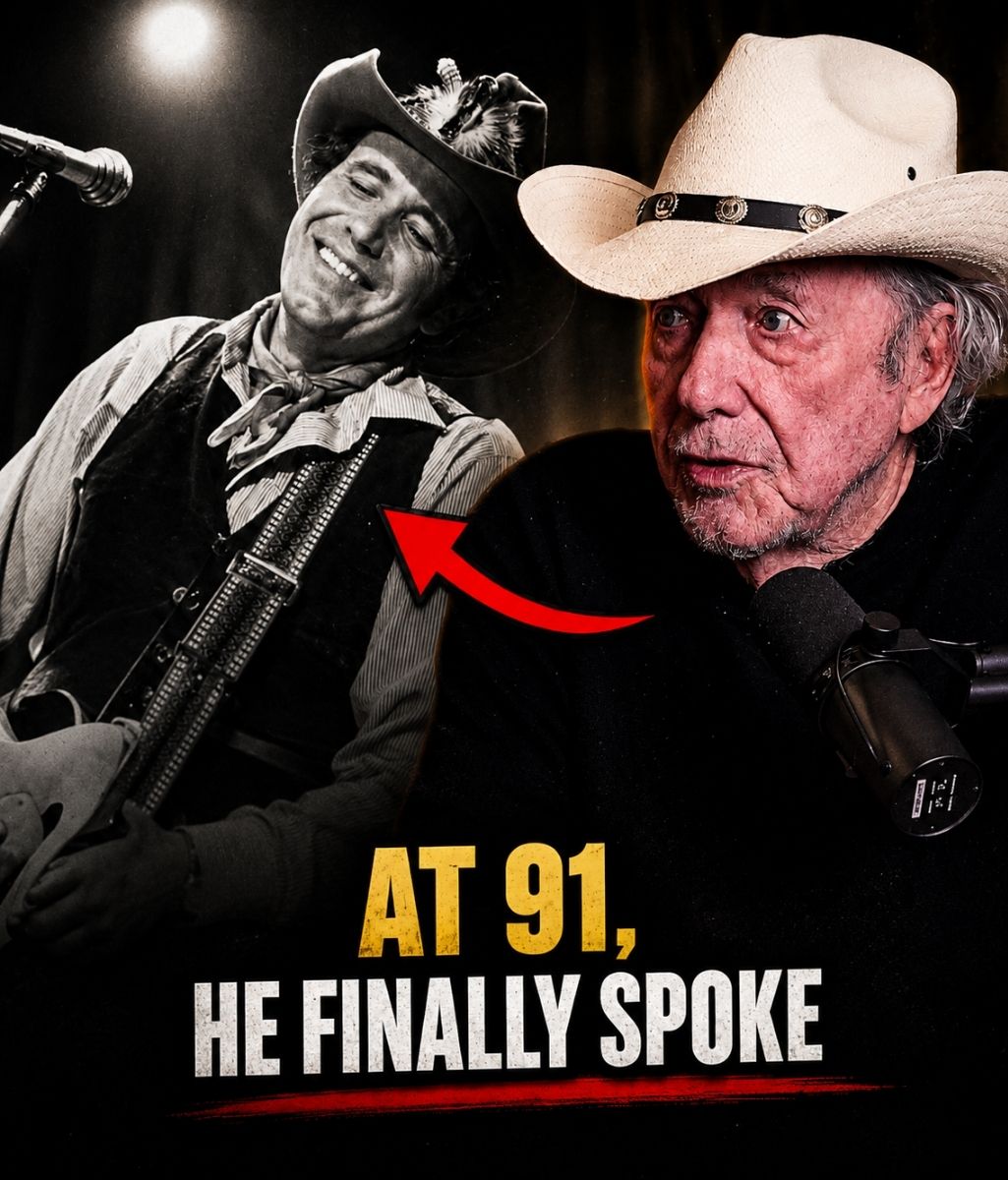
At 91 years old, Bobby Bare belongs to a generation of country legends that is slowly disappearing. He is rarely seen in the spotlight today, but when Bare looks back across more than six decades of music, the stories reveal something even some longtime fans may not fully realize. Behind “Detroit City,” “500 Miles Away from Home,” “Marie Laveau,” and the familiar voice millions came to know was a man whose influence often happened away from the microphone. Bare helped open doors for other artists, challenged Nashville’s established way of making records, and quietly helped create the conditions for changes that would reshape country music.
For many listeners, Bobby Bare will always be remembered first for the songs. His recordings established him as one of country music’s finest storytellers, a singer who could move naturally between loneliness, humor, reflection, and unusual characters without ever sounding forced. His career eventually earned him induction into the Country Music Hall of Fame in 2013, but a list of hits tells only part of his story. Some of Bare’s most fascinating contributions happened in conversations and decisions that received far less attention than the records bearing his name.
One of the clearest examples involves a young Waylon Jennings. Before Waylon became one of the defining figures of Outlaw Country, Bare encountered him performing at J.D.’s in Phoenix and heard something he believed Nashville needed to hear. Waylon was still years away from the image and musical independence that would make him a legend, but Bare recognized the talent before much of the country music establishment did. Instead of simply wishing the young singer well, Bare decided to do something about it.
The story that followed has become one of the most revealing episodes of their friendship. Bare contacted legendary RCA producer Chet Atkins and urged him to pay attention to Waylon, insisting that the young performer deserved an opportunity with a major record company. Bare later acknowledged the irony of helping someone who could eventually compete for the same songs and listeners he wanted himself. But he made the recommendation anyway because he believed Waylon was simply too talented to ignore.
That phone call did not create Waylon Jennings by itself, and Waylon’s later success belonged to Waylon. But Bare’s recommendation helped open an important door. Jennings eventually came to Nashville and signed with RCA, beginning a complicated relationship with the Nashville system that would ultimately help fuel his desire for greater creative control. The young singer Bare had championed would eventually become one of the most famous men to challenge the very rules governing Music Row.
There is a wonderful irony in that story because Bobby Bare himself had already begun testing some of Nashville’s boundaries. He wasn’t usually portrayed as the loudest rebel in town, nor did he build his public identity around fighting the establishment. Instead, Bare often pushed quietly, looking for enough freedom to make records the way he believed they should sound. That approach would become increasingly important as Nashville moved toward the creative battles of the 1970s.
When Bare returned to RCA during that period, he pushed for something artists were not routinely granted: greater control over the production of his own records. That may sound ordinary today, when successful performers often expect significant influence over their music, but Nashville’s studio system was far more controlled at the time. Producers, labels, studio musicians, and established conventions could determine much of how a record was made. Bare’s willingness to demand more independence placed him among the artists beginning to question whether that system had to remain unchanged.
Those ideas would soon become central to what the world called Outlaw Country. Waylon Jennings and Willie Nelson would eventually become its most recognizable faces, but musical revolutions rarely begin with one person on one particular day. They develop through smaller challenges, experiments, and artists who discover that the old rules are not permanent. Bare was part of that changing atmosphere before the rebellion acquired its famous image.
His willingness to trust unconventional talent also shaped another important chapter of his career: his relationship with Shel Silverstein. Silverstein was hardly a conventional Nashville songwriter. His work could be funny, strange, tender, dark, absurd, and unexpectedly moving, sometimes within the same collection of songs. Bare understood that behind the unusual characters and humor was a remarkable storyteller whose writing could become something special in the right hands.
Their collaboration helped produce “Bobby Bare Sings Lullabys, Legends and Lies,” one of the projects most closely associated with Bare’s storytelling identity. Instead of treating an album merely as a container for a few potential radio singles, Bare embraced Silverstein’s world of characters and stories. The result demonstrated what could happen when an artist trusted a songwriter’s vision rather than constantly trying to fit everything into the safest Nashville formula.
Out of that creative relationship came one of the strangest milestones in Bobby Bare’s entire career. “Marie Laveau,” written by Silverstein and Baxter Taylor, told a colorful Louisiana tale involving a mysterious woman, an outrageous bargain, and a man foolish enough to break his promise. In 1974, the song reached No. 1 on Billboard’s country chart, becoming Bare’s only solo chart-topper there. After years of success, his biggest chart milestone came not from playing it safe, but from embracing exactly the kind of unusual storytelling he had learned to trust.
That fact seems almost symbolic of Bare’s career. He succeeded not because every decision followed the obvious path, but because he repeatedly showed an instinct for voices and ideas that sounded different. He recognized something in Waylon before Nashville fully understood it. He recognized something in Silverstein’s writing that could become extraordinary country music. And when the industry preferred artists to remain within established boundaries, Bare kept searching for more room to make his own decisions.
This is why his legacy looks different when viewed from the distance of many decades. Bobby Bare was never simply the man who sang “Detroit City” or the storyteller behind “Marie Laveau.” He was also one of the connective figures in a remarkable Nashville generation — someone who moved among songwriters, producers, performers, and future legends and sometimes helped the right people find one another.
Bare lived long enough to see ideas that once required a fight become accepted parts of the business. Artists seeking creative control no longer sounds revolutionary. Country singers recording unconventional material or building albums around a distinctive artistic vision no longer seems unusual. Yet there was a period when Nashville operated very differently, and Bare was among the people quietly pushing against those limitations.
That may be the most revealing thing about looking back on Bobby Bare at 91. His influence cannot be measured only by trophies, chart positions, or the number of songs casual listeners still recognize. Sometimes influence is a recommendation made when nobody is watching, a songwriter given room to be unusual, or an artist insisting that a record should sound the way he believes it should.
The spotlight may be quieter around Bobby Bare today, but the consequences of those choices remain scattered throughout country music history. Waylon Jennings became a legend. Shel Silverstein’s songs became an essential part of Bare’s catalog. Nashville’s artists eventually won freedoms that earlier generations had struggled to obtain. Bare cannot be credited for those changes alone, but his fingerprints can be found in more of the story than many casual fans realize.
More than six decades after “Detroit City” helped establish him as a major country voice, perhaps that is the most interesting way to understand Bobby Bare’s place in the music he helped shape. The famous records matter, but so do the phone calls, friendships, risks, writers he trusted, and rules he was willing to question.
Bobby Bare didn’t need to be the loudest rebel in Nashville to make a difference. He simply kept opening doors — for himself, for unusual songs, and sometimes for the people who would eventually walk through those doors and change country music forever.