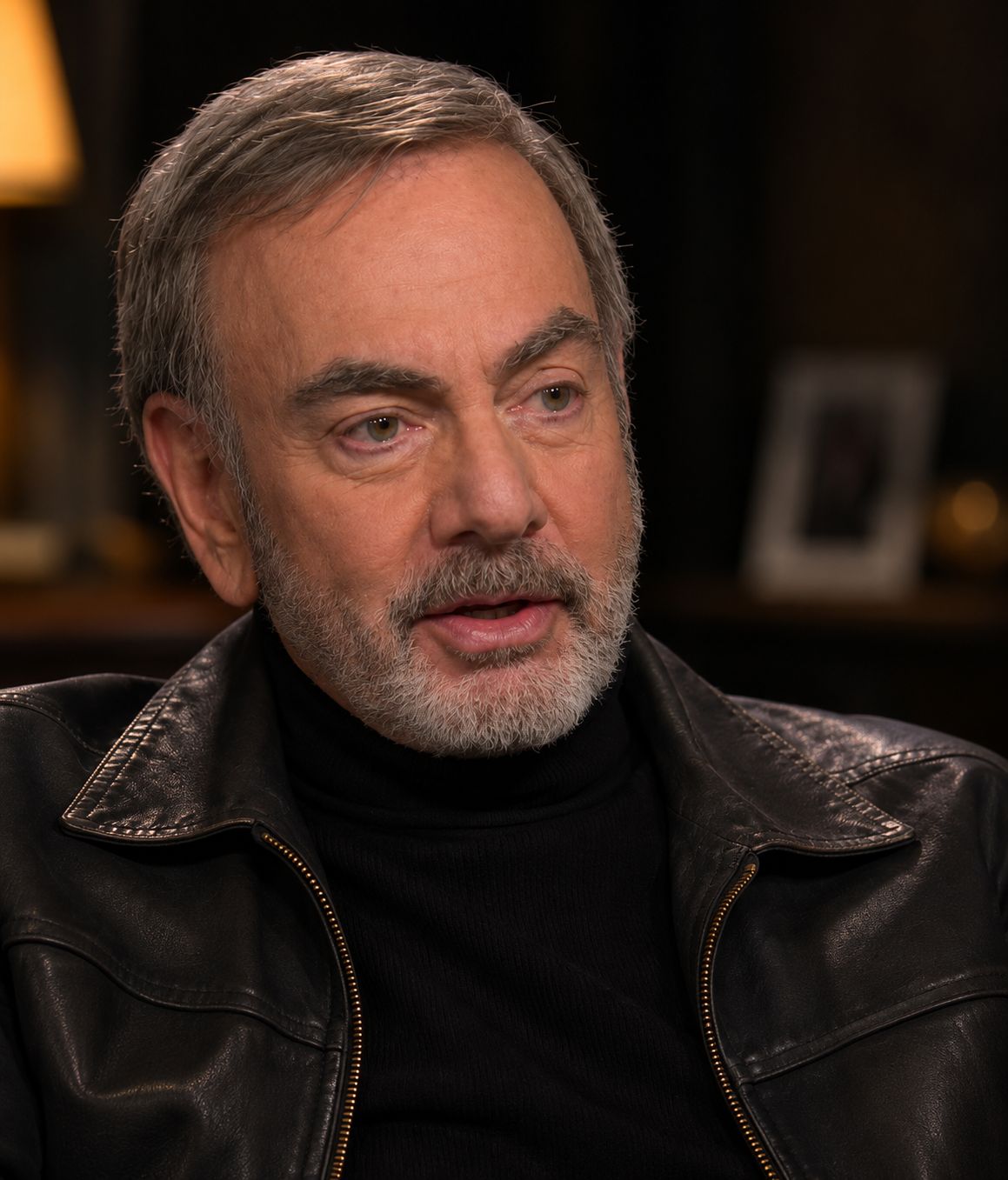
For more than half a century, Neil Diamond built his life around music.
His songs filled arenas, radios and family memories across generations. “Sweet Caroline,” “Cracklin’ Rosie,” “Song Sung Blue,” “America” and dozens of other recordings turned him into one of the most recognizable singer-songwriters of his era.
Then, in 2018, everything changed.
Diamond announced that he had been diagnosed with Parkinson’s disease, a progressive neurological condition that affects movement and coordination. The diagnosis forced him to retire from touring, bringing an abrupt end to a life that had been built around traveling from city to city and standing in front of thousands of people.
At first, Neil did not truly accept what was happening.
Years later, he admitted that he spent the first year or two in denial. When his doctor explained the diagnosis, Neil remembered reacting as though it were something he could temporarily set aside because he still had work to do.
Eventually, that became impossible.
In a deeply personal interview with CBS Sunday Morning, Neil acknowledged that Parkinson’s was not something he could simply fight until life returned to normal. He said there was no cure and no way to tell the disease that enough was enough.
That realization was painful.
For a man whose identity had been tied so closely to performance, accepting physical limitations meant accepting that a chapter of his life had genuinely ended. He could no longer live as though another tour, another city and another packed arena were always waiting around the corner.
Yet Neil also revealed something surprising.
He said he could still sing.
When asked what happened inside him when he sang, Diamond explained that his mind and body seemed to work together and that singing still made him feel good. Music had not disappeared from his life, even if the demanding touring schedule had.
That connection has remained visible.
In July 2025, Neil surprised audiences at a performance of A Beautiful Noise in Los Angeles by joining in on “Sweet Caroline.” The crowd immediately rose to its feet, turning the moment into an emotional reminder that the voice fans had loved for decades was still there.
By 2026, Neil had also remained connected to music through the release of Wild at Heart, an album built around previously unreleased recordings, while his wife Katie described him as continuing physical therapy and exercise regularly.
But the most revealing part of Neil’s story may be what changed inside him.
He admitted that it took years before a sense of calm finally arrived. The man who had spent his life chasing stages, songs and success began to appreciate a quieter existence. He said he had become easier on himself and on the people around him, and that he had learned to accept the limitations Parkinson’s had brought into his life.
For longtime fans, that acceptance is both comforting and heartbreaking.
Neil Diamond is still Neil Diamond.
He can still sing.
He can still hear thousands of people answer the familiar chorus of “Sweet Caroline.”
But he also understands that the life he once had cannot simply be restored.
At 85, Neil Diamond’s greatest challenge is no longer filling arenas. It is learning to accept the life he has now, while holding onto the music that Parkinson’s has never been able to take away from him.