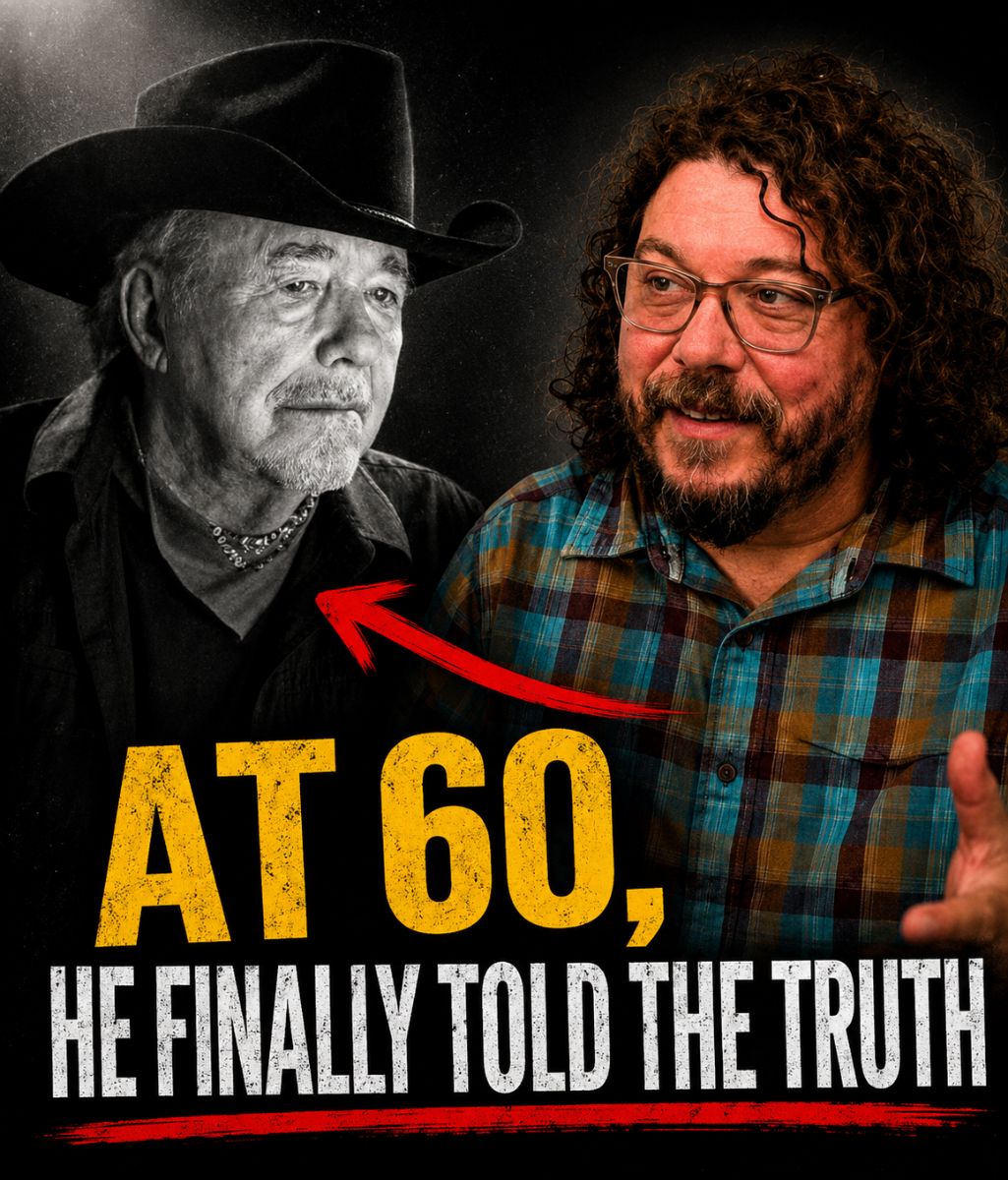
For generations of country fans, Bobby Bare has been remembered as the unmistakable voice behind songs such as “Detroit City,” “500 Miles Away from Home,” “Miller’s Cave,” and “Four Strong Winds.” He was a gifted storyteller, a successful recording artist, and eventually a member of the Country Music Hall of Fame. Yet when his son, Bobby Bare Jr., is placed at the center of the story, another side of the legendary singer begins to emerge—not simply the hitmaker known to Nashville, but the father, survivor, mentor, and fiercely independent musician behind the records.
Long before fame, Bobby Bare knew hardship. His mother died when he was only five years old, and his father, unable to provide for all of his children, had to separate the family. By the age of 15, Bobby was already working to survive, first on farms and later in factories. Music became one of the few things he could call his own. Without the money for a proper instrument, he famously built a crude guitar using a coffee can, a stick, and makeshift strings.
That childhood makes the later image of Bobby Bare particularly striking. The man who eventually helped shape modern country storytelling began with almost nothing. He did not inherit a place in Nashville. He built one.
After finding early success in pop music, Bare deliberately moved toward country, the music he believed suited him best. Under the guidance of Chet Atkins at RCA, he developed a style that blended folk, country, and pop without losing the plainspoken quality of his voice. The breakthrough came quickly. “Detroit City” became a major country and pop success and earned a Grammy, establishing Bare as much more than another Nashville singer.
But perhaps the most revealing part of his story was what he did after achieving success.
Bare had an unusually sharp ear for talent. While traveling through Phoenix, he encountered Waylon Jennings and helped him gain a foothold at RCA. The two became close friends, later spending time in the loose circle of musicians, songwriters, offices, and gathering places associated with Nashville’s emerging independent spirit. Bare even remembered how Waylon and others would take over the pinball machines in his office so completely that he eventually installed three of them. The machines became so popular that, according to Bare, the money collected from them paid more than the rent.
It is a small story, but it reveals something important. Bobby Bare’s Nashville world was not built entirely around prestige. It was informal, communal, filled with musicians dropping by, trading songs, talking, laughing, and helping one another.
That same spirit eventually appeared in one of the most personal recordings of his career.
In the 1970s, Bare recorded “Daddy What If” with his young son, Bobby Bare Jr. The record reached No. 2 on the country chart and became one of the defining moments of the elder Bare’s career. Unlike a carefully manufactured family image, the performance worked because it sounded natural. A father and young son were sharing a song, and listeners could hear the warmth between them.
That recording now carries another layer of meaning.
Bobby Bare Jr. did not remain merely “the little boy on his father’s record.” He eventually became a musician himself, growing into an artist with his own identity rather than simply attempting to reproduce his father’s career. Seen from that perspective, “Daddy What If” becomes more than a successful country single. It becomes a preserved moment between two generations of musicians.
Bobby Bare’s willingness to follow unusual songs also distinguished him from many of his contemporaries. His partnership with songwriter Shel Silverstein produced the ambitious double album Bobby Bare Sings Lullabys, Legends and Lies, which included both “Daddy What If” and the No. 1 hit “Marie Laveau.” Their collaboration grew into a lasting friendship and reinforced Bare’s reputation as an artist who cared deeply about songwriters and stories.
Later, Bare carried that philosophy into television. From 1983 to 1988, he hosted Bobby Bare and Friends on TNN. Rather than surrounding himself with elaborate spectacle, he often created an atmosphere resembling Nashville’s informal “guitar pulls,” where musicians passed a guitar around and simply played their songs.
That may ultimately be the different perspective worth remembering.
Behind the 34 Top 20 country hits, the Grammy, and the Hall of Fame honor was a man whose life repeatedly came back to the same things: songs, friendship, family, and giving other musicians room to be heard.
For fans who knew Bobby Bare primarily through the records, looking at his story through Bobby Bare Jr. offers something the charts cannot provide. The legend becomes human again—the boy who built a guitar because he could not afford one, the singer who helped Waylon Jennings, the friend who opened his office to musicians, and the father who once stood beside his young son and turned a simple conversation into one of country music’s most enduring family recordings.
Perhaps that is the real revelation.
Bobby Bare’s legacy was never only about the songs he sang. It was also about the people he encouraged, the doors he opened, and the musical life he quietly passed on to the next generation.
Video