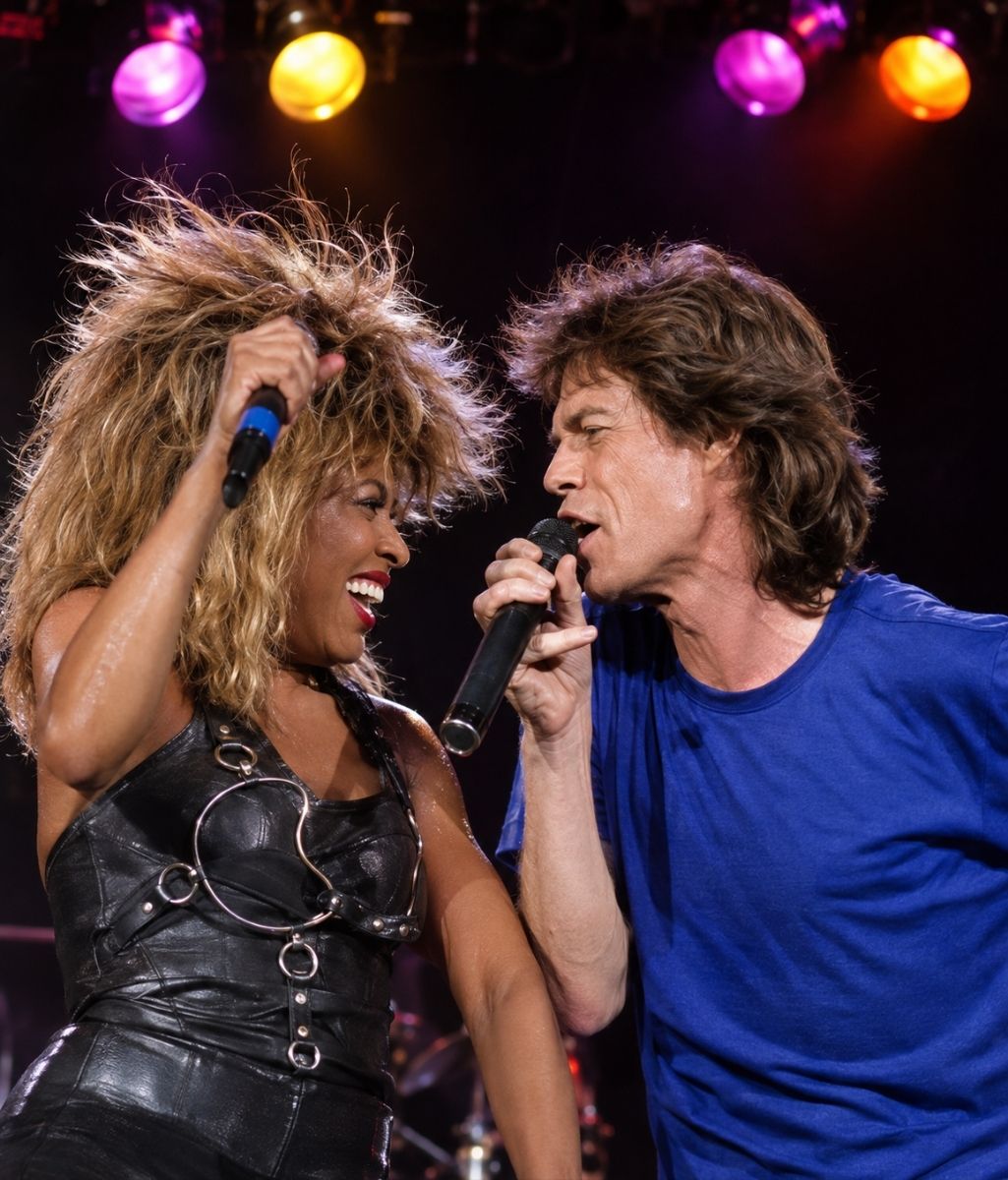
On July 13, 1985, the world witnessed one of the greatest gatherings of musical talent in history. Organized to raise money for famine relief in Africa, Live Aid brought legendary performers together in London and Philadelphia, creating a global television event unlike anything audiences had experienced before. Among the many extraordinary performances that day, one particular encounter between Tina Turner and Mick Jagger would remain etched in the memories of rock and roll fans for decades.
When Jagger welcomed Tina onto the stage at Philadelphia’s John F. Kennedy Stadium, the atmosphere immediately changed. These were two performers whose connection stretched back nearly twenty years, and their reunion represented much more than an exciting collaboration between internationally famous singers. Their history reached back to 1966, when the Ike & Tina Turner Revue toured Britain with the Rolling Stones, beginning a friendship built around music, dancing and mutual admiration.
Tina later recalled in her autobiography that Jagger had been fascinated by the way she and her backing dancers moved onstage. He approached them backstage and began learning some of their dance moves, quickly absorbing the energy and physical expressiveness that would become essential elements of his own performing style. Nearly two decades later, their appearance at Live Aid offered audiences an opportunity to see that remarkable connection in action once again.
The timing of their reunion made it especially meaningful for Tina. After leaving Ike Turner in 1976 and spending years rebuilding her career, she had achieved an extraordinary comeback with her 1984 album Private Dancer. Her success with “What’s Love Got to Do with It” had established her as an international superstar in her own right, and by the summer of 1985, she was enjoying one of the most celebrated periods of her professional life.
Their performance began with “State of Shock,” a song Jagger had originally recorded with Michael Jackson for the Jacksons. Tina brought her unmistakable vocal intensity to the performance, matching Jagger’s movements and turning the duet into an exhilarating exchange between two artists who understood exactly how to command an audience.
As the music transitioned into “It’s Only Rock ‘n Roll (But I Like It),” the energy intensified, with both singers moving across the stage and responding to each other’s gestures. Jagger removed his shirt during the performance before delivering the theatrical surprise that would become one of Live Aid’s most widely remembered moments.
In front of approximately 89,000 spectators and an enormous international television audience, Jagger pulled away Tina’s black leather skirt, leaving her to continue performing in her leotard and fishnet stockings. The moment captured the unpredictable theatricality of rock and roll, although Tina later revealed that Jagger had mentioned his intention shortly before they took the stage.
Rather than interrupting the performance, Tina continued singing and dancing with the same confidence that had defined her career. Her ability to maintain command of the stage demonstrated the professionalism, physical stamina and remarkable charisma that had earned her the title of the Queen of Rock ‘n’ Roll.
Looking back, the performance also represented a remarkable reversal in Tina’s personal history. The young singer who had once toured with the Rolling Stones while living under Ike Turner’s control was now standing beside Mick Jagger as an independent superstar, celebrated entirely on her own terms.
Following Tina’s passing in May 2023, footage of their Live Aid duet became an especially poignant reminder of her extraordinary stage presence and the musical friendships that had endured throughout her career.
More than forty years later, the performance remains unforgettable not simply because of its provocative finale, but because it captured two rock legends at the height of their powers. For Tina Turner, it was also a triumphant demonstration of how far she had come, standing before the world as a woman who had reclaimed her freedom, her identity and her rightful place in music history.