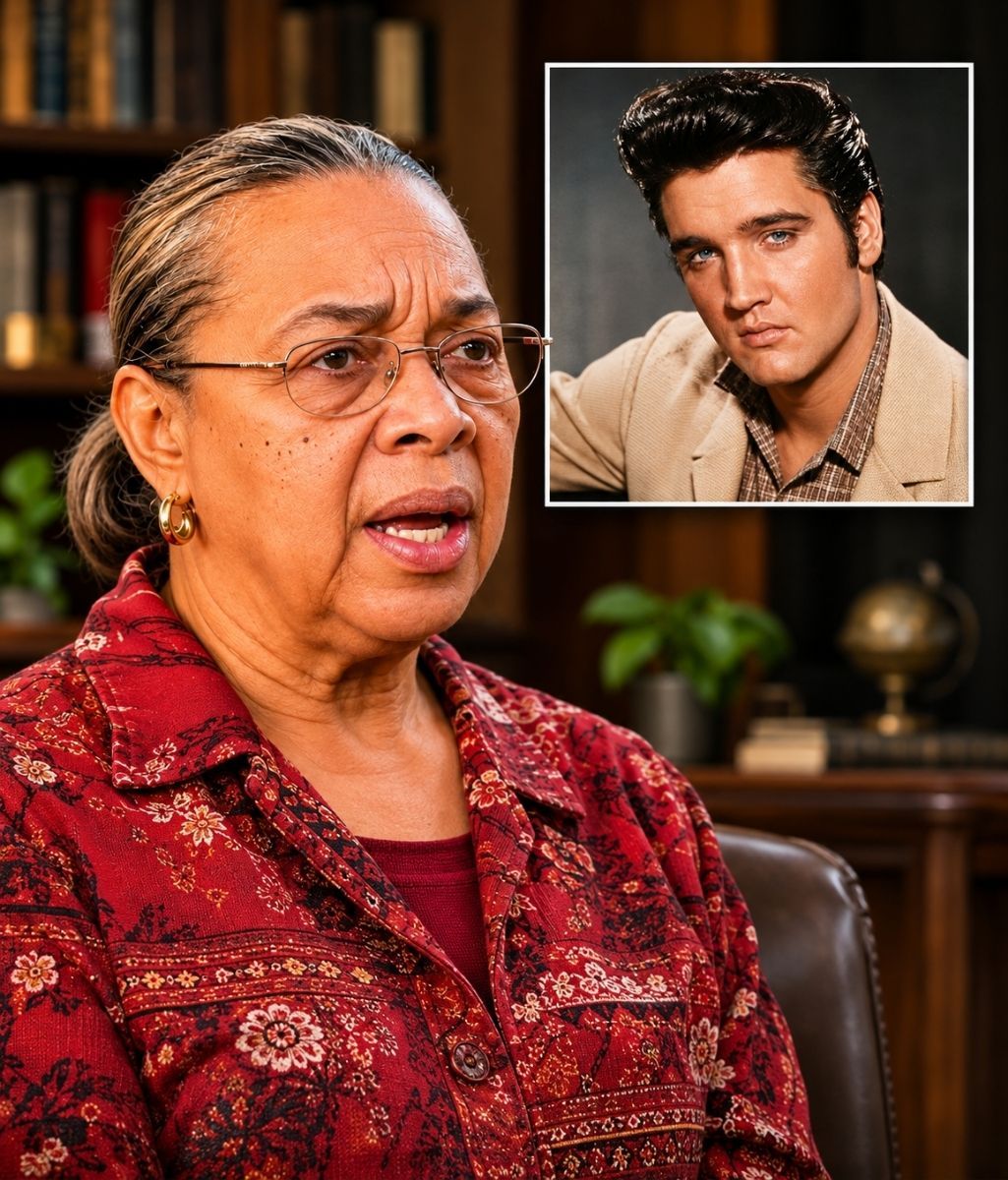
For more than a decade, Nancy Rooks worked inside Graceland, preparing meals, cleaning rooms and seeing a side of Elvis Presley that millions of fans could never have known.
She was not watching him from the audience or reading about him in magazines. She saw Elvis when the gates were closed, when there were no screaming crowds outside the room and when the most famous entertainer in America could simply ask for something to eat or sit quietly inside his own home.
That made Nancy’s memories of August 16, 1977 especially haunting.
Nancy later recalled that she was the only maid working at Graceland that morning. Another employee was ill, while others had finished their shifts or were resting before returning later. Elvis had spent much of the night awake and had eventually gone to play racquetball with members of his entourage before returning to the house in the early morning hours.
When Elvis came through the kitchen area on his way upstairs, Nancy saw him.
It would be the final time she spoke to him.
She asked whether he wanted breakfast, but Elvis declined. He told her that he wanted to get some sleep and asked only for water before going upstairs. Nancy later remembered the exchange because there was nothing dramatic about it. There was no farewell speech, no indication that everyone inside Graceland was about to experience one of the most devastating days in music history.
It was simply an ordinary conversation.
Several hours later, Elvis was found unresponsive upstairs and was rushed to Baptist Memorial Hospital, where he was pronounced dead at the age of 42.
Nancy’s account provides a striking contrast to the mythology that later surrounded those final hours.
Some later reports described Elvis as restless or under considerable pressure before his death. Nancy wrote and spoke about concerns surrounding his mood, while other members of the Graceland household remembered tension during the night. However, Ginger Alden, Elvis’s fiancée, later disputed portrayals of a deeply troubled final evening and said Elvis had actually been looking toward the future, discussing marriage, children and the upcoming tour.
That disagreement is important because there is no single witness who could see everything happening inside Graceland that night.
Nancy knew what she personally witnessed.
Ginger remembered the private conversations she shared with Elvis.
Bodyguards and other members of the household remembered still other moments.
Together, those recollections create a picture far more complicated than the sensational claims that have surrounded Elvis’s death for nearly half a century.
What makes Nancy’s story particularly powerful is how ordinary Elvis could appear to the people working around him.
She remembered him as generous and approachable, a man who could joke with employees and treat household staff warmly. Elvis even gave Nancy a car during her years working for him, one example of the extravagant generosity for which he became famous among friends, relatives and employees.
Yet by 1977, the people closest to Elvis were also seeing changes that fans watching from the audience could not fully understand.
His health had become increasingly fragile, his touring schedule remained demanding, and prescription medication had become part of a complicated medical situation that would continue to generate debate long after his death.
Nancy did not claim to possess some hidden explanation that overturned the official history.
Her testimony is powerful for almost the opposite reason.
She remembered the final morning not as a dramatic mystery, but as the last ordinary moments of a man whose death nobody in the kitchen believed was only hours away.
After Elvis died, Nancy remained at Graceland and continued working for members of the Presley family. She stayed for several more years, including the period leading up to Graceland opening to the public in 1982. She later wrote Inside Graceland: Elvis’ Maid Remembers, preserving memories of a world that had once existed behind gates most fans could never enter.
Her final conversation with Elvis remained one of those memories.
There was no dramatic confession.
There was no warning.
There was only Elvis coming home after a long night, declining breakfast, asking for water and saying that he wanted to sleep.
A few hours later, everything had changed.
For millions of people, August 16, 1977 became the day the King of Rock ’n’ Roll died. For Nancy Rooks, it was also the day an ordinary morning inside Graceland became a memory she would carry for the rest of her life — because she had spoken to Elvis Presley without knowing she was saying goodbye.