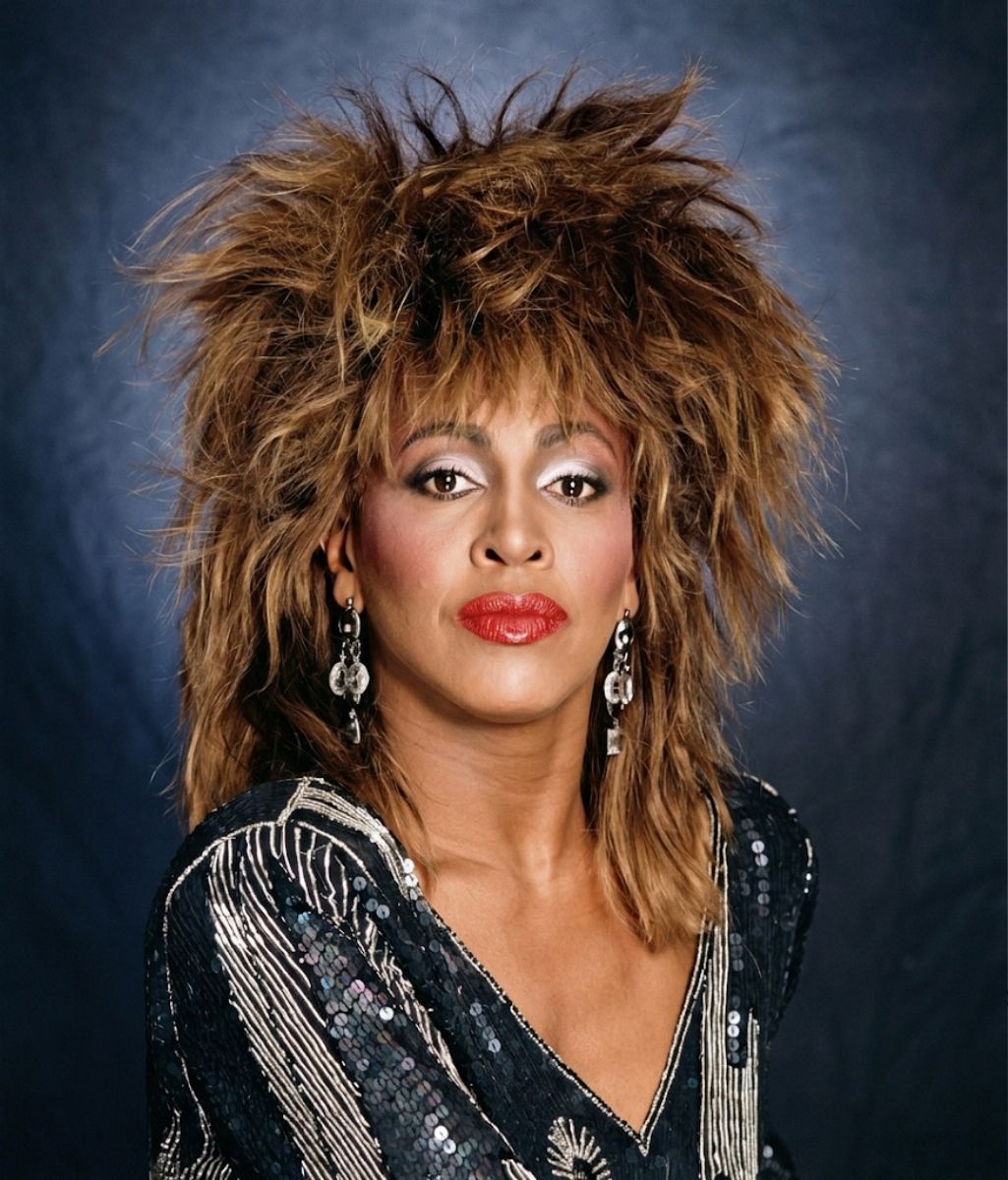
By the late 1970s, Tina Turner was hardly an unknown singer.
She had already spent years touring the world, appeared on television, recorded major hits and delivered unforgettable performances of songs such as “Proud Mary” and “River Deep – Mountain High.” Her name was recognizable, her stage presence was legendary, and few performers could match the sheer energy she brought to a live show. Yet after leaving Ike Turner and attempting to rebuild her career alone, Tina discovered something that seemed almost impossible: being famous did not mean the music industry wanted her anymore.
After walking away from Ike in 1976 and finalizing their divorce in 1978, Tina was forced to begin again with very little. She performed in Las Vegas lounges, cabarets, hotel showrooms and smaller venues simply to keep working and pay her debts. She recorded solo albums, appeared on television and continued touring, but none of it immediately restored the status she had once enjoyed. The problem was not that Tina had stopped performing. The problem was that the industry had already decided what it thought she was.
To many record executives, Tina Turner belonged to the past.
She was still associated so strongly with Ike & Tina Turner that some people could not imagine her as an independent artist. Her new manager, Roger Davies, later recalled that there was a stigma surrounding her because of Ike’s reputation and because many people in the business still mentally connected the two of them. Even after Tina had physically and professionally separated herself from Ike, the music industry had not fully separated her identity from his.
There was another obstacle that was even more revealing.
Davies said that when he shopped Tina’s recordings to record companies, executives sometimes liked what they heard but questioned the direction. According to him, some people believed that because Tina was a Black female singer, she should not be trying to reinvent herself as a rock artist. That attitude placed her inside a narrow box at the exact moment when she was trying to escape one. She had spent years fighting for personal freedom, only to discover that the business still wanted to tell her what kind of singer she was allowed to be.
Tina herself was also rebuilding her confidence.
Years of working under Ike had affected the way she understood her own voice. She later recalled that he had pushed her toward a harsher, higher delivery, and for a long time she had not been encouraged to explore the full range of what she could do. After leaving him, she was not simply searching for another record contract. She was discovering what Tina Turner sounded like when nobody else was controlling the answer.
Roger Davies recognized that the transformation had to go far beyond music.
He encouraged Tina to move away from the cabaret image she had been using, rebuild her band and start performing in clubs where younger rock audiences might see her differently. She opened shows for The Rolling Stones, appeared with Rod Stewart and began creating a harder, more contemporary image. The strategy generated excitement, particularly in Europe, but even then American record labels remained hesitant. As late as 1983, Tina still did not have the kind of major-label support that someone with her history might have seemed certain to receive.
The breakthrough finally came from Europe.
Tina recorded a version of Al Green’s “Let’s Stay Together” with members of Heaven 17, and the single became a major success in Britain. It proved that audiences were not interested merely in remembering Tina Turner. They were ready to hear a new version of her. The success helped create momentum for a new recording deal and eventually led to Private Dancer, the album that would transform everything.
Released in 1984, Private Dancer did not simply restore Tina to her former level of fame. It made her bigger than she had ever been before.
The album produced “What’s Love Got to Do With It,” her first and only solo No. 1 single in the United States, along with hits such as “Better Be Good to Me” and the title track. Tina won major Grammy Awards, filled arenas and became one of the defining stars of the decade. The woman record companies had struggled to categorize was suddenly one of the most valuable performers in popular music.
That success makes the years before it feel even more extraordinary.
Tina Turner had already proved that she could sing, dance, tour and command a stage. What she had not yet been allowed to prove was that she could define herself. The industry looked at her age, her past, her race, her association with Ike and the style of music she wanted to pursue, then repeatedly concluded that the safest version of Tina Turner was the one people already remembered.
Tina refused to stay there.
The heartbreaking truth was that Tina Turner did not struggle for a record deal because the talent had disappeared. She struggled because too many people in the industry could only see who she had been, while she was already becoming someone entirely new. When the world finally caught up in 1984, it discovered that the artist it had nearly left behind was capable of one of the greatest comebacks music had ever seen.