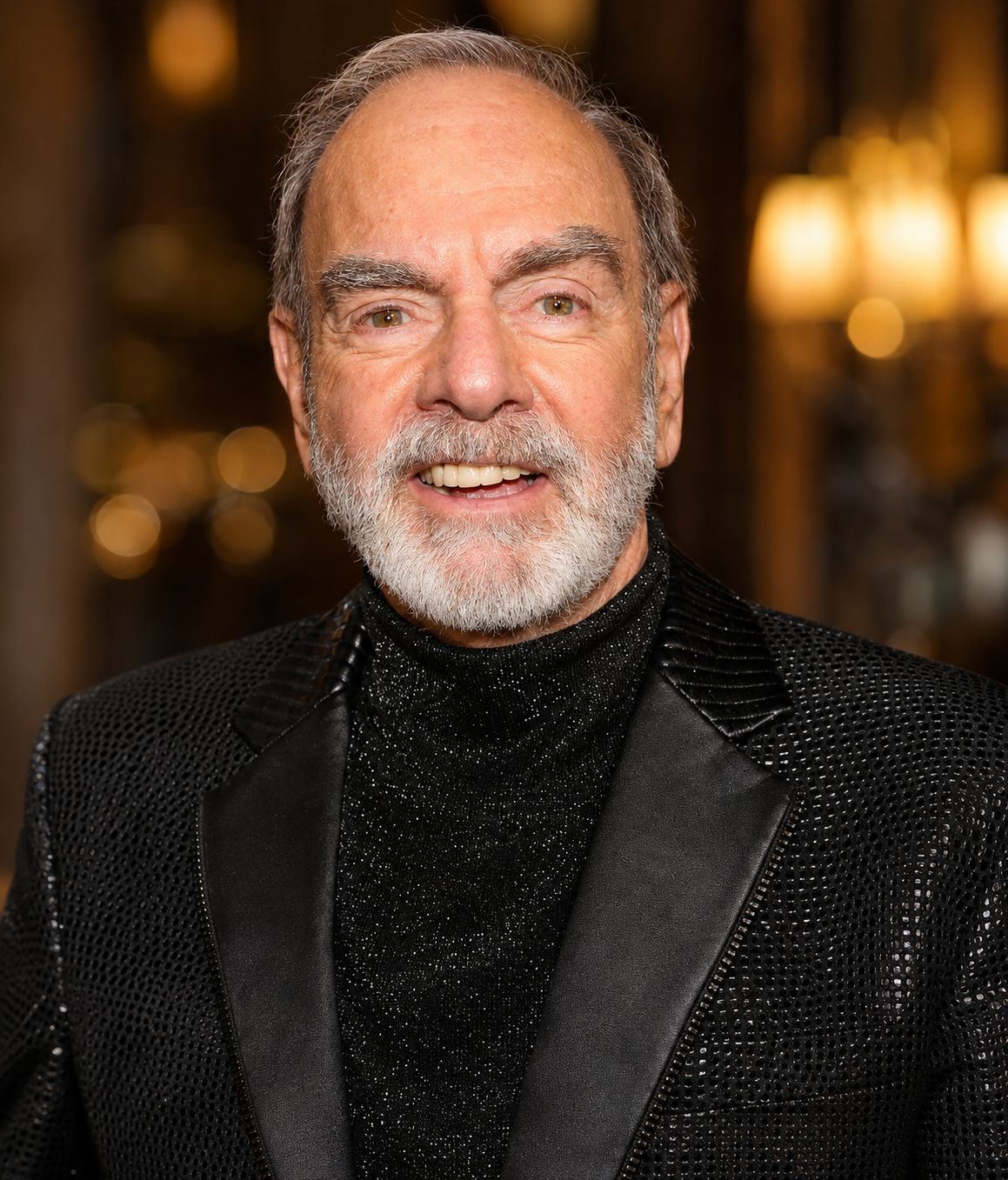
For decades, Neil Diamond seemed completely at home beneath the stage lights. He could stand before thousands of people, begin the opening lines of “Sweet Caroline,” “Cracklin’ Rosie” or “I Am… I Said,” and instantly turn an arena into one enormous sing-along. His glittering shirts, unmistakable voice and commanding presence helped make him one of the most successful live performers of his generation, yet away from the audience, Neil often lived a very different life.
He later admitted that the confidence people saw onstage did not always exist when the concert ended. During the 1970s, Diamond stepped away from touring for several years and entered psychoanalysis, trying to understand parts of himself that fame had never been able to resolve. He even brought song lyrics into therapy after realizing that the words he wrote might reveal emotions he had struggled to recognize directly, which showed how different the private man could be from the performer who appeared completely in control.
That divide followed him for years because the public Neil Diamond projected certainty, while the man away from the stage frequently wrestled with loneliness, relationships and the cost of putting music first. Diamond eventually acknowledged that his career had taken a heavy toll on his family life. Long tours meant extended periods away from home, and he admitted that his children missed him while he traveled. He described family and career as being in constant competition, with music repeatedly becoming the priority even when he understood the personal consequences.
His marriages reflected much of that tension. Diamond’s first marriage ended in 1969, while his second marriage to Marcia Murphey lasted roughly 25 years before ending in the mid-1990s. Looking back, Neil said both women were remarkable and admitted that after two failed marriages, he sometimes wondered whether he was capable of making a lifelong relationship work. Audiences rarely saw that uncertainty because, from their seats, he remained the man who could walk onto a stage and seem completely certain of who he was.
The contrast between those two versions of Neil Diamond became one of the defining tensions of his life. Millions of people knew the superstar who could command an arena, while much of his private world consisted of hotel rooms, family conversations, therapy sessions and long periods of reflection after the applause disappeared. The distance between those two lives was not built around a hidden second family or a shocking secret identity, but around the emotional difference between the man who belonged to the audience and the man who had to live with himself when the concert was over.
Years later, that private side became even more important. In 2012, Neil married Katie McNeil, whom he described as the woman of his dreams. Their relationship offered something different from the earlier years of constant touring and pressure, and Katie has since described their marriage as a partnership built around friendship, support and helping each other through difficult periods. For Diamond, it marked a later chapter in which personal connection became more central than the relentless pace that had defined so much of his earlier career.
When Parkinson’s disease forced Diamond to retire from concert touring in 2018, the division between his public and private worlds changed again. The man whose life had revolved around stages suddenly had to live without the rhythm that had defined him for decades. In a later letter connected to A Beautiful Noise, the musical based on his life, Neil openly discussed his years of psychoanalysis and admitted that revisiting his past through the show had become therapeutic, giving him another way to understand the experiences he had spent so much of his life trying to process.
That may be the closest thing to Neil Diamond’s real “double life.” There was never a hidden second family or secret identity waiting to be exposed. There was simply Neil Diamond the superstar and Neil Diamond the private man, and the emotional distance between those two versions was sometimes enormous.
The world knew the voice, the songs and the man beneath the lights, but it took much longer to understand the person who remained when the crowd went home — a man who could make thousands of people feel less alone while quietly spending decades trying to understand his own loneliness.