 q
q
In the 1970s, Nashville had a very clear idea of what a country star was supposed to be. Producers chose songs, record labels shaped images, studios controlled arrangements, and artists were often expected to fit comfortably inside a system that had already decided what country music should sound like. Dolly Parton and Waylon Jennings both came through that world, but neither was willing to let it make every decision for them.
What makes their stories so fascinating is that they rebelled in completely different ways.
Dolly Parton chose independence without abandoning charm. She had spent years working alongside Porter Wagoner, whose television show helped introduce her to a national audience. Their partnership was enormously important to her early career, but Dolly gradually realized that remaining permanently attached to someone else’s program would limit what she could become.
She wanted to write her own songs, make her own decisions, and build a career that belonged to her.
Walking away was not easy. Porter had helped open doors for Dolly, and she remained grateful for what he had done. Yet gratitude did not mean surrendering control of her future. When she eventually left the partnership, she famously turned the emotional difficulty of that decision into “I Will Always Love You,” a song that allowed her to say goodbye with affection rather than bitterness.
That moment revealed something essential about Dolly’s way of resisting Nashville.
She did not need to burn everything down.
She simply needed the freedom to move forward.
As the decade continued, Dolly expanded far beyond the expectations traditionally placed on a female country singer. She crossed into pop, television, film, and eventually business, all while continuing to write deeply rooted country songs. Some traditionalists questioned whether she was moving too far from Nashville, but Dolly never seemed interested in choosing between being country and being ambitious.
She believed she could be both.
Waylon Jennings took a much rougher road toward the same destination.
By the early 1970s, Waylon had become increasingly frustrated with what became known as the Nashville Sound, a highly controlled system in which producers and record companies often determined how records were made. Waylon wanted greater authority over his sessions. He wanted to choose musicians he trusted, shape arrangements himself, and record music that reflected his own instincts rather than a polished formula created by someone else.
That frustration became part of the movement later called outlaw country.
The name suggested rebellion, but the real battle was largely about creative control.
Waylon was not trying to abandon country music. He was trying to reclaim ownership of the way he made it.
Albums such as Honky Tonk Heroes helped establish that new direction. Working with songs written largely by Billy Joe Shaver, Waylon embraced a harder, leaner sound that felt closer to the music he actually wanted to perform. It was less polished than mainstream Nashville production and more connected to the rough-edged world he understood.
By the middle of the decade, the outlaw movement had become impossible for the country establishment to ignore. Waylon, Willie Nelson, Jessi Colter, and Tompall Glaser were featured on the 1976 compilation Wanted! The Outlaws, which became the first country album certified platinum in the United States.
The irony was striking.
The artists who had resisted Nashville’s formula had become some of Nashville’s biggest sellers.
Dolly’s rebellion looked very different, but the principle underneath it was remarkably similar.
Where Waylon fought openly for control inside the recording studio, Dolly gradually expanded the boundaries around her career. She learned that independence could mean owning songs, making careful business decisions, choosing when to leave partnerships, and refusing to let one genre determine the limits of her ambition.
Waylon pushed against the system.
Dolly learned how to move around it.
Both approaches required courage because Nashville could be unforgiving toward artists who challenged established expectations. Record labels wanted predictability, and successful formulas were rarely abandoned willingly. For artists, stepping outside those formulas meant risking radio support, industry relationships, and sometimes the careers they had spent years building.
Yet Dolly and Waylon understood something that many artists eventually learn: success means very little if someone else controls the identity that success creates.
Their personalities also shaped the way they handled that realization.
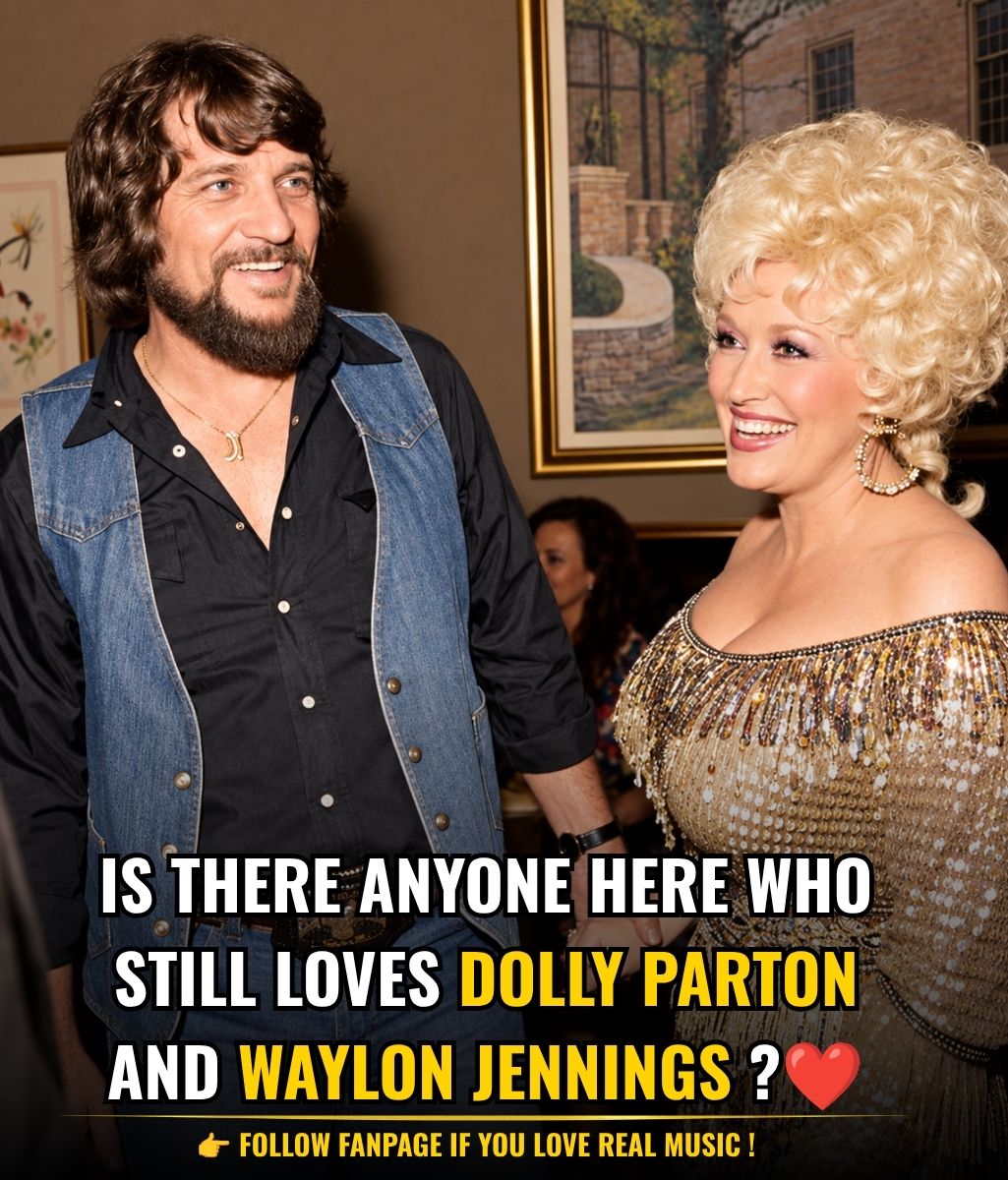
Waylon projected defiance. His long hair, leather vest, beard, and uncompromising attitude became visual symbols of outlaw country. He looked like someone who did not need Nashville’s permission, and his music reinforced that image.
Dolly approached independence with humor and warmth. She could smile while making a decision that was every bit as firm. Her exaggerated stage image sometimes caused people to underestimate her, but behind the rhinestones was an extraordinarily disciplined songwriter and businesswoman who understood ownership, publishing, and long-term career strategy.
That difference may be why their stories work so well together.
Waylon challenged the system from the outside.
Dolly transformed her place inside it.
Neither approach was more authentic than the other.
Both were ways of saying the same thing: an artist should be allowed to decide what kind of artist he or she becomes.
Over time, both proved that resisting Nashville did not require rejecting country music itself. Waylon remained deeply connected to traditional country storytelling even as he rejected the industry’s polished production rules. Dolly carried Appalachian influences throughout a career that eventually reached far beyond the country charts.
Their independence actually made their roots more visible, not less.
By refusing to become products of a formula, they created music that sounded more personal.
That is why their legacies still feel powerful decades later.
Dolly Parton and Waylon Jennings did not take the same road, dress the same way, make the same records, or build the same kind of career. One became an international entertainer whose name eventually stretched into film, television, business, and philanthropy. The other became one of the defining voices of outlaw country and a symbol of artistic resistance.
But underneath those differences was the same stubborn belief.
Nashville could give them a stage, a record deal, and an audience, but it would never be allowed to decide who they were.
And that may be the real connection between Dolly Parton and Waylon Jennings: they proved that sometimes the most country thing an artist can do is refuse to let anyone else write the rules.