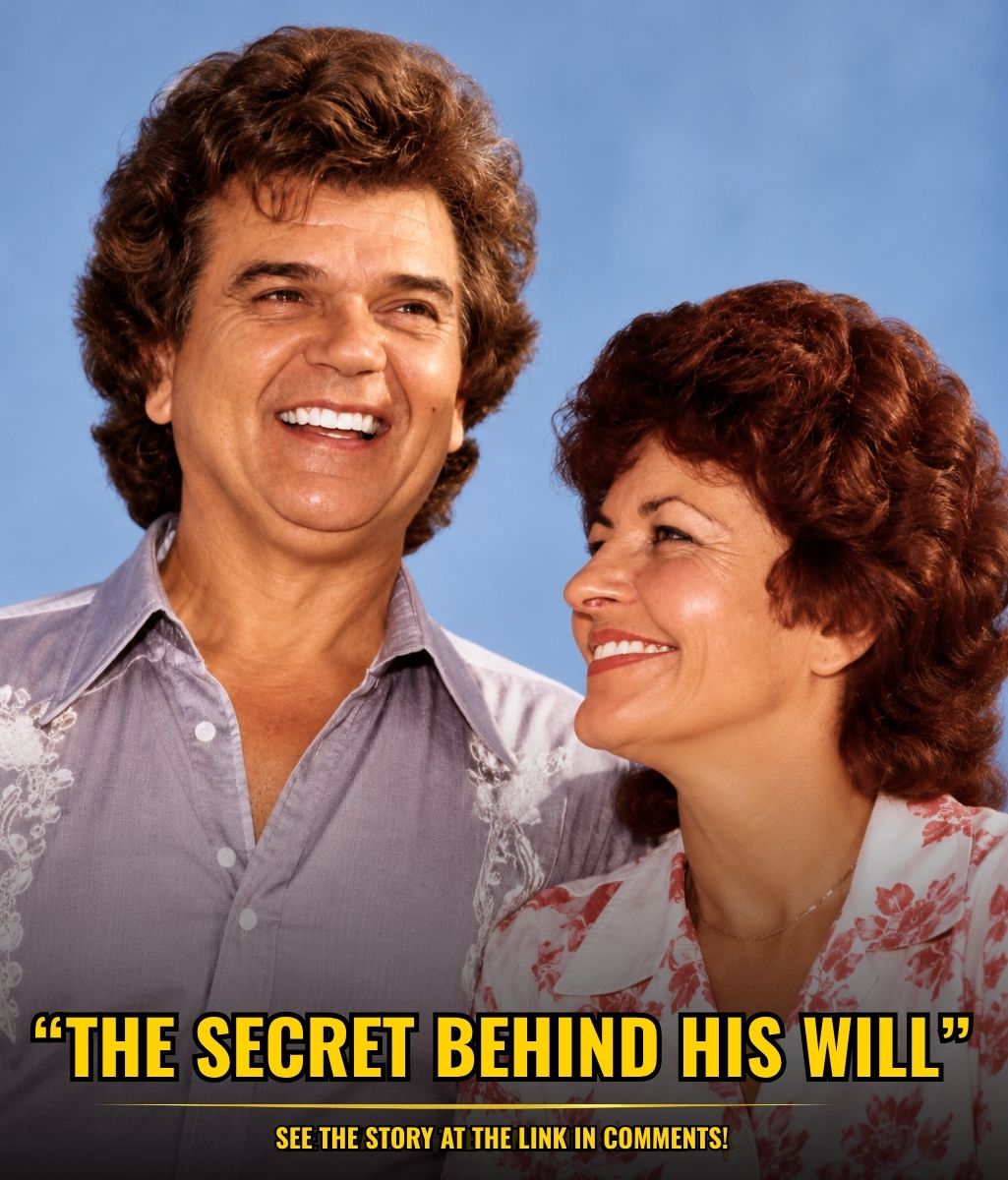
When Conway Twitty died unexpectedly on June 5, 1993, country music lost one of its most successful voices. He was only 59, still touring, still recording, and still surrounded by the business empire he had spent decades building. But almost immediately after his death, attention shifted from the songs to something far more personal: his will.
The document contained a surprise.
Conway’s legal name was Harold Lloyd Jenkins, and according to Tennessee court records, his will and two later codicils left $50,000 to his mother, Velma Dunaway, with the remainder of his estate going to his four adult children: Michael, Joni, Kathy, and Jimmy Jenkins. His surviving wife, Dolores “Dee” Henry Jenkins, was not named to receive that remaining estate.
On paper, it looked startling.
Conway had married Dee in 1987, six years before his death. Yet estate-planning accounts of the case say he had not updated his will after that marriage. Rather than proving that Conway deliberately decided to punish or disinherit Dee, the situation appears to have been created in large part by an outdated estate plan that no longer reflected his marital circumstances.
That distinction mattered because Tennessee law did not simply leave Dee with nothing.
As Conway’s surviving spouse, she had the right to reject the terms of the will and claim what is known as an elective share of the estate. On December 10, 1993, Dee formally filed a petition seeking that share. From that point forward, the estate became the center of a long and complicated legal battle.
The fight was not just about cash sitting in a bank account.
Conway’s estate included property, business interests, personal possessions, royalty income, and valuable intellectual property connected to one of the largest country music catalogs of his generation. Determining Dee’s legal share meant lawyers and courts had to decide what the estate was actually worth and which assets should count toward that value.
That was where things became messy.
Conway’s children wanted to preserve as much of their father’s estate and musical legacy as possible. Dee, meanwhile, was exercising rights the law gave her as his widow. The disagreement placed people who had already been connected through a complicated family history on opposite sides of a major financial dispute.
Even Twitty City, the elaborate Hendersonville, Tennessee complex Conway had built as a combination family compound, tourist attraction, business center, and monument to his career, became caught in the aftermath.
For years, Twitty City had represented Conway’s dream of keeping family and career in one place. His relatives lived there, fans visited the grounds, and memorabilia from his career filled the property. After his death, however, the financial demands surrounding the estate meant that the complex could not simply continue as it had before.
Much of it was eventually sold.
Personal property was also auctioned.
Cars, jewelry, stage clothing, furnishings, awards, and other belongings that had once helped make Twitty City feel like a living museum were placed before buyers. What had taken Conway decades to accumulate was gradually divided into individual assets with individual prices.
The television series The Will: Family Secrets Revealed later dramatized the estate battle as a conflict involving an estate estimated around $15 million, Conway’s four children, and a widow legally entitled to claim a portion despite not being included among the principal beneficiaries in the will.
But one of the most valuable parts of the estate could not be placed on an auction table.
The songs remained.
Conway had built an extraordinary catalog during decades in country music, with recordings, songwriting interests, licensing rights, and his name and likeness continuing to hold commercial value after his death. Those rights became especially important because whoever controlled them would have influence over how Conway Twitty’s legacy was used for years to come.
The legal proceedings dragged on.
A 1999 Tennessee Court of Appeals opinion shows how technical the dispute became, with arguments over the proper calculation of Dee’s elective share and the financial structure of the estate. The case returned to appellate courts more than once, demonstrating just how difficult Conway’s estate became to settle.
Eventually, Conway’s children retained control over important parts of their father’s musical legacy, while Dee received the share of the estate to which she was legally entitled.
The consequences reached beyond one family.
The dispute became a well-known cautionary example in estate-planning circles because Conway’s will had not been properly updated after his later marriage. Attorneys involved in the aftermath have pointed to the case as an example of how an outdated will can create years of conflict even when substantial wealth exists to distribute.
The controversy also helped inspire changes in Tennessee’s approach to calculating a surviving spouse’s elective share, tying the amount more closely to the length of the marriage rather than automatically treating every surviving spouse the same way. The case therefore left behind not only a family dispute, but also a legal legacy connected to how estates could be divided in the future.
That may be the most important part of the story.
Conway Twitty spent his career singing about marriage, heartbreak, loyalty, and complicated love. After his death, his own family became caught in a conflict involving many of those same themes, except this time there was no three-minute country song to resolve them.
His will did leave the bulk of his estate to his children.
His widow was not listed among those principal beneficiaries.
But that does not necessarily mean Conway consciously decided, near the end of his life, to cut Dee out.
The stronger evidence points to something far less dramatic and, in many ways, more tragic: he never properly updated the document after marrying her.
When Conway died suddenly, there was no opportunity left to correct it.
What followed was years of litigation, the dismantling of much of Twitty City, the sale of personal belongings, and a fight over the value of a musical legacy that Conway had spent an entire lifetime creating.
For a man who once built Twitty City as a place meant to bring his family and his career together, the final irony was painful.
After his death, the estate that was supposed to preserve what he built became one of the things that divided the people he left behind.
Video
https://www.youtube.com/watch?v=C0igSdNnUHA