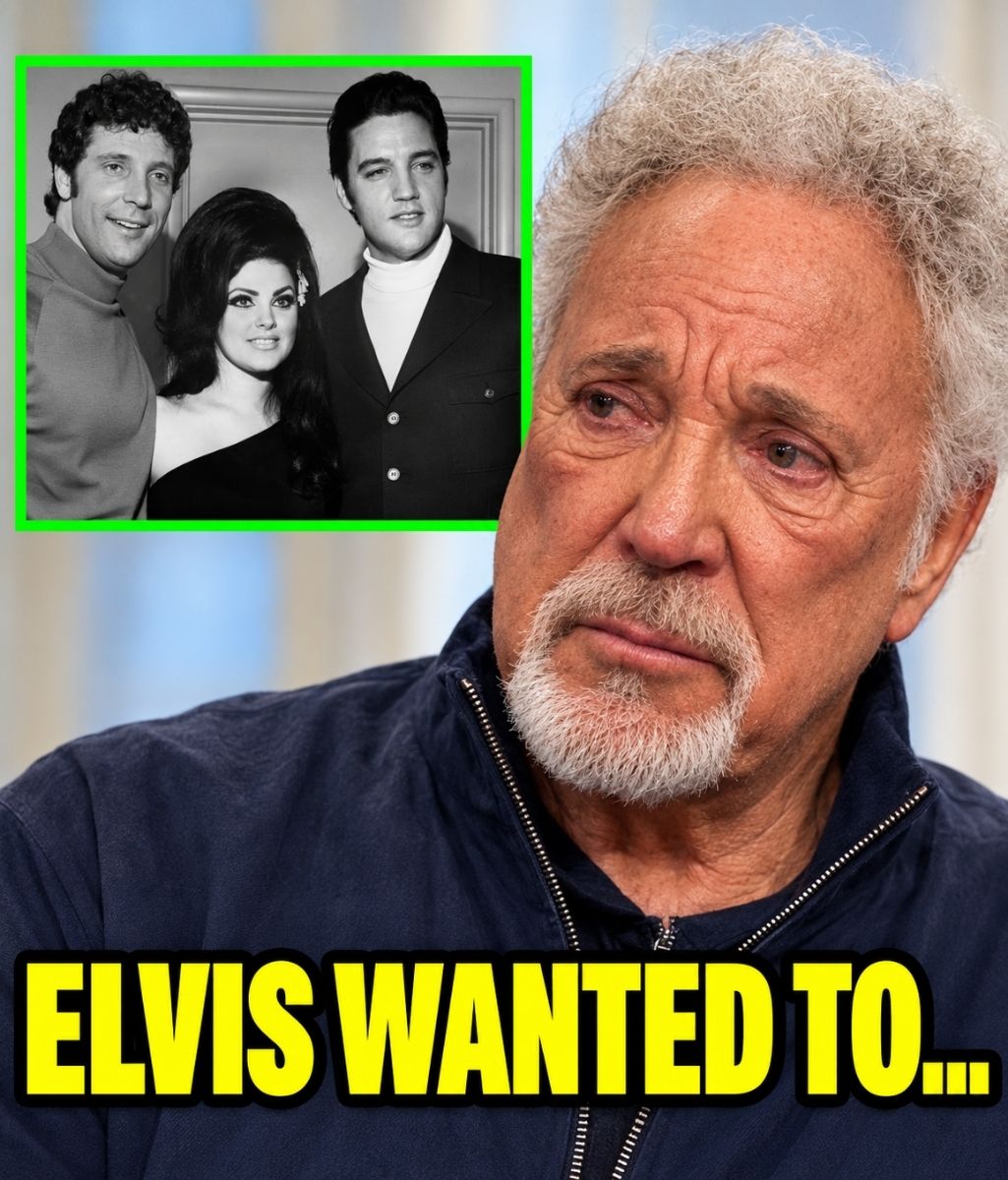
AT 85, TOM JONES FINALLY REVEALS WHAT HE REGRETS MOST ABOUT ELVIS PRESLEY’S FINAL YEARS — AND IT STILL HAUNTS HIM
For decades, Tom Jones has carried memories of Elvis Presley that few other artists could claim. They were not simply two singers who crossed paths at awards shows or posed together for publicity photographs. They became genuine friends, spent time together in Las Vegas, sang privately in hotel suites, traded jokes, and shared the strange experience of being two of the most recognizable male performers in the world.
But when Tom looks back on the final years of Elvis’s life, one memory stands above the others.
It is not something Elvis said the night before he died.
It is the conversation Tom never had.
Tom Jones has said that he did not see Elvis during the final two years of his life. At the time, he knew his friend had become increasingly withdrawn and that prescription drugs were becoming a problem, but he did not understand just how serious the situation had become. From the outside, Tom thought Elvis was becoming heavier, less active, and increasingly unwilling to take calls. Only after Elvis died did he realize how much deeper the struggle may have been.
That realization left Tom with a painful question.
What if he had gone to see him?
The two men had first met in Los Angeles in 1965, when Tom was still adjusting to sudden international fame. Elvis had heard “It’s Not Unusual” and wanted to meet the Welsh singer behind the voice. Tom later remembered being stunned that Elvis Presley, one of his own greatest influences, had sought him out.
The meeting quickly became a friendship.
Elvis admired Tom’s voice, stage presence, and confidence. Tom, in turn, openly acknowledged that Elvis had helped give him the courage to perform with the physical energy that became part of his own image. Years later, Tom remembered Elvis telling him that he recognized something of himself in the way Tom performed.
Their friendship became especially close in Las Vegas.
When both men were performing there, Elvis would sometimes come to Tom’s shows, and afterward they would continue the night privately. Tom recalled going to Elvis’s hotel suite, where they would sing gospel songs together with musicians and backing singers long after the official performances had ended.
These were not staged duets for television.
They were friends singing because they wanted to.
Tom remembered nights when Elvis became fixated on songs such as “Why Me” and “Killing Me Softly,” repeating them over and over because he loved them so much. He also remembered the two of them singing “The Old Rugged Cross” repeatedly, comparing the gospel music Elvis had grown up hearing in Mississippi with the Welsh religious music Tom knew from home.
For Tom, those memories captured a side of Elvis that fame often hid.
Elvis was still the superstar everyone knew, but around trusted friends he could simply become a man obsessed with music, asking questions, singing favorite songs, and talking about places he still hoped to visit.
Then the friendship became more distant.
During the last two years of Elvis’s life, Tom said he stopped seeing him. Elvis withdrew more and more, and the people around him became increasingly difficult to reach. Tom did not fully understand what was happening.
He thought Elvis was pulling away.
He did not realize how desperate things had become.
Then came August 16, 1977.
Elvis Presley died at Graceland at the age of 42.
Tom later said one of the first things that hit him was the realization that he should have gone to see Elvis before it was too late. The regret became even heavier after Priscilla Presley spoke with him. According to Tom, Priscilla told him that when he came around, Elvis seemed to regain some of his competitive energy and excitement.
That comment stayed with him.
Tom began wondering whether his presence might have helped, even temporarily.
Could seeing an old friend have brought Elvis back to himself for a while?
Could music have given him something to focus on?
Could another late-night singing session have reminded him of the man he had been before isolation took hold?
Tom has never claimed he knows the answer.
That uncertainty is exactly what makes the regret painful.
He later said he wished he had made more of an effort to get through to Elvis, even when Elvis stopped taking calls and pushing people away. Tom admitted that at the time he mistook some of the behavior for laziness rather than recognizing it as evidence that his friend was seriously struggling.
Years later, Tom revealed another haunting coincidence.
In a 2015 interview, he said he had actually been thinking about Elvis on the day Elvis died. He did not describe receiving some mysterious final message or having a last-minute conversation. Instead, it became another strange memory attached to the day he lost his friend.
That distinction matters.
There was no documented late-night confession from Elvis to Tom Jones on August 15, 1977.
The real story is more human.
Tom had known Elvis closely enough to see the playful, competitive, music-obsessed man behind the legend. Then, as Elvis became more isolated, the two drifted apart. Tom assumed there would be another chance to reconnect.
There was not.
That is why Tom’s story remains so emotional decades later.
His regret is not about failing to understand some dramatic final secret.
It is about something much simpler and more familiar.
He wishes he had shown up.
For years, Tom Jones remembered the nights when Elvis would keep him awake singing gospel songs until sunrise.
After Elvis died, he was left thinking about one visit he never made.
And sometimes the words that hurt the most are not the final things someone said.
They are the things two friends never got the chance to say at all.