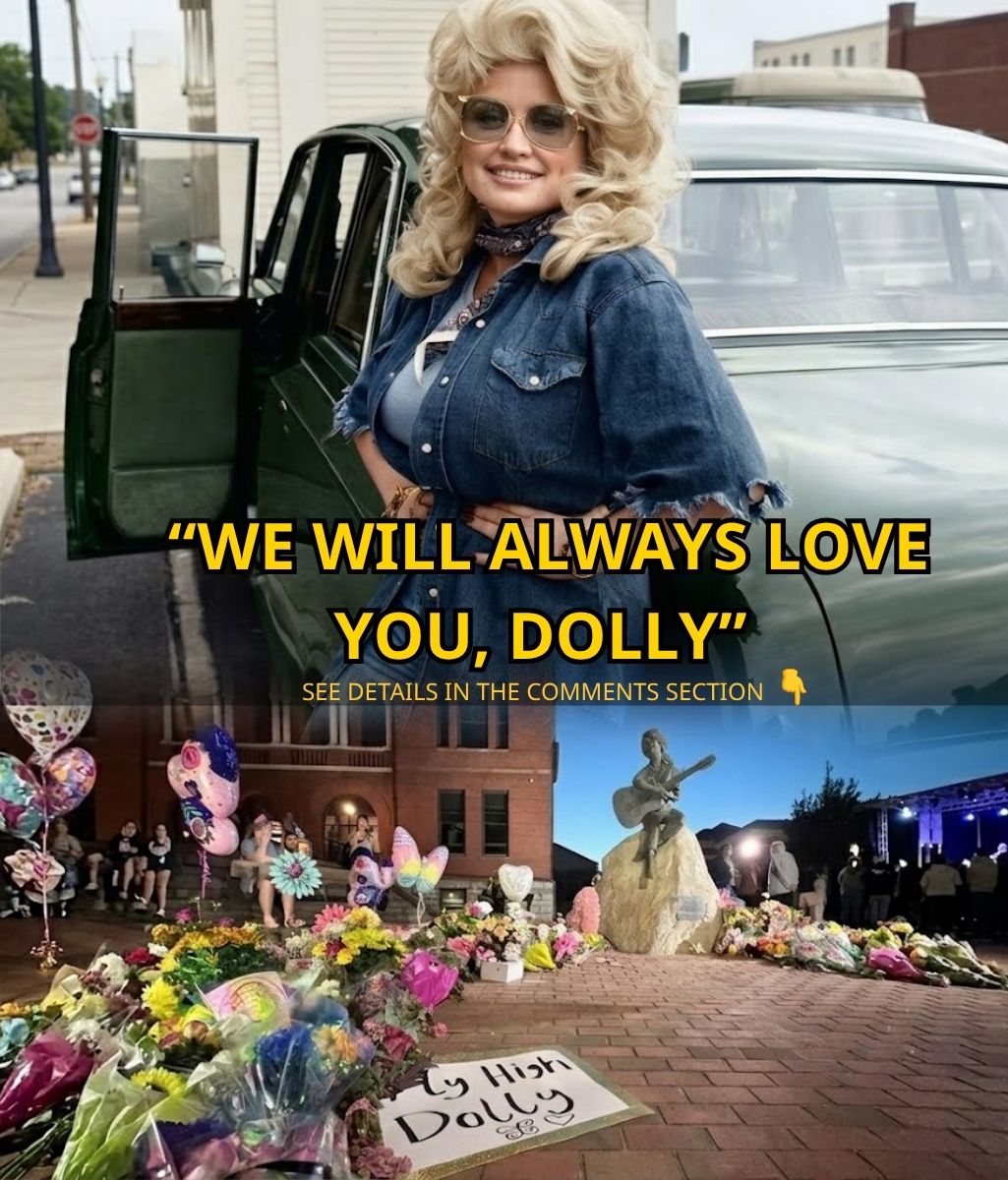
There are some voices people assume will always be there. For millions of listeners, Dolly Parton was one of them. But following her death in Nashville on August 25, 2026, at the age of 80, a simple farewell has spread across the music world and taken on a meaning few words could carry more perfectly: “We will always love you, Dolly.” It is both a goodbye and an unmistakable echo of one of the greatest songs she ever wrote.
The message appeared as part of the statement announcing Dolly’s death. Her representatives remembered a woman whose life had been defined not only by timeless music and extraordinary songwriting, but also by warmth, humor, compassion, and resilience. A small private service is expected for immediate family, while those wishing to honor her have been encouraged to support Dolly Parton’s Imagination Library, the literacy program that became one of the most important parts of her legacy.
For longtime country fans, those final words carry an especially powerful weight. Dolly wrote “I Will Always Love You” decades ago as a deeply personal farewell, never knowing that its title would eventually become one of the phrases people around the world would use to say goodbye to her. What began as one songwriter’s expression of gratitude and parting has now become something much larger: a collective farewell to the woman who gave that song to the world.
The reaction since her death has stretched far beyond Nashville. Paul McCartney, Elton John, Reba McEntire, and artists from multiple generations have joined fans in remembering Dolly. Reuters reported tributes from around the world, including a performance of “9 to 5” by the King’s Guard at Buckingham Palace, a striking reminder that the Tennessee singer’s influence had traveled far beyond the boundaries of country music.
Among the most emotional tributes came from Reba McEntire, who remembered Dolly not simply as an icon but as a friend. Reba thanked her for the music, love, generosity, and memories she left behind, ending her remembrance with a phrase that suddenly carried heartbreaking significance: “I will always love you.”
Those words seem appropriate because Dolly’s legacy was never measured only in hit records. She gave country music some of its most recognizable songs, including “Jolene,” “Coat of Many Colors,” “9 to 5,” and “I Will Always Love You,” but the affection surrounding her death reveals how deeply people connected with the woman behind those songs.
She had a rare ability to make extraordinary fame seem surprisingly human.
Dolly could stand beneath enormous stage lights wearing rhinestones and instantly command thousands of people, then speak about her childhood in rural Tennessee with the familiarity of someone sitting across the kitchen table. She never seemed interested in hiding where she came from. Instead, she turned those memories into songs about poverty, family, pride, sacrifice, heartbreak, determination, and hope.
Her generosity became equally important. Through the Imagination Library, millions of children received free books, extending Dolly’s influence into homes where some families may never have owned one of her albums. Reuters noted that tributes following her death repeatedly celebrated not only her artistic achievements but also her philanthropy and commitment to literacy.
That combination helps explain why the grief feels so personal.
For one listener, Dolly may always be the young woman singing “Jolene.” For another, she is the songwriter behind a song played during an important goodbye. Someone else remembers watching 9 to 5, visiting Dollywood, hearing her music in a parent’s home, or receiving a childhood book carrying the name of her foundation.
Everybody seems to have their own Dolly Parton memory.
And now those memories are being shared everywhere.
Flowers and handwritten messages have appeared in Tennessee. Musicians are revisiting her songs. Fans who never met Dolly are describing a strange feeling of having lost someone familiar. Even tribute performers who spent years celebrating her have spoken about the difficulty of imagining their next performance now that the woman who inspired it is gone.
Perhaps this is why “We will always love you, Dolly” feels like more than an ordinary memorial message.
It captures something that awards, sales figures, and Hall of Fame honors cannot. Dolly Parton gave people songs they attached to their own lives, and once music becomes part of someone’s memories, the person who created it never entirely disappears.
Country music has lost one of its greatest voices.
But somewhere tonight, “Jolene” will play again. “Coat of Many Colors” will tell its story again. And “I Will Always Love You” will carry a meaning more poignant than it did before.
Dolly Parton spent a lifetime giving the world words for love, hardship, laughter, and goodbye.
Now the world is using her own spirit to send one final message back:
We will always love you, Dolly.