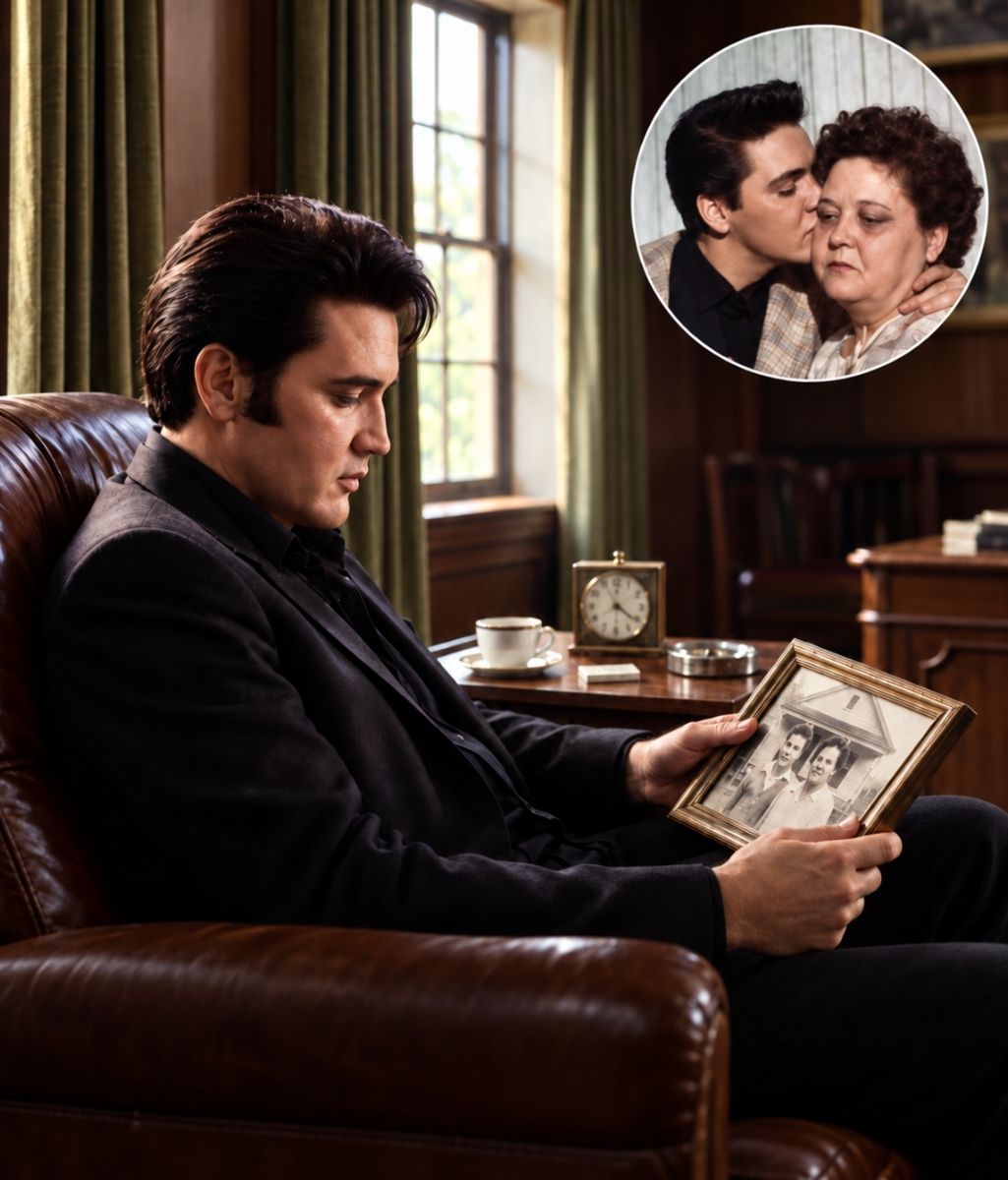
Long before the private jets, the gold records, the screaming crowds, and the gates of Graceland, Elvis Presley was simply Gladys Presley’s son. Their bond was unusually close, shaped by poverty, uncertainty, family hardship, and the feeling that they had survived difficult years together. As Elvis became one of the most famous men in the world, nearly everything around him changed, but one thing remained deeply rooted in the life he had known before fame: his attachment to his mother.
Gladys had been there when there was very little money, when Elvis was just a shy boy growing up in Tupelo and later Memphis, and when success still seemed almost impossible. She worried about him, encouraged him, and became one of the central emotional figures in his life. Elvis, in return, remained intensely devoted to her. Even after he became wealthy enough to buy almost anything he wanted, many accounts of his life suggest that the approval and comfort he received from his mother still mattered more to him than material success.
That is why the story of Elvis and Gladys remains so powerful. Fame eventually gave Elvis everything his younger self could have imagined, but it could not protect him from loss. In August 1958, while Elvis was serving in the U.S. Army, Gladys became seriously ill. Elvis was granted emergency leave and returned home to see her. She died on August 14, 1958, at only 46 years old, leaving a wound that those close to Elvis believed he never fully escaped.
The timing made the loss even harder. Elvis was still young, only 23, and his life had been transformed almost overnight. Within just a few years, he had gone from performing in small venues to becoming an international phenomenon. Yet the woman who had known him before any of that success was suddenly gone. The person who could remember the frightened child, the struggling family, and the days before anyone called him the King would never again be waiting at home.
For Elvis, grief was not simply about losing a parent. It was also about losing a connection to the world that existed before fame changed everything.
Gladys represented familiarity. She represented the years when breakfast was simply breakfast and a morning at home did not require security, schedules, business meetings, or people constantly asking for something. She knew Elvis before the public created an image around him, and that made their relationship something no amount of celebrity could replace.
That is why the idea of one more ordinary morning carries so much emotional weight.
Elvis did not need another award from Gladys. He did not need another sold-out show or another million records. If he could have been given one more morning with her, it is easy to imagine that the value would have been in the ordinary details: hearing her voice from another room, sitting at a table together, sharing a meal, laughing about something that would never make a newspaper, and simply knowing that she was still there.
Those moments often seem small while we are living them.
Only later do we understand what they were worth.
People who knew Elvis described how devastated he was after Gladys died. At her funeral, his grief was visible and overwhelming. The confident performer millions of fans had seen on television disappeared, replaced by a young son facing a loss that fame could not soften. No stage presence, no money, and no public admiration could change what had happened.
In the years that followed, Elvis continued moving forward because his career demanded it. He served overseas, returned to music, made films, recorded hit songs, performed in Las Vegas, and eventually became an even larger cultural figure than he had been before his mother’s death. Yet success did not erase the absence.
Graceland itself became part of that memory.
Elvis had purchased the mansion in 1957, in part because he wanted to give his parents a better life after the financial struggles they had endured. Gladys lived there only briefly before her death, but her presence remained attached to the home. For Elvis, Graceland was never simply a symbol of wealth. It was also connected to family, security, and the promise that the difficult years were finally behind them.
The tragedy was that success arrived too late to guarantee more time.
That may explain why Elvis’s story continues to resonate with people far beyond his music. Beneath the extraordinary career was a universal experience: the realization that the people we love cannot be replaced once they are gone. Elvis could replace a car, a house, a costume, or even a band member. He could earn more money and make another record. He could not recreate the years he had with his mother.
That kind of regret does not belong only to famous people.
Almost everyone eventually looks back at ordinary moments and wishes they had understood their importance while they were happening. A conversation in the kitchen, a familiar laugh, a parent calling from another room, or a quiet morning that seemed completely forgettable at the time can become priceless in memory.
Elvis’s relationship with Gladys reminds us that the most valuable parts of life are often the least dramatic.
The world remembers Elvis Presley standing beneath bright lights while thousands of people screamed his name. It remembers the black leather, the white jumpsuits, the television appearances, and the records that changed music history. Yet some of the moments Elvis may have treasured most were probably the ones nobody photographed.
They belonged to a time when he was not yet the King.
He was simply a son.
And perhaps, after everything fame eventually gave him, Elvis Presley would have traded all of it for one more ordinary morning when Gladys was still there, the house was quiet, and there was nowhere else he needed to be.